What does Genesis 31:51 mean?
"And Laban said to Jacob, Behold this heap, and behold this pillar, which I have cast betwixt me and thee;" - Genesis 31:51
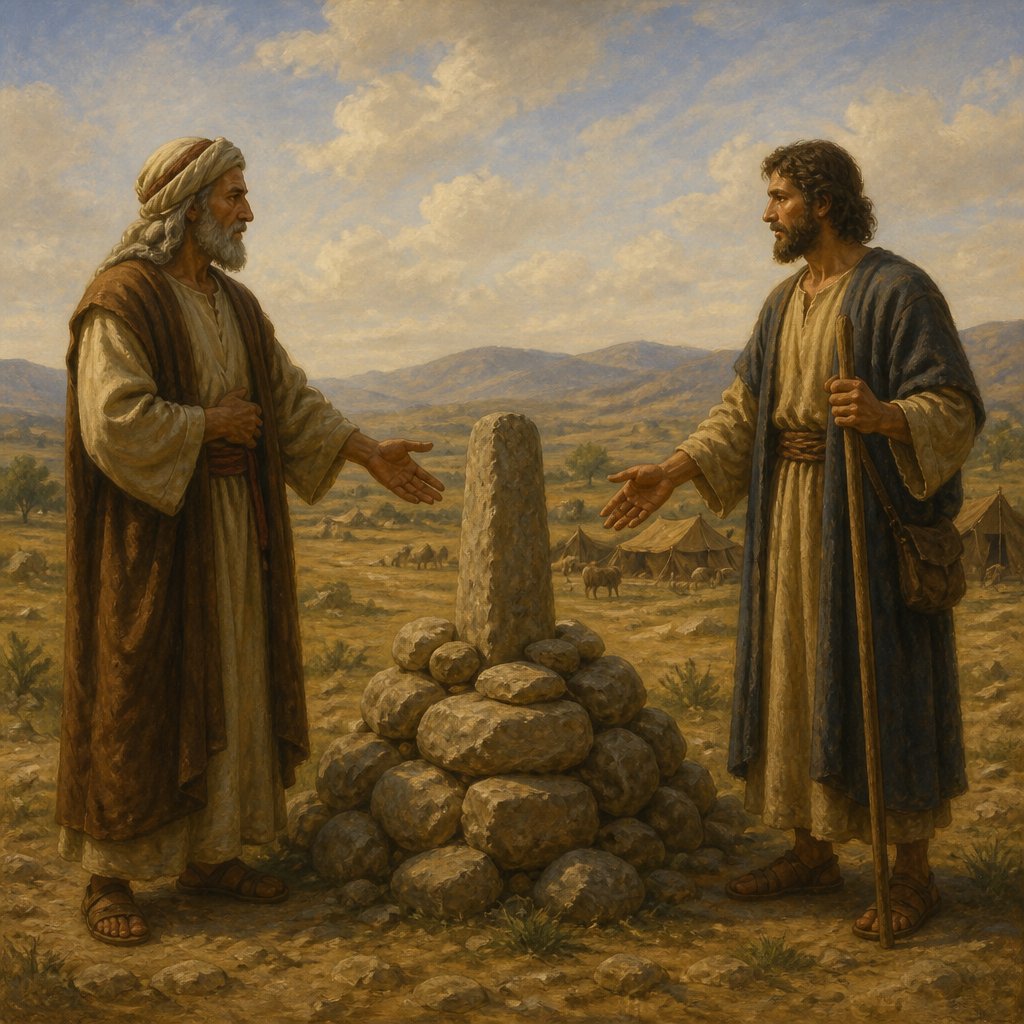
Genesis 31:51 (KJV) is a verse from the Old Testament of the Bible that reflects a significant moment in the narrative of the patriarch Jacob and his father-in-law, Laban. The verse is part of a larger narrative that tells the story of Jacob's departure from his father-in-law's household and the resolution of their conflict. In this verse, Laban and Jacob make a covenant, symbolized by a pile of stones, as a witness to their agreement.
The verse reads:
"And Laban said to Jacob, Behold this heap, and behold this pillar, which I have cast betwixt me and thee;"
The context of this verse is essential for understanding its significance. Jacob had worked for his father-in-law, Laban, for 20 years, during which time he married Laban's daughters and built a substantial flock of livestock. However, he eventually became disenchanted with Laban's treatment and decided to return to his homeland. Laban pursued Jacob, accusing him of stealing his idols. After an intense confrontation, they came to an agreement and decided to erect a pillar as a symbol of their covenant.
One of the main themes in this verse is the resolution of conflicts and the establishment of peace. Both Jacob and Laban had grievances against each other, but they were able to come to a mutual understanding and make a covenant to end their hostilities. The use of physical objects, such as the heap of stones and the pillar, served as a tangible symbol of their agreement, ensuring that both parties would uphold their end of the bargain. This theme of reconciliation and peace is a recurring motif in the Bible and underscores the importance of forgiveness and understanding in resolving disputes.
The verse also carries a deeper symbolic meaning. In biblical times, the act of building a monument or heap of stones was often used to signify a significant event or covenant between parties. In this instance, the pillar and heap of stones served as a physical reminder of the agreement between Jacob and Laban. The use of such symbols highlights the importance of tangible representations in sealing covenants and agreements, emphasizing the solemnity and permanence of the arrangement.
Furthermore, the verse showcases the significance of physical landmarks in biblical narratives. Throughout the Bible, physical objects and landmarks are frequently used as symbols of God's faithfulness and the continuity of His covenants with His people. In this verse, the pillar and heap of stones not only represent the agreement between Jacob and Laban but also serve as a testament to God's presence in their reconciliation. The use of physical objects as symbols of divine intervention and faith is a recurring motif in the Bible, emphasizing the tangible evidence of God's promises and the enduring nature of His covenants.
In conclusion, Genesis 31:51 (KJV) captures the resolution of the conflict between Jacob and Laban through the establishment of a covenant symbolized by a heap of stones and a pillar. The verse underscores the themes of reconciliation, peace, and the significance of physical landmarks in sealing agreements. It also highlights the symbolic importance of such physical objects as tangible representations of divine intervention and the enduring nature of God's covenants with His people. Overall, this verse serves as a powerful testament to the importance of forgiveness, understanding, and the physical representation of covenants in biblical narratives.
Have questions about Genesis 31:51?
Dive deeper into this scripture with Bible Chat — an AI-powered tool for exploring God's Word through conversation. Ask questions, get context, and grow in your understanding of the Bible.
Get Our Apps


Genesis 31:51 Artwork

Genesis 31:51 - "And Laban said to Jacob, Behold this heap, and behold this pillar, which I have cast betwixt me and thee;"
"And Laban said to Jacob, Behold this heap, and behold this pillar, which I have cast betwixt me and thee;" - Genesis 31:51

Genesis 24-51

Numbers 31:51 - "And Moses and Eleazar the priest took the gold of them, even all wrought jewels."

Jeremiah 51:31 - "One post shall run to meet another, and one messenger to meet another, to shew the king of Babylon that his city is taken at one end,"
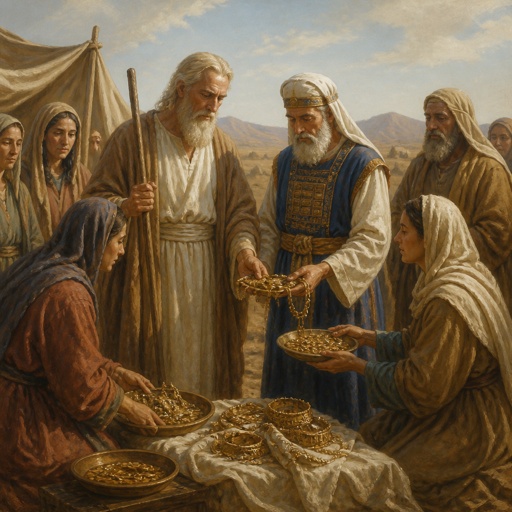
"And Moses and Eleazar the priest took the gold of them, even all wrought jewels." - Numbers 31:51

Genesis 21-31

Genesis 18-31

Genesis 31:35

Genesis 19-31

Genesis 24-31

Genesis 24:51 - "Behold, Rebekah is before thee, take her, and go, and let her be thy master's son's wife, as the LORD hath spoken."

Genesis 41:51 - "And Joseph called the name of the firstborn Manasseh: For God, said he, hath made me forget all my toil, and all my father's house."

Genesis 31:22 - "And it was told Laban on the third day that Jacob was fled."

Genesis 31:45 - "And Jacob took a stone, and set it up for a pillar."

Genesis 31:47 - "And Laban called it Jegarsahadutha: but Jacob called it Galeed."

Genesis 31:31 - "And Jacob answered and said to Laban, Because I was afraid: for I said, Peradventure thou wouldest take by force thy daughters from me."

Genesis 34:31 - "And they said, Should he deal with our sister as with an harlot?"

Genesis 25:31 - "And Jacob said, Sell me this day thy birthright."

Genesis 31:2 - "And Jacob beheld the countenance of Laban, and, behold, it was not toward him as before."

Genesis 31:4 - "And Jacob sent and called Rachel and Leah to the field unto his flock,"

Genesis 37:31 - "And they took Joseph's coat, and killed a kid of the goats, and dipped the coat in the blood;"

Genesis 42:31 - "And we said unto him, We are true men; we are no spies:"
Genesis 10:31 - "These are the sons of Shem, after their families, after their tongues, in their lands, after their nations."

Genesis 21:31 - "Wherefore he called that place Beer-sheba; because there they sware both of them."

Genesis 41:31 - "And the plenty shall not be known in the land by reason of that famine following; for it shall be very grievous."

Genesis 31:17 - "¶ Then Jacob rose up, and set his sons and his wives upon camels;"

Genesis 31:6 - "And ye know that with all my power I have served your father."

Genesis 31:9 - "Thus God hath taken away the cattle of your father, and given them to me."

Genesis 5:31 - "And all the days of Lamech were seven hundred seventy and seven years: and he died."