What does Genesis 30:12 mean?
"And Zilpah Leah's maid bare Jacob a second son." - Genesis 30:12
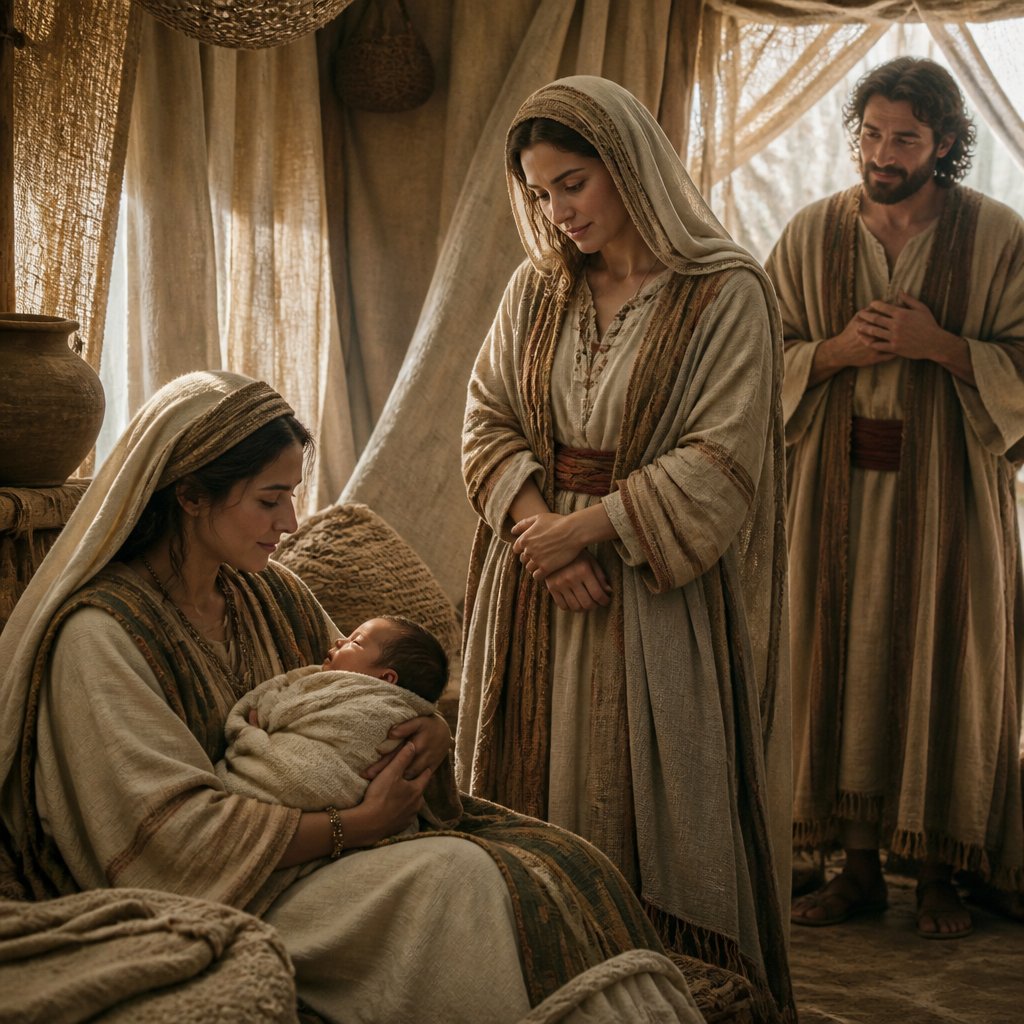
Genesis 30:12 (KJV) states, “And Zilpah Leah's maid bare Jacob a second son.” This verse is part of the narrative of the patriarch Jacob and his family in the book of Genesis, which is the first book of the Bible. To fully understand the significance of this verse, it is essential to examine the broader context and themes within which it is situated.
The book of Genesis tells the story of the creation of the world, the fall of humanity, and the establishment of God’s covenant with the people of Israel through the patriarchs, including Abraham, Isaac, and Jacob. This particular verse occurs within the narrative of Jacob’s marriages and the birth of his children, who will become the twelve tribes of Israel.
In Genesis 30, the focus is on the competition and jealousy between Jacob’s wives, Leah and Rachel. Both women are sisters, and Jacob married them both. However, Rachel was his true love, while Leah was initially unloved. This tension is reflected in their ability to bear children, as children were highly valued in ancient times for many reasons, including household labor, economic security, and social status. In this context, the birth of Zilpah’s second son to Jacob is a significant event that provides insight into the dynamics of Jacob’s family and the struggles that the women faced in their roles as wives and mothers.
The verse also highlights the role of Zilpah, who was Leah's maid. In the patriarchal society of ancient Israel, the status of women was often defined by their ability to bear children, and those who were unable to do so were considered inferior. Zilpah had the responsibility to bear children for Leah, and in doing so, she played a crucial role in the expansion of Jacob’s family and the fulfillment of God’s promise to bless his descendants.
Furthermore, the verse draws attention to the names and lineage of the characters involved. In the ancient world, names were imbued with significant meaning and were often chosen to reflect the circumstances of a child’s birth or to convey a parent’s hopes for the child’s future. In this case, the second son born to Zilpah is named by Leah as Asher, which means “happy” or “blessed” in Hebrew. This name reflects Leah’s feelings of happiness and gratitude to God for blessing her with another child, despite the challenges she faced in her relationship with Jacob and her rivalry with Rachel.
The birth of Asher also holds broader theological significance within the narrative of Genesis. It is a reminder of God’s faithfulness to his covenant promises and the continuation of the line of Jacob, which will ultimately lead to the birth of the twelve tribes of Israel. This theme of divine providence and fulfillment of God’s promises runs throughout the book of Genesis and lays the foundation for the rest of the biblical narrative.
In conclusion, Genesis 30:12 is a verse that may seem simple at first glance, but upon closer examination, it reveals rich layers of meaning and significance within the broader context of the biblical narrative. It speaks to the dynamics of familial relationships, the value of children, and the fulfillment of God’s promises. It also sheds light on the roles and status of women in ancient Israel and the cultural and theological significance of names. As such, this verse serves as a reminder of the complexity and depth of the biblical text and the enduring relevance of its themes to contemporary readers.
Have questions about Genesis 30:12?
Dive deeper into this scripture with Bible Chat — an AI-powered tool for exploring God's Word through conversation. Ask questions, get context, and grow in your understanding of the Bible.
Get Our Apps


Genesis 30:12 Artwork

Genesis 30:12 - "And Zilpah Leah's maid bare Jacob a second son."
"And Zilpah Leah's maid bare Jacob a second son." - Genesis 30:12

Genesis 19-30

Genesis 24-30

Genesis 18-30

Genesis 21-30

Genesis 30:10-11

Genesis 29:15-30

Genesis 30:5 - "And Bilhah conceived, and bare Jacob a son."

Genesis 11:30 - "But Sarai was barren; she had no child."

Genesis 30:10 - "And Zilpah Leah's maid bare Jacob a son."

Genesis 30:19 - "And Leah conceived again, and bare Jacob the sixth son."

Genesis 26:30 - "And he made them a feast, and they did eat and drink."

Genesis 30:28 - "And he said, Appoint me thy wages, and I will give it."

Genesis 30:21 - "And afterwards she bare a daughter, and called her name Dinah."

Genesis 30:34 - "And Laban said, Behold, I would it might be according to thy word."

Genesis 30:22 - "¶ And God remembered Rachel, and God hearkened to her, and opened her womb."

Genesis 30:7 - "And Bilhah Rachel's maid conceived again, and bare Jacob a second son."

Genesis 10:30 - "And their dwelling was from Mesha, as thou goest unto Sephar a mount of the east."

Genesis 30:11 - "And Leah said, A troop cometh: and she called his name Gad."

Genesis 30:39 - "And the flocks conceived before the rods, and brought forth cattle ringstraked, speckled, and spotted."

Genesis 30:17 - "And God hearkened unto Leah, and she conceived, and bare Jacob the fifth son."

Genesis 30:43 - "And the man increased exceedingly, and had much cattle, and maidservants, and menservants, and camels, and asses."

Genesis 12

Nehemiah 12:30 - "And the priests and the Levites purified themselves, and purified the people, and the gates, and the wall."

Genesis 30:23 - "And she conceived, and bare a son; and said, God hath taken away my reproach:"

Proverbs 30:12 - "There is a generation that are pure in their own eyes, and yet is not washed from their filthiness."

Genesis 42:30 - "The man, who is the lord of the land, spake roughly to us, and took us for spies of the country."

Genesis 30:4 - "And she gave him Bilhah her handmaid to wife: and Jacob went in unto her."

Genesis 30:24 - "And she called his name Joseph; and said, The LORD shall add to me another son."