What does Genesis 29:17 mean?
"Leah was tender eyed; but Rachel was beautiful and well favoured." - Genesis 29:17
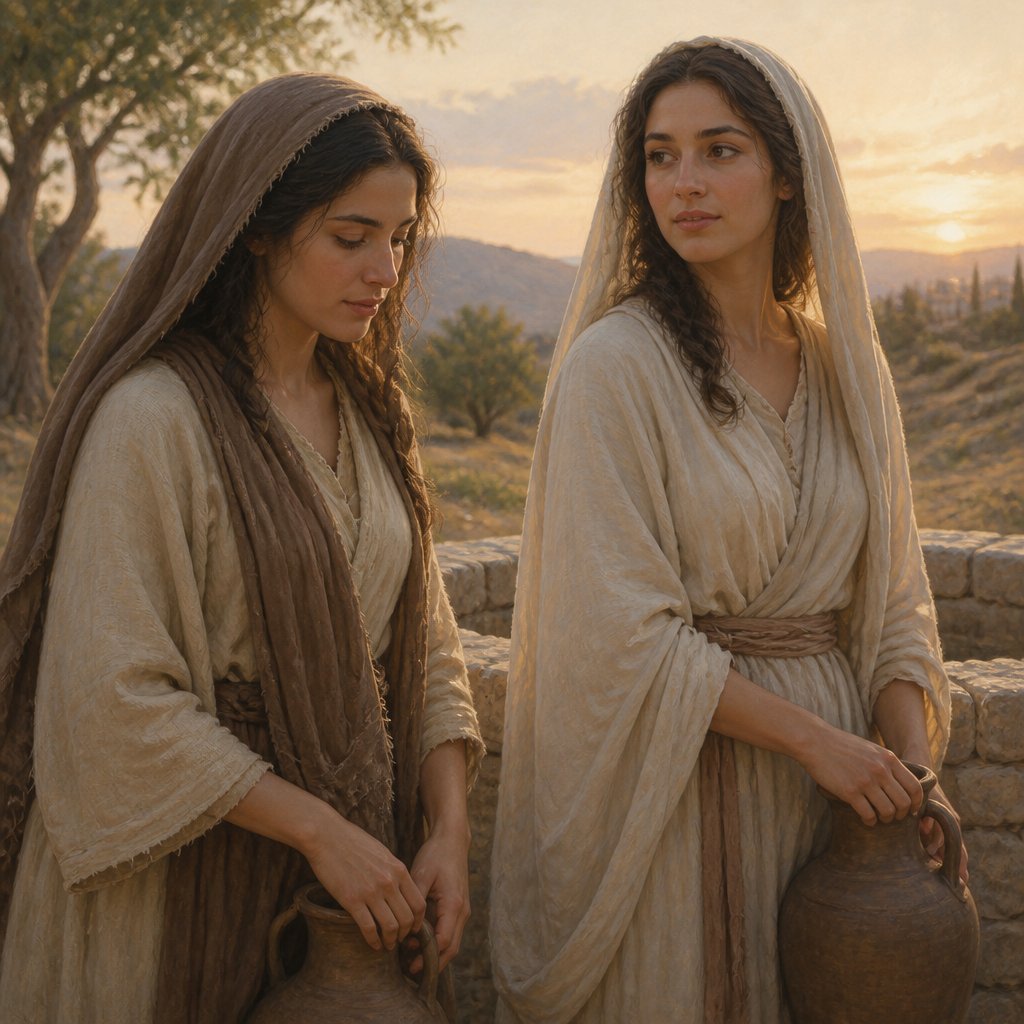
Genesis 29:17 (KJV) states: "Leah was tender eyed; but Rachel was beautiful and well favored."
This verse is part of the story of Jacob, one of the most important figures in the Book of Genesis. Jacob, the son of Isaac and the grandson of Abraham, is also known as Israel, the father of the 12 tribes of Israel.
In this particular verse, the focus is on two sisters, Leah and Rachel, who both become wives of Jacob. The verse describes Leah as "tender eyed," suggesting that she may have had weak or dull eyes, while Rachel is described as "beautiful and well favored." This contrast sets the stage for the complex and often tragic story of the relationships between these sisters and Jacob.
One of the key themes in this verse is the contrast between outward appearances and inner qualities. While Rachel is described as the more physically attractive of the two sisters, the verse does not comment on their inner qualities. This speaks to the biblical idea that outward beauty is not as important as inner character, a theme that is echoed throughout the Bible.
This verse also highlights the theme of rivalry and jealousy, which will play a major role in the subsequent narrative. The unequal portrayal of the sisters sets up a dynamic that invites comparison and competition between them, leading to a series of conflicts and challenges as they both vie for the affection of their husband.
The verse also reflects the cultural context of the time in which it was written. In ancient Near Eastern societies, physical beauty was highly valued, particularly in the context of marriage. The description of Rachel as "beautiful and well favored" would have been an important detail for the original audience, emphasizing her desirability as a wife.
Additionally, the contrast between Leah and Rachel sets the stage for the narrative of Jacob's marriages. As the story unfolds, Jacob's love for Rachel and his subsequent marriage to Leah as a result of Laban's deception become central plot points. The dynamics between these characters will shape the trajectory of the narrative and have lasting implications for both Jacob's family and the larger biblical story.
Symbolically, this verse can be seen as representing the idea that outward appearances can be deceiving. While Rachel may appear more attractive on the surface, it is Leah who ultimately plays a more significant role in the establishment of the 12 tribes of Israel. This theme of unexpected outcomes and the importance of inner qualities can be seen as a reflection of broader biblical teachings about the value of humility, faith, and the idea that God's plans often unfold in ways that defy human expectations.
In conclusion, Genesis 29:17 is a verse that sets the stage for the complex relationships and themes that will shape the narrative of Jacob and his family. Through its portrayal of the contrast between Leah and Rachel, as well as its exploration of themes such as inner qualities, rivalry, and unexpected outcomes, this verse lays the groundwork for a rich and multifaceted story that will continue to unfold in the subsequent chapters of the Book of Genesis.
Have questions about Genesis 29:17?
Dive deeper into this scripture with Bible Chat — an AI-powered tool for exploring God's Word through conversation. Ask questions, get context, and grow in your understanding of the Bible.
Get Our Apps


Genesis 29:17 Artwork

Genesis 29:17 - "Leah was tender eyed; but Rachel was beautiful and well favoured."
"Leah was tender eyed; but Rachel was beautiful and well favoured." - Genesis 29:17

Genesis 29:29 - "And Laban gave to Rachel his daughter Bilhah his handmaid to be her maid."

Genesis 29-2

Genesis 29-6

Genesis 29-5

Genesis 42:29

Genesis 29-7

Genesis 29:1

Genesis 18-29

Genesis 26:29

Genesis 29-3

Genesis 19-29

Genesis 29-8

Genesis 29-4

Genesis 21-29

Genesis 24-29

Genesis 17-17

Genesis 29:16-35

Genesis 29:15-30

Exodus 13:17-14:29

Genesis 10:29 - "And Ophir, and Havilah, and Jobab: all these were the sons of Joktan."

Genesis 29:11 - "And Jacob kissed Rachel, and lifted up his voice, and wept."

Genesis 29:1 - "Then Jacob went on his journey, and came into the land of the people of the east."

Genesis 17-15

Genesis 17-23

Genesis 18-17

Genesis 17-27

Genesis 17-21

Genesis 17:2