What does Genesis 29:11 mean?
"And Jacob kissed Rachel, and lifted up his voice, and wept." - Genesis 29:11
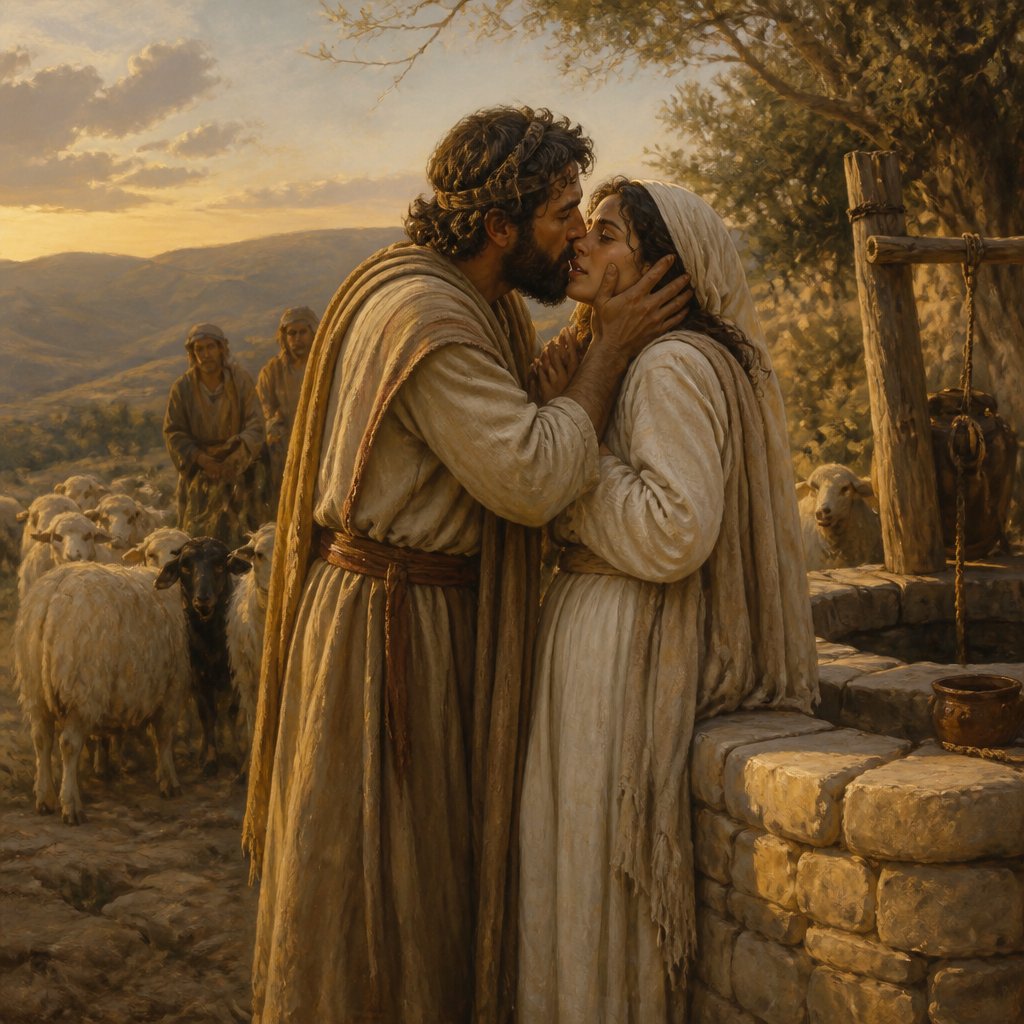
Genesis 29:11 (KJV) "And Jacob kissed Rachel, and lifted up his voice, and wept."
This verse from the book of Genesis captures a deeply emotional and poignant moment in the life of Jacob, one of the central figures in the biblical narrative. In order to fully understand the significance of this verse, it is important to delve into the context in which it is situated and consider the themes and symbolism that are present in this verse.
The story of Jacob is one of great complexity and depth, and it is essential to understand the events leading up to this moment in order to comprehend its full meaning. Jacob, the son of Isaac and the grandson of Abraham, is a pivotal character in the narrative of the Bible. He is known for his cunning and resourcefulness, as well as for his profound spiritual experiences. In this particular passage, Jacob is depicted as a young man who has fled from his home after deceiving his father and his brother, Esau. He is on a journey to his mother’s homeland to find a wife and seek refuge from the wrath of his brother.
Genesis 29 describes Jacob’s arrival in the land of Haran, where he meets Rachel, the daughter of Laban, his uncle. The moment that is captured in this verse is Jacob’s reaction to meeting Rachel for the first time. The act of kissing her and weeping is a powerful expression of his love and longing, and it serves as a pivotal moment in the unfolding of his story.
One of the central themes of this verse is the theme of love. Jacob’s reaction to seeing Rachel for the first time is a profound and deeply emotional expression of love and longing. The act of kissing her and weeping signifies the intensity of his feelings for her, and it is a testament to the power of love to move and transform individuals. This theme of love is foundational to the biblical narrative as a whole, and it is through the lens of love that the story of Jacob and Rachel unfolds.
Furthermore, this verse also speaks to the theme of longing and desire. Jacob’s journey to find a wife is driven by his desire for companionship and love, and his reaction upon meeting Rachel reflects the depth of his longing for connection and intimacy. This theme of longing is a universal human experience, and it resonates deeply with readers as it captures the innate human desire for love and connection.
In addition to the themes of love and longing, this verse also holds deep symbolic significance. The act of kissing and weeping can be interpreted as a symbol of the profound emotional and spiritual experience that Jacob undergoes upon meeting Rachel. It serves as a symbol of the transformative power of love and the ways in which it can move individuals to the depths of their being.
Moreover, the act of weeping can be understood as a symbol of vulnerability and emotional openness. In this moment, Jacob is stripped of his defenses and reveals the depth of his emotions, illustrating the ways in which love can break down barriers and cultivate a sense of openness and vulnerability.
In conclusion, Genesis 29:11 captures a deeply emotional and evocative moment in the narrative of the Bible. Through the themes of love and longing and the powerful symbolism present in this verse, it speaks to the universal human experiences of love, desire, vulnerability, and transformation. As readers engage with this verse, they are invited to contemplate the profound depths of human emotion and the ways in which love has the power to move and transform individuals.
Have questions about Genesis 29:11?
Dive deeper into this scripture with Bible Chat — an AI-powered tool for exploring God's Word through conversation. Ask questions, get context, and grow in your understanding of the Bible.
Get Our Apps


Genesis 29:11 Artwork

Genesis 29:11 - "And Jacob kissed Rachel, and lifted up his voice, and wept."
"And Jacob kissed Rachel, and lifted up his voice, and wept." - Genesis 29:11

Genesis 11:29 - "And Abram and Nahor took them wives: the name of Abram's wife was Sarai; and the name of Nahor's wife, Milcah, the daughter of Haran, the father of Milcah, and the father of Iscah."

Genesis 29:16-35

Jeremiah 29:11

Genesis 29:29 - "And Laban gave to Rachel his daughter Bilhah his handmaid to be her maid."

Genesis 29-2

Genesis 29-6

Genesis 29-5

Genesis 42:29

Genesis 29:1

Genesis 29-7

Genesis 18-29

Genesis 26:29

Genesis 19-29

Genesis 29-8

Genesis 29-3

Genesis 29-4

Genesis 21-29

Genesis 24-29

Jeremiah 29:11-13

Jeremiah 29:11-13

Jeremiah 29:11-13

Jeremiah 29:11-13

Genesis 29:15-30

Jeremiah 29:11

Jeremiah 29:11

Jeremiah 29:11

Haggai 2:9

Matthew 2:9