What does Genesis 28:18 mean?
"And Jacob rose up early in the morning, and took the stone that he had put for his pillows, and set it up for a pillar, and poured oil upon the top of it." - Genesis 28:18
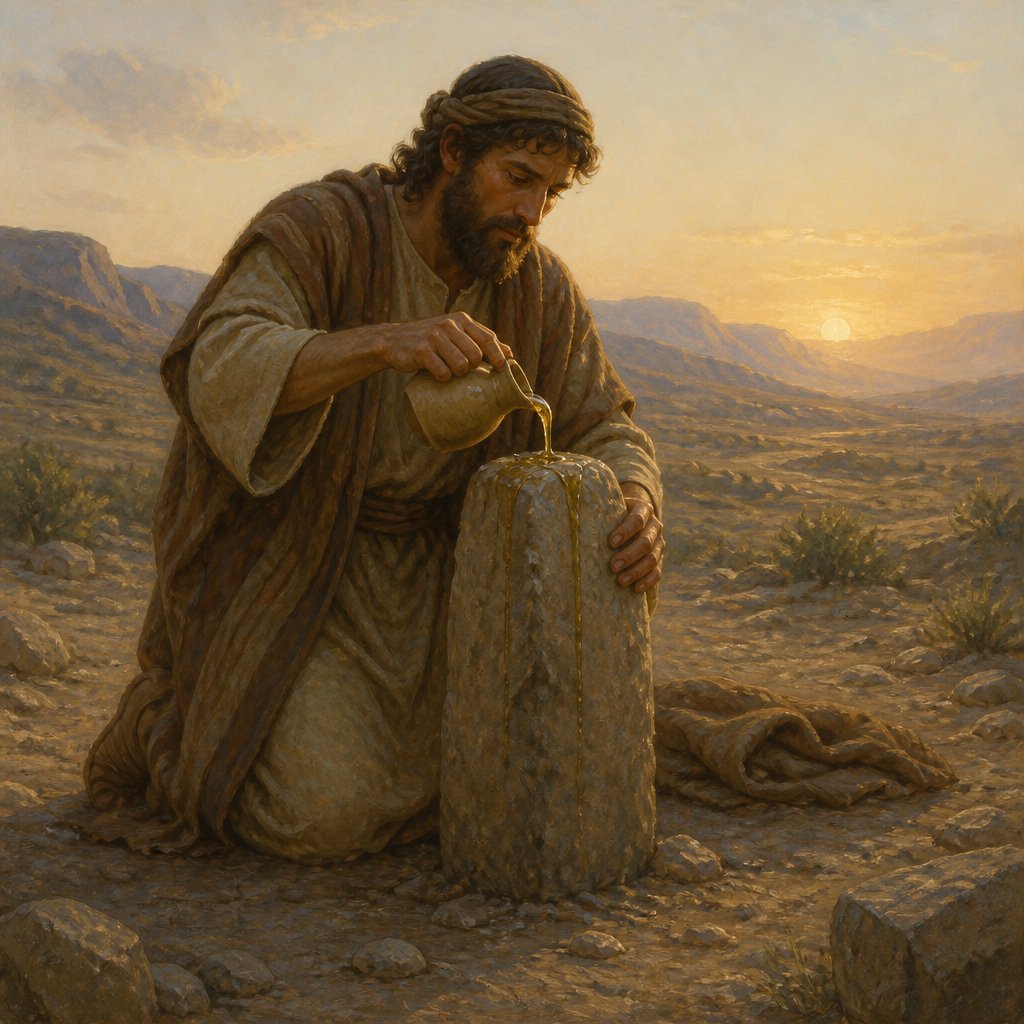
Genesis 28:18 (KJV) reads: "And Jacob rose up early in the morning, and took the stone that he had put for his pillows, and set it up for a pillar, and poured oil upon the top of it."
This verse comes from the story of Jacob's ladder, a well-known story from the book of Genesis in the Bible. In this story, Jacob is on a journey to find a wife and is fleeing from his brother Esau, whom he had deceived and taken his birthright. After traveling for a day, he stops to rest for the night. As he sleeps, he has a dream in which he sees a ladder reaching from earth to heaven, with angels ascending and descending on it. Above the ladder, he sees God, who promises to bless and protect Jacob and his descendants. When Jacob wakes up, he realizes that he is in a holy place and declares that God is there, even though he hadn't known it.
The verse Genesis 28:18 is a pivotal moment in the story, as it marks the beginning of Jacob's transformation. Jacob's response to God's promise highlights his newfound faith and commitment to God. In this verse, Jacob takes the stone that he had used as a pillow and sets it up as a pillar. This act symbolizes Jacob's recognition of the holiness of the place where he had the dream. By anointing the stone with oil, Jacob consecrates it as a marker of the encounter with God.
The theme of transformation is central to the meaning of Genesis 28:18. Jacob's encounter with God leads to a change in his character and his relationship with God. Before this encounter, Jacob was known for his deceitful and conniving nature, but after encountering God, he transforms into a man of faith and integrity. The act of setting up the stone as a pillar can be seen as an outward symbol of Jacob's inner transformation. It signifies his desire to honor God and his commitment to follow God's will.
Another important theme in this verse is the concept of sacred space. Jacob's realization that he had encountered God in a particular place highlights the belief that certain locations can serve as a bridge between the earthly and the divine. By anointing the stone with oil, Jacob marks the spot as a place of significance, a place where he had a powerful spiritual experience. This act demonstrates Jacob's understanding of the sacredness of the place and his desire to honor it as a holy site.
Symbolism also plays a significant role in the interpretation of Genesis 28:18. The stone that Jacob anoints with oil can be seen as a symbol of God's presence and faithfulness. In the Bible, stones are often used as markers of significant events or encounters with God. In this verse, the stone becomes a symbol of Jacob's encounter with God and a reminder of God's promise to bless and protect him.
Overall, Genesis 28:18 is a powerful and meaningful verse that captures the transformation of Jacob's character and his newfound commitment to God. Through his actions, Jacob demonstrates his recognition of the sacredness of the place where he encountered God and his desire to honor it as a holy site. This verse highlights the themes of transformation, sacred space, and symbolism, making it a rich and significant passage in the biblical narrative.
Have questions about Genesis 28:18?
Dive deeper into this scripture with Bible Chat — an AI-powered tool for exploring God's Word through conversation. Ask questions, get context, and grow in your understanding of the Bible.
Get Our Apps


Genesis 28:18 Artwork

Genesis 28:18

Genesis 28:18
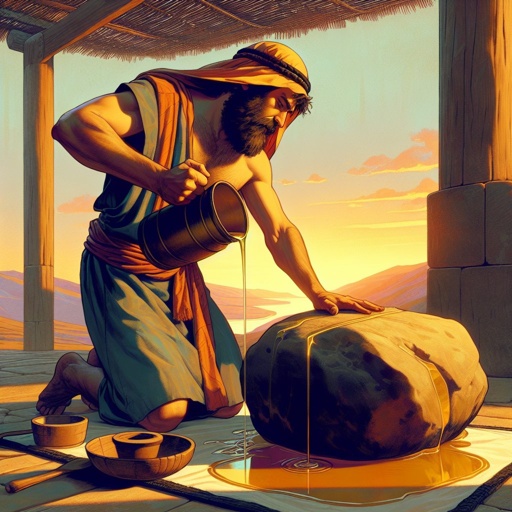
Genesis 28:18 - "And Jacob rose up early in the morning, and took the stone that he had put for his pillows, and set it up for a pillar, and poured oil upon the top of it."
"And Jacob rose up early in the morning, and took the stone that he had put for his pillows, and set it up for a pillar, and poured oil upon the top of it." - Genesis 28:18

Genesis 18-28

Genesis 18:28 - "Peradventure there shall lack five of the fifty righteous: wilt thou destroy all the city for lack of five? And he said, If I find there forty and five, I will not destroy it."
Genesis 18-18

Genesis 28-15

Genesis 28-22

Genesis 28-12

Genesis 28-21

Genesis 28-16

Genesis 28-17

Genesis 24:28

Genesis 21:28

Genesis 28-20

Genesis 28-19

Genesis 28-11

Genesis 28-14

Genesis 28-13

Genesis 19-28

Genesis 28:10

Genesis 10:28 - "And Obal, and Abimael, and Sheba,"

Genesis 36:28 - "The children of Dishan are these; Uz, and Aran."

Exodus 28:18 - "And the second row shall be an emerald, a sapphire, and a diamond."

Genesis 35:28 - "And the days of Isaac were an hundred and fourscore years."

Genesis 21:28 - "And Abraham set seven ewe lambs of the flock by themselves."

Genesis 24-18

Genesis 18-12

Genesis 18-26