What does Genesis 27:27 mean?
"And he came near, and kissed him: and he smelled the smell of his raiment, and blessed him, and said, See, the smell of my son is as the smell of a field which the LORD hath blessed:" - Genesis 27:27
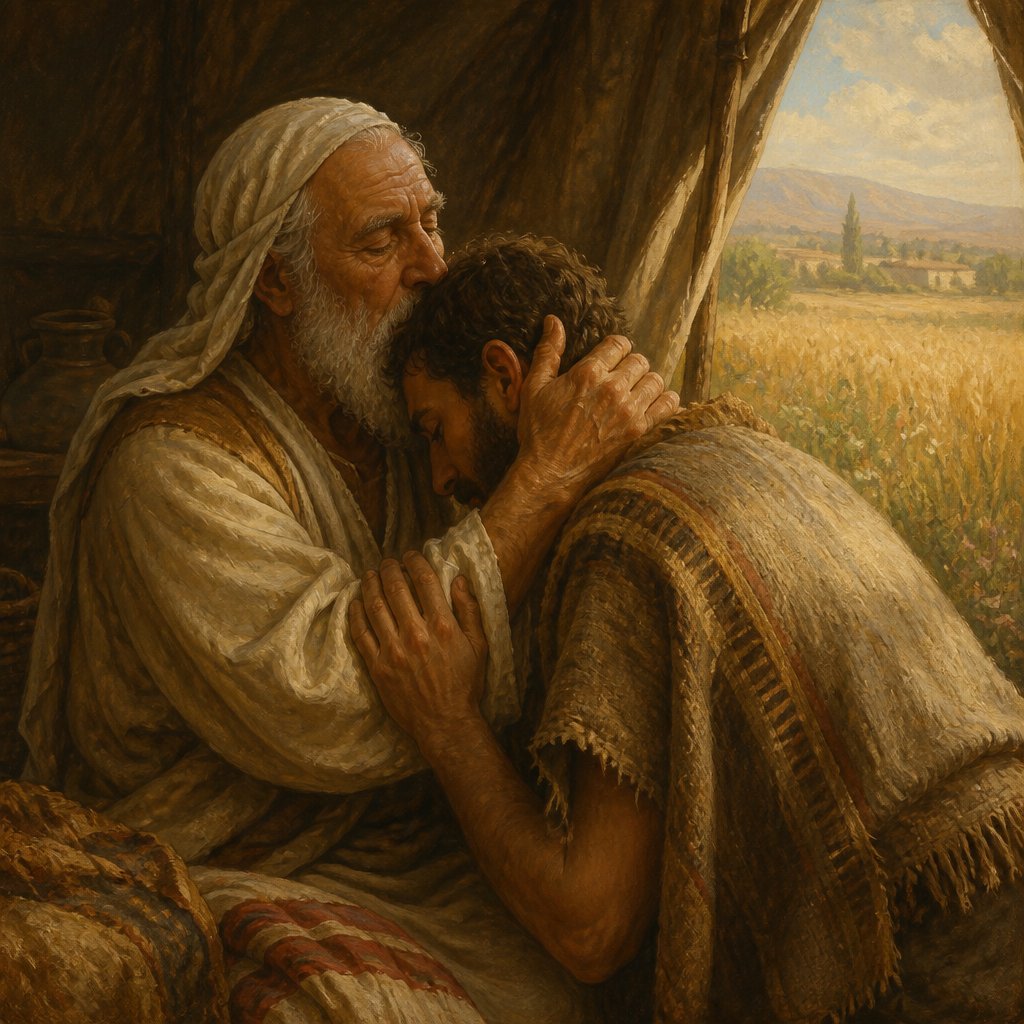
Genesis 27:27 in the King James Version (KJV) reads, "And he came near, and kissed him: and he smelled the smell of his raiment, and blessed him, and said, See, the smell of my son is as the smell of a field which the Lord hath blessed." This verse comes from the story of Jacob and his father, Isaac.
In the context of the story, Isaac, who was old and blind, wanted to bless his firstborn son, Esau, before he died. However, Jacob, the younger son, along with his mother, Rebekah, plotted to deceive Isaac and receive the blessing instead. Rebekah helped Jacob dress in Esau's clothes and put animal skins on his hands to make them feel hairy like Esau's. When Jacob came before Isaac, pretending to be Esau, Isaac was initially suspicious but eventually blessed him, based on the smell and feel of his garments.
The meaning of this verse is multi-layered and rich with symbolism. The act of Isaac sniffing Jacob's garments and proclaiming the smell to be like the fragrance of a blessed field carries deep insights into the spiritual dynamics of the moment. Here, Isaac is using his sense of smell as a way to affirm and confirm the blessing he is about to bestow on his son. The sense of smell is often associated with discernment and spiritual insight in the Bible, and here it plays a crucial role in the passing on of the blessing from father to son.
The smell of Jacob's clothes represents the deception that is taking place, as well as the lengths to which Jacob and Rebekah have gone to secure the blessing. It also serves as a metaphor for the fragrant aroma of a blessed life. The act of smelling in the ancient Near East was a way of discerning and determining the character and worth of an individual or an offering. In this case, Isaac's sense of smell becomes a means of divine discernment, as he is led by the Spirit to bestow the blessing on the son that God has chosen.
The imagery of the "smell of a field which the Lord hath blessed" represents the abundance and fertility that come from God's blessings. It evokes the idea of a field teeming with life, growth, and provision, and it underscores the connection between the physical and the spiritual realms. In this moment, Isaac is recognizing and affirming the divine favor that rests upon Jacob, in spite of the deception that has taken place.
Furthermore, this verse speaks to the theme of God's sovereignty and His ability to work through flawed and deceitful individuals to fulfill His purposes. Jacob's deception and manipulation are not endorsed or justified, but they do not thwart God's plan for him. This story highlights the complex interplay of human agency and divine providence, as well as the way in which God's blessings can transcend the limitations of our own understanding and actions.
In conclusion, Genesis 27:27 presents a profound and layered depiction of the dynamics of blessing, discernment, and divine favor. It invites readers to contemplate the role of the senses in spiritual discernment, the nuances of human behavior and divine purpose, and the richness of God's blessings that extend beyond our understanding. This verse stands as a poignant and evocative reminder of the ways in which God's grace and providence can permeate even the most complicated and imperfect aspects of our lives.
Have questions about Genesis 27:27?
Dive deeper into this scripture with Bible Chat — an AI-powered tool for exploring God's Word through conversation. Ask questions, get context, and grow in your understanding of the Bible.
Get Our Apps


Genesis 27:27 Artwork

Genesis 27:27 - "And he came near, and kissed him: and he smelled the smell of his raiment, and blessed him, and said, See, the smell of my son is as the smell of a field which the LORD hath blessed:"

Genesis 27:27 KJV And he came near, and kissed him: and he smelled the smell of his raiment, and blessed him, and said, See, the smell of my son is as the smell of a field which the LORD hath blessed:
"And he came near, and kissed him: and he smelled the smell of his raiment, and blessed him, and said, See, the smell of my son is as the smell of a field which the LORD hath blessed:" - Genesis 27:27

Genesis 27:32

Genesis 27:5

Genesis 25-27

Genesis 17-27

Genesis 18-27

Genesis 24-27

Genesis 21-27

Genesis 19-27

Genesis 10:27 - "And Hadoram, and Uzal, and Diklah,"

Genesis 27:10 KJV

Genesis 27:18-19

Genesis 27:1-3

Genesis 36:27 - "The children of Ezer are these; Bilhan, and Zaavan, and Akan."

"And Hadoram, and Uzal, and Diklah," - Genesis 10:27

Genesis 38:27 - "¶ And it came to pass in the time of her travail, that, behold, twins were in her womb."

Genesis 27:44 - "And tarry with him a few days, until thy brother's fury turn away;"

Genesis 32:27 - "And he said unto him, What is thy name? And he said, Jacob."

Genesis 34:27 - "The sons of Jacob came upon the slain, and spoiled the city, because they had defiled their sister."

Genesis 27:35 - "And he said, Thy brother came with subtilty, and hath taken away thy blessing."

Genesis 5:27 - "And all the days of Methuselah were nine hundred sixty and nine years: and he died."

Genesis 19:27 - "¶ And Abraham gat up early in the morning to the place where he stood before the LORD:"

Genesis 27:28 - "Therefore God give thee of the dew of heaven, and the fatness of the earth, and plenty of corn and wine:"

Genesis 11:27 - "¶ Now these are the generations of Terah: Terah begat Abram, Nahor, and Haran; and Haran begat Lot."

Philippians 2:7

Philippians 2:7

Philippians 2:7

Philippians 2:7