What does Genesis 1:3 mean?
"And God said, Let there be light: and there was light." - Genesis 1:3
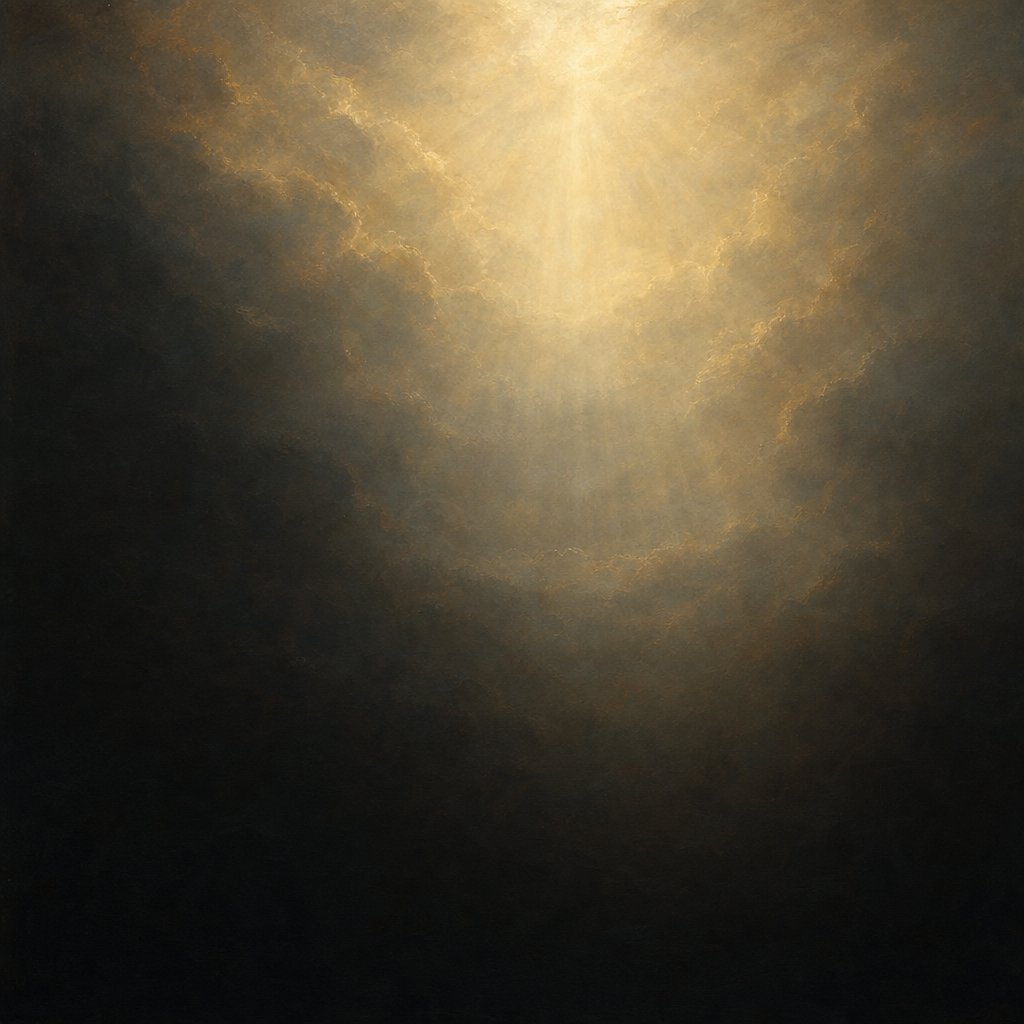
Genesis 1:3 in the KJV reads, “And God said, Let there be light: and there was light.” In the flow of Genesis 1, this sentence stands at the beginning of God’s ordering work in creation. Verses 1 and 2 set the scene: “In the beginning God created the heaven and the earth,” yet “the earth was without form, and void; and darkness was upon the face of the deep. And the Spirit of God moved upon the face of the waters.” The world is presented as real and created, but unformed and unfilled, covered in darkness. Into that darkness, the first recorded divine act of shaping the created order is not a struggle, not a crafting with tools, and not a negotiation with another power, but a word. “And God said.” Genesis 1:3 introduces the pattern that will govern the whole chapter: God speaks, and what He speaks comes to pass. The significance, in KJV terms, lies in the immediacy and authority of that speech: “Let there be light: and there was light.” The command and the fulfillment are joined without delay, emphasizing that creation responds directly to God’s voice.
The verse highlights a central theme of Genesis 1: God creates and governs by His word. The repeated “And God said” throughout the chapter makes creation a deliberate, ordered, purposeful act rather than an accident or a contest. In Genesis 1:3 this begins with “light,” which functions both as a literal element within the created world and as a symbol of the order and goodness God is introducing into what is described as “darkness.” In the narrative, darkness is already present in verse 2, and it is not portrayed as a rival deity but as part of the undeveloped condition of the world. When God says, “Let there be light,” the first movement of creation’s ordering is the overcoming of darkness by illumination. The verse therefore marks the opening of intelligibility and distinction, because light makes seeing possible and prepares the way for the separations and structures that follow.
The immediate context shows that this “light” is the first step toward a world that can be measured and inhabited. After Genesis 1:3, the KJV says, “And God saw the light, that it was good: and God divided the light from the darkness.” Then, “God called the light Day, and the darkness he called Night. And the evening and the morning were the first day.” So Genesis 1:3 is not merely about brightness; it initiates the division that becomes the rhythm of time as human beings will experience it. Light is tied to the establishment of “Day” and “Night,” and thus to the very idea of “the first day.” In this way, Genesis 1:3 begins the ordering of creation into a structured sequence. It also shows that God’s work is evaluative: God “saw” and pronounced it “good.” Light, then, is presented as a good gift, and its goodness is not defined by human preference but by God’s judgment.
Symbolically, light in Scripture often carries the sense of revelation, truth, and life, because light makes what is hidden visible and provides the conditions under which living things can flourish. Even within Genesis 1 itself, light’s role as the first created element sets it as a foundational blessing. It is the opposite of the obscurity and formlessness implied by “darkness… upon the face of the deep,” and it signals that God’s creative intent is not chaos but clarity, not abandonment but purposeful presence. The wording “And God said” also suggests that creation is responsive and that reality is, at its root, addressed by God. The verse portrays God as personal and sovereign: He speaks, and the world is not only made but made in an ordered way that corresponds to His will.
The verse’s simplicity also carries theological weight. It depicts creation as effortless for God: no intermediary, no resistance is described, only the authoritative command and the accomplished result, “and there was light.” The power is located in God Himself rather than in material processes or pre-existing forces that constrain Him. The light is not summoned from some independent source; it exists because God wills it to exist. This sets the tone for the rest of the chapter, where seas, skies, land, plants, lights in the firmament, creatures, and finally man are all brought forth by the same pattern of divine speech. Genesis 1:3, as the first instance of that pattern, functions like a thesis statement: God is the One who speaks order into being.
In terms of significance, Genesis 1:3 is the first clear moment in the biblical story where God’s word turns the situation from darkness toward a world that can be inhabited and blessed. It begins the movement from “without form, and void” toward a cosmos shaped by distinction, goodness, and purpose. It also prepares for the later biblical use of light as an image of God’s saving and revealing work. But even at the level of Genesis 1 alone, its meaning is already profound: where there is darkness, God speaks; where there is no created illumination, God gives it; and what God commands, creation becomes. The verse presents the beginning of creation’s order as a divine gift spoken into existence, establishing from the first day that the world is not self-made, but made by the voice and will of God.
Have questions about Genesis 1:3?
Dive deeper into this scripture with Bible Chat — an AI-powered tool for exploring God's Word through conversation. Ask questions, get context, and grow in your understanding of the Bible.
Get Our Apps


Genesis 1:3 Artwork

Genesis 1:3 - "And God said, Let there be light: and there was light."

Create a picture of Genesis 1:3

Entonces Dios dijo: «Que haya luz»; y hubo luz. Génesis 1:3

Entonces Dios dijo: «Que haya luz»; y hubo luz. Génesis 1:3

"And God said, Let there be light: and there was light." - Genesis 1:3

"And God said, Let there be light: and there was light." - Genesis 1:3

Genesis 1:3 world covered in water, with bright light shining from God, no sun no moon

Genesis 1:3 world covered in water as seen from space, with bright light shining from God, black background

Genesis 3:16

Genesis 1:2 3

Genesis 21:1-3

Genesis 27:1-3

Genesis 12:1-3

Genesis 21:1-3

Genesis 3

Genesis 3:8

Genesis 3:24
Genesis 19-3

Genesis 18-3

Genesis 3:8
Genesis 20-3

Genesis 3:8

Genesis 16:3

Genesis 21-3

Genesis 3:23

Genesis 24-3

Genesis 3:7

GENESIS 3:7

Genesis 16:3

Genesis 3:7