What does Galatians 4:10 mean?
"Ye observe days, and months, and times, and years." - Galatians 4:10
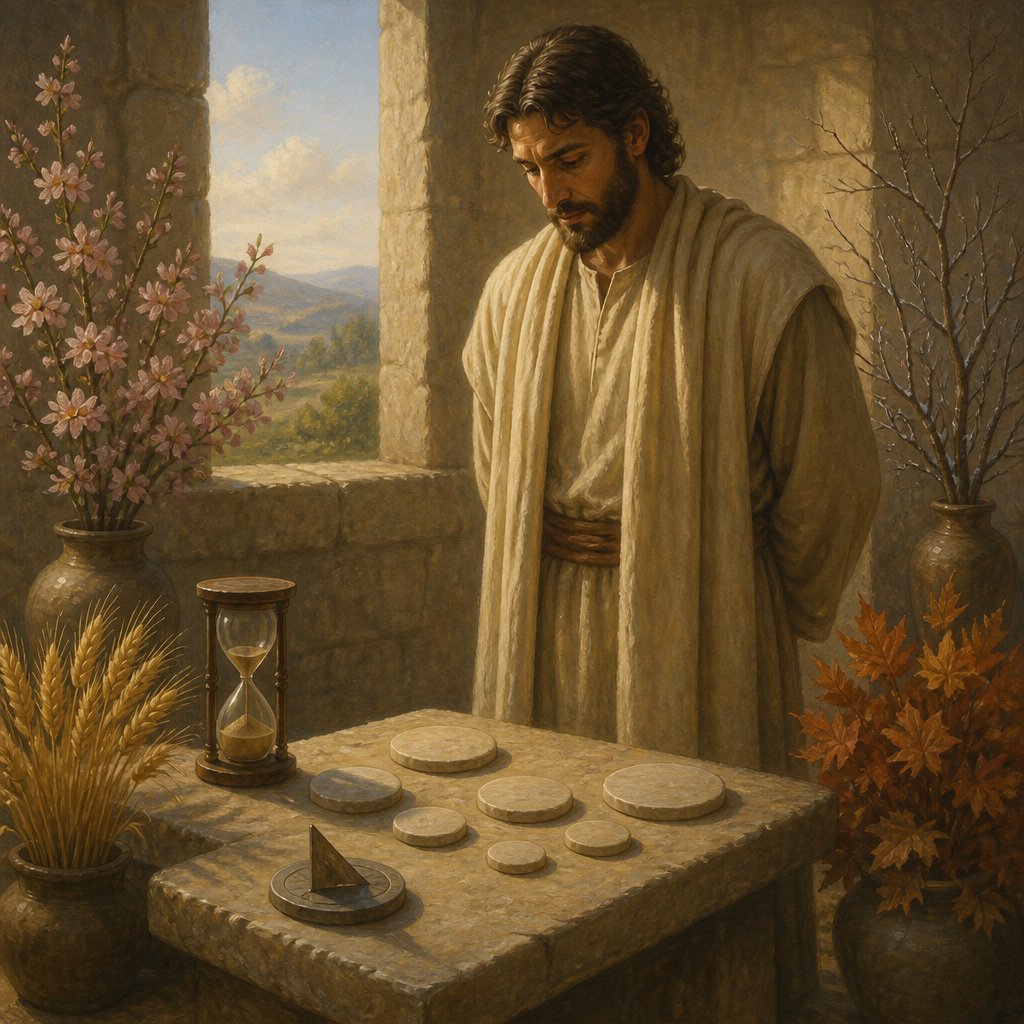
Galatians 4:10 in the King James Version of the Bible reads, "Ye observe days, and months, and times, and years."
To fully understand the meaning of this verse, it is important to consider the historical and cultural context in which it was written. The book of Galatians was written by the apostle Paul to the churches in Galatia, a region in modern-day Turkey. Paul's letter to the Galatians addresses the issue of legalism and the false teaching that Gentile Christians needed to observe Jewish religious customs, such as circumcision and keeping the Mosaic law, in order to be truly saved.
In Galatians 4:10, Paul is admonishing the Galatian Christians for returning to a legalistic approach to their faith. The phrase "ye observe days, and months, and times, and years" refers to the religious festivals and observances that were part of the Jewish calendar. These observances were tied to the Mosaic law and were considered necessary for Jews to maintain a right relationship with God. However, Paul is making it clear that these observances are not essential for Gentile believers in Christ.
The theme of freedom in Christ is central to this verse. Paul's letter to the Galatians emphasizes the truth that believers are justified by faith in Christ alone, apart from the works of the law. In Galatians 5:1, Paul writes, "Stand fast therefore in the liberty wherewith Christ hath made us free, and be not entangled again with the yoke of bondage." The observance of religious festivals and observances is a form of bondage that Paul exhorts the Galatian Christians to reject in favor of the freedom found in Christ.
The verse also addresses the issue of spiritual maturity. The Galatian Christians were being drawn back into a legalistic mindset, which Paul equates with being "children" in the faith. In the preceding verses, Paul uses the analogy of a child who is under guardians and tutors until the time appointed by the Father. He contrasts this with the freedom and full rights of an adult son. The observance of religious rituals and festivals is a sign of spiritual immaturity, as it reflects a lack of understanding of the fullness of the gospel and the freedom that comes through faith in Christ.
In terms of symbolism, the days, months, times, and years mentioned in the verse can be seen as representing the religious rituals and observances that are tied to the Mosaic law. These observances were markers of time and were meant to remind the Jewish people of their covenant relationship with God. However, for the Gentile Christians in Galatia, who were not under the Mosaic law, these observances held no spiritual significance. Paul is warning against the danger of being ensnared by religious traditions and practices that do not align with the truth of the gospel.
In conclusion, Galatians 4:10 carries a powerful message about the sufficiency of Christ and the freedom that believers have in Him. It warns against legalism and the tendency to rely on religious rituals and observances for spiritual fulfillment. Instead, Paul encourages the Galatian Christians to stand fast in the liberty that comes through faith in Christ alone. This verse serves as a reminder for believers to mature in their faith and to reject anything that would lead them back into bondage.
Have questions about Galatians 4:10?
Dive deeper into this scripture with Bible Chat — an AI-powered tool for exploring God's Word through conversation. Ask questions, get context, and grow in your understanding of the Bible.
Get Our Apps


Galatians 4:10 Artwork

Galatians 4:10 - "Ye observe days, and months, and times, and years."
"Ye observe days, and months, and times, and years." - Galatians 4:10

galatians 4:4

Galatians 6:4

Galatians 6:4

Galatians 6:4

Galatians 6:4

Galatians 6:4

Galatians 6:4

Galatians 4:13

Galatians 4:24-27

Galatians 6:4

Galatians 4:13

Galatians 6:4

Galatians 6:4

Galatians 4:13

Galatians 6: 4-5

Galatians 6: 4-5

Galatians 6: 4-5

Galatians 4:28 - "Now we, brethren, as Isaac was, are the children of promise."

Galatians 4:31 - "So then, brethren, we are not children of the bondwoman, but of the free."

Galatians 4:4 - "But when the fulness of the time was come, God sent forth his Son, made of a woman, made under the law,"

Galatians 4:26 - "But Jerusalem which is above is free, which is the mother of us all."

Galatians 4:2 - "But is under tutors and governors until the time appointed of the father."

Galatians 4:22 - "For it is written, that Abraham had two sons, the one by a bondmaid, the other by a freewoman."

Galatians 4:5 - "To redeem them that were under the law, that we might receive the adoption of sons."

Galatians 3:4 - "Have ye suffered so many things in vain? if it be yet in vain."

Galatians 4:23 - "But he who was of the bondwoman was born after the flesh; but he of the freewoman was by promise."

Galatians 4:21 - "Tell me, ye that desire to be under the law, do ye not hear the law?"

Galatians 2:10 - "Only they would that we should remember the poor; the same which I also was forward to do."