What does Ezra 9:9 mean?
"For we were bondmen; yet our God hath not forsaken us in our bondage, but hath extended mercy unto us in the sight of the kings of Persia, to give us a reviving, to set up the house of our God, and to repair the desolations thereof, and to give us a wall in Judah and in Jerusalem." - Ezra 9:9
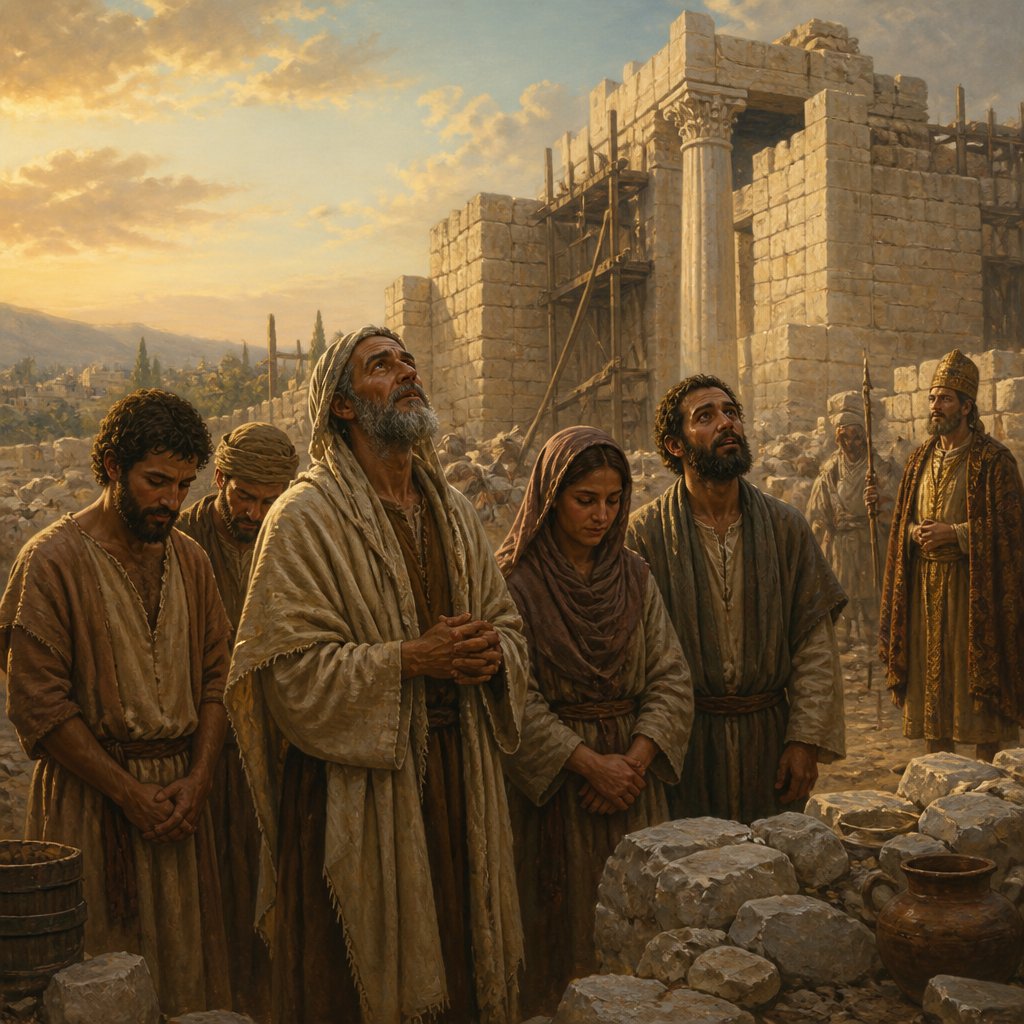
Ezra 9:9 from the King James Version (KJV) of the Bible reads: "For we were bondmen; yet our God hath not forsaken us in our bondage, but hath extended mercy unto us in the sight of the kings of Persia, to give us a reviving, to set up the house of our God, and to repair the desolations thereof, and to give us a wall in Judah and in Jerusalem."
This verse comes from the book of Ezra in the Old Testament. Ezra was a scribe and priest who played a crucial role in the restoration of the Israelites after their exile in Babylon. The context of this verse is Ezra's prayer of confession and repentance for the sins of the Israelites, specifically the intermarriage between the Israelites and the surrounding pagan nations. The Israelites had been unfaithful to God's commandments and had broken their covenant with Him. As a result, Ezra was seeking God's mercy and forgiveness for the Israelites' disobedience.
The verse begins with a recognition of the Israelites' past as bondmen or slaves. This serves as a reminder of their history of oppression and bondage, and the deliverance that God had provided for them. Despite their past, the Israelites acknowledge that God had not forsaken them in their bondage. This demonstrates the faithfulness and mercy of God, even in the midst of their sinful actions. The Israelites recognize that it was only by God's grace that they had not been completely abandoned in their state of disobedience.
The verse further states that God had extended mercy to them in the sight of the kings of Persia. This reference to the kings of Persia highlights the sovereignty of God in orchestrating the events of history for the benefit of His people. It also underscores the theme of divine providence, as God had influenced the hearts of the Persian kings to support the restoration of the Israelites and the reconstruction of the temple in Jerusalem.
The verse then outlines the specific blessings and provisions that God had granted to the Israelites. It speaks of God's mercy in giving them a "reviving," indicating a restoration and renewal of their spiritual life and relationship with Him. Additionally, it mentions the rebuilding of the house of God and the repair of its desolations. This symbolizes the reestablishment of the Israelites' worship and devotion to God, as well as the physical restoration of the temple as a central symbol of their faith.
The verse also mentions the provision of a wall in Judah and Jerusalem. This symbolizes the security and protection that God had provided for His people as they sought to reestablish themselves in their homeland. This imagery of a wall also carries spiritual significance, representing God's defense and fortification against external threats and spiritual attacks. It speaks to the idea of God's faithfulness in preserving and guarding His people as they seek to remain faithful to Him.
Overall, Ezra 9:9 is a powerful and poignant expression of the Israelites' acknowledgment of their past transgressions and their humble plea for God's mercy and restoration. It underscores themes of God's faithfulness, mercy, and providence, as well as the Israelites' need for repentance and renewal. It serves as a reminder of the consequences of disobedience and the graciousness of God in inviting His people to return to Him. The verse holds relevance for believers today, serving as a call to seek God's mercy and restoration when faced with the consequences of sin, and to trust in His faithfulness to revive and renew His people.
Have questions about Ezra 9:9?
Dive deeper into this scripture with Bible Chat — an AI-powered tool for exploring God's Word through conversation. Ask questions, get context, and grow in your understanding of the Bible.
Get Our Apps


Ezra 9:9 Artwork

Ezra 9:9 - "For we were bondmen; yet our God hath not forsaken us in our bondage, but hath extended mercy unto us in the sight of the kings of Persia, to give us a reviving, to set up the house of our God, and to repair the desolations thereof, and to give us a wall in Judah and in Jerusalem."
"For we were bondmen; yet our God hath not forsaken us in our bondage, but hath extended mercy unto us in the sight of the kings of Persia, to give us a reviving, to set up the house of our God, and to repair the desolations thereof, and to give us a wall in Judah and in Jerusalem." - Ezra 9:9

Ezra 9:6

Ezra 3:9

Ezra 9:3

Ezra 9:1

Ezra 9:1

Ezra 9:1

Ezra 9:1-2

Ezra 9:13-15

Ezra 9:1-2

Ezra 2:9 - "The children of Zaccai, seven hundred and threescore."

Ezra 8:9 - "Of the sons of Joab; Obadiah the son of Jehiel, and with him two hundred and eighteen males."

Ezra 1:9 - "And this is the number of them: thirty chargers of gold, a thousand chargers of silver, nine and twenty knives,"

"The children of Zaccai, seven hundred and threescore." - Ezra 2:9

Ezra 9:10 - "And now, O our God, what shall we say after this? for we have forsaken thy commandments,"

Ezra 5:9 - "Then asked we those elders, and said unto them thus, Who commanded you to build this house, and to make up these walls?"

Ezra 4:9 - "Then wrote Rehum the chancellor, and Shimshai the scribe, and the rest of their companions; the Dinaites, the Apharsathchites, the Tarpelites, the Apharsites, the Archevites, the Babylonians, the Susanchites, the Dehavites, and the Elamites,"

Ezra 9:3 - "And when I heard this thing, I rent my garment and my mantle, and plucked off the hair of my head and of my beard, and sat down astonied."

Ezra 3:9 - "Then stood Jeshua with his sons and his brethren, Kadmiel and his sons, the sons of Judah, together, to set forward the workmen in the house of God: the sons of Henadad, with their sons and their brethren the Levites."

Ezra 9:2 - "For they have taken of their daughters for themselves, and for their sons: so that the holy seed have mingled themselves with the people of those lands: yea, the hand of the princes and rulers hath been chief in this trespass."

"Of the sons of Joab; Obadiah the son of Jehiel, and with him two hundred and eighteen males." - Ezra 8:9

Ezra 9:4 - "Then were assembled unto me every one that trembled at the words of the God of Israel, because of the transgression of those that had been carried away; and I sat astonied until the evening sacrifice."

Ezra 9:15 - "O LORD God of Israel, thou art righteous: for we remain yet escaped, as it is this day: behold, we are before thee in our trespasses: for we cannot stand before thee because of this."
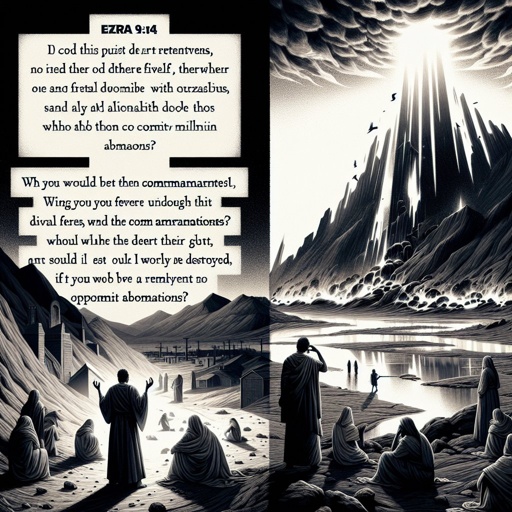
Ezra 9:14 - "Should we again break thy commandments, and join in affinity with the people of these abominations? wouldest not thou be angry with us till thou hadst consumed us, so that there should be no remnant nor escaping?"

"And this is the number of them: thirty chargers of gold, a thousand chargers of silver, nine and twenty knives," - Ezra 1:9

Ezra 7:9 - "For upon the first day of the first month began he to go up from Babylon, and on the first day of the fifth month came he to Jerusalem, according to the good hand of his God upon him."

Ezra 9:5 - "¶ And at the evening sacrifice I arose up from my heaviness; and having rent my garment and my mantle, I fell upon my knees, and spread out my hands unto the LORD my God,"

Ezra 9:6 - "And said, O my God, I am ashamed and blush to lift up my face to thee, my God: for our iniquities are increased over our head, and our trespass is grown up unto the heavens."

Ezra 9:13 - "And after all that is come upon us for our evil deeds, and for our great trespass, seeing that thou our God hast punished us less than our iniquities deserve, and hast given us such deliverance as this;"