What does Ezra 9:7 mean?
"Since the days of our fathers have we been in a great trespass unto this day; and for our iniquities have we, our kings, and our priests, been delivered into the hand of the kings of the lands, to the sword, to captivity, and to a spoil, and to confusion of face, as it is this day." - Ezra 9:7
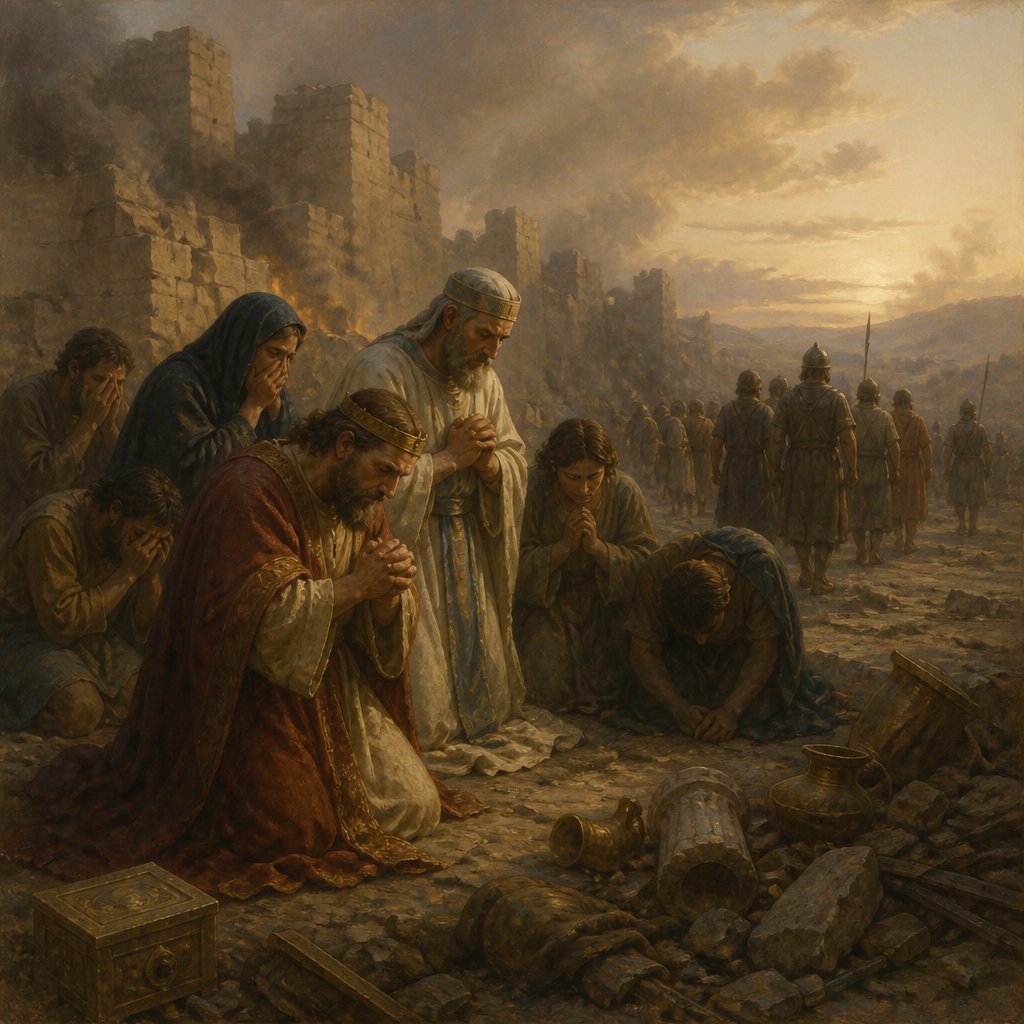
In Ezra 9:7, the King James Version (KJV) of the Bible states, "Since the days of our fathers have we been in a great trespass unto this day; and for our iniquities have we, our kings, and our priests, been delivered into the hand of the kings of the lands, to the sword, to captivity, and to a spoil, and to confusion of face, as it is this day."
This verse comes from the book of Ezra, which is a historical and prophetic book in the Old Testament. It is believed to have been written by the scribe and priest Ezra, and it recounts the events surrounding the return of the Israelites from Babylonian captivity and the rebuilding of the temple in Jerusalem. In this particular verse, Ezra is lamenting the sins of the Israelites and their leaders, acknowledging the consequences of their disobedience to God.
The theme of sin and its consequences is central to this verse. The Israelites had repeatedly disobeyed God's commands, leading to their exile and subjugation by foreign powers. The verse emphasizes the idea that the Israelites' suffering was a direct result of their own actions. This theme of sin and its repercussions is a recurring one throughout the Bible, serving as a warning to believers about the dangers of straying from God's will.
Another important theme in this verse is that of repentance and humility. Ezra's acknowledgement of the Israelites' transgressions and his plea for forgiveness demonstrate a profound sense of remorse and humility. He recognizes the gravity of the situation and takes responsibility for the sins of his people, acknowledging that they have brought shame and disgrace upon themselves. This act of contrition is an important aspect of the Israelites' eventual restoration and reconciliation with God.
Contextually, this verse comes at a crucial moment in the narrative of Ezra. The Israelites have returned to Jerusalem from their exile in Babylon, only to discover that the people who remained in the land have intermarried with the surrounding nations and adopted their pagan practices. This verse is part of Ezra's prayer of confession and repentance, as he grapples with the enormity of the people's transgressions and seeks God's mercy and forgiveness.
The symbolism in this verse lies in the imagery of being "delivered into the hand of the kings of the lands, to the sword, to captivity, and to a spoil, and to confusion of face." This imagery represents the Israelites' experience of being conquered and subjugated, as well as the shame and disgrace that accompanied their disobedience. It serves as a powerful reminder of the consequences of turning away from God and the fragility of human power in the face of divine judgment.
Overall, Ezra 9:7 is a poignant reflection on the nature of sin, repentance, and God's mercy. It serves as a reminder of the importance of remaining faithful to God and the consequences of straying from His path. It also highlights the power of confession and contrition in seeking reconciliation with God. As such, it continues to hold relevance for believers today, offering a timeless lesson in the importance of humility, repentance, and the enduring nature of God's grace.
Have questions about Ezra 9:7?
Dive deeper into this scripture with Bible Chat — an AI-powered tool for exploring God's Word through conversation. Ask questions, get context, and grow in your understanding of the Bible.
Get Our Apps


Ezra 9:7 Artwork

Ezra 9:7 - "Since the days of our fathers have we been in a great trespass unto this day; and for our iniquities have we, our kings, and our priests, been delivered into the hand of the kings of the lands, to the sword, to captivity, and to a spoil, and to confusion of face, as it is this day."
"Since the days of our fathers have we been in a great trespass unto this day; and for our iniquities have we, our kings, and our priests, been delivered into the hand of the kings of the lands, to the sword, to captivity, and to a spoil, and to confusion of face, as it is this day." - Ezra 9:7

Ezra 9:6

Ezra 3:9

Ezra 7:9 - "For upon the first day of the first month began he to go up from Babylon, and on the first day of the fifth month came he to Jerusalem, according to the good hand of his God upon him."

Ezra 9:3

Ezra 9:1

Ezra 9:1

Ezra 9:1

Ezra 7:12 - "Artaxerxes, king of kings, unto Ezra the priest, a scribe of the law of the God of heaven, perfect peace, and at such a time."

Ezra 9:1-2

Ezra 9:13-15

Ezra 7:10 - "For Ezra had prepared his heart to seek the law of the LORD, and to do it, and to teach in Israel statutes and judgments."

Ezra 7:1 - "Now after these things, in the reign of Artaxerxes king of Persia, Ezra the son of Seraiah, the son of Azariah, the son of Hilkiah,"

Ezra 9:1-2

Ezra 2:9 - "The children of Zaccai, seven hundred and threescore."

Ezra 7:11 - "¶ Now this is the copy of the letter that the king Artaxerxes gave unto Ezra the priest, the scribe, even a scribe of the words of the commandments of the LORD, and of his statutes to Israel."

Ezra 7:2 - "The son of Shallum, the son of Zadok, the son of Ahitub,"

Ezra 7:4 - "The son of Zerahiah, the son of Uzzi, the son of Bukki,"

Ezra 7:3 - "The son of Amariah, the son of Azariah, the son of Meraioth,"

Ezra 2:7 - "The children of Elam, a thousand two hundred fifty and four."
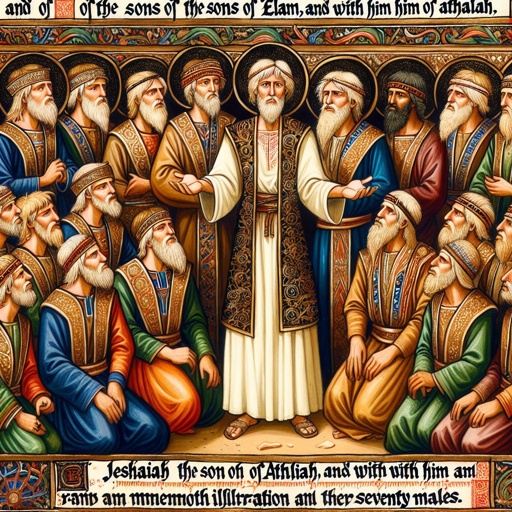
Ezra 8:7 - "And of the sons of Elam; Jeshaiah the son of Athaliah, and with him seventy males."

Ezra 7:8 - "And he came to Jerusalem in the fifth month, which was in the seventh year of the king."

Ezra 7:21 - "And I, even I Artaxerxes the king, do make a decree to all the treasurers which are beyond the river, that whatsoever Ezra the priest, the scribe of the law of the God of heaven, shall require of you, it be done speedily,"

Ezra 7:7 - "And there went up some of the children of Israel, and of the priests, and the Levites, and the singers, and the porters, and the Nethinims, unto Jerusalem, in the seventh year of Artaxerxes the king."

Ezra 8:9 - "Of the sons of Joab; Obadiah the son of Jehiel, and with him two hundred and eighteen males."

Ezra 7:5 - "The son of Abishua, the son of Phinehas, the son of Eleazar, the son of Aaron the chief priest:"

Ezra 1:9 - "And this is the number of them: thirty chargers of gold, a thousand chargers of silver, nine and twenty knives,"

Ezra 7:6 - "This Ezra went up from Babylon; and he was a ready scribe in the law of Moses, which the LORD God of Israel had given: and the king granted him all his request, according to the hand of the LORD his God upon him."

"The children of Zaccai, seven hundred and threescore." - Ezra 2:9