What does Ezra 9:2 mean?
"For they have taken of their daughters for themselves, and for their sons: so that the holy seed have mingled themselves with the people of those lands: yea, the hand of the princes and rulers hath been chief in this trespass." - Ezra 9:2
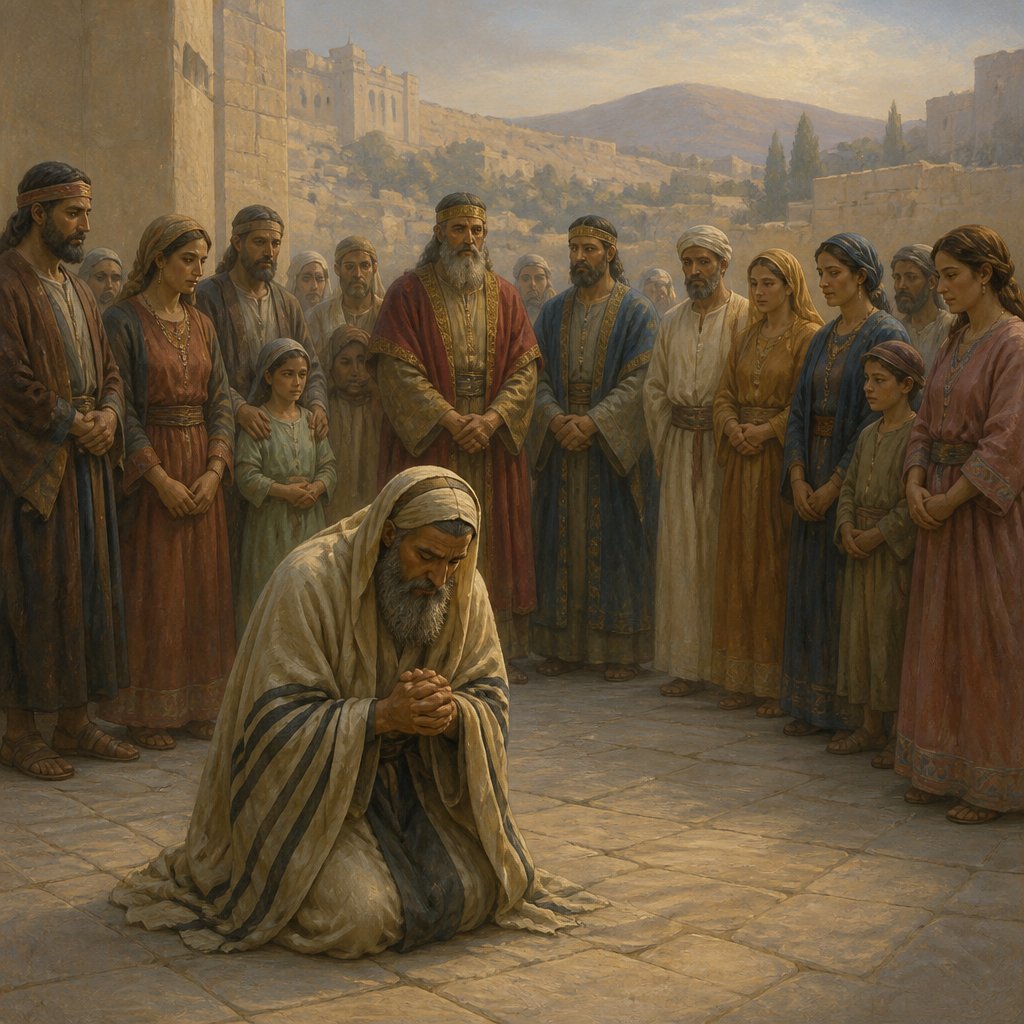
Ezra 9:2 (KJV) states, "For they have taken of their daughters for themselves, and for their sons: so that the holy seed have mingled themselves with the people of those lands: yea, the hand of the princes and rulers hath been chief in this trespass."
This verse comes from the book of Ezra, which tells the story of the restoration of the Jewish community in Jerusalem after their exile in Babylon. The verse reflects the struggle of the Jewish community to maintain their identity and purity while living amongst foreign nations.
The context of this verse is important for understanding its meaning. The Jewish people had returned to Jerusalem from Babylon, where they had been in exile for 70 years. They were eager to rebuild the temple and reestablish their religious practices. However, they faced many challenges, including opposition from the surrounding nations and the temptation to intermarry with the local inhabitants.
The verse begins by condemning the Jewish people for taking daughters from the surrounding nations for themselves and their sons. This intermarriage was a direct violation of the Law of Moses, which forbade the Israelites from intermingling with the pagan nations around them. The reason for this prohibition was to maintain the purity of the Jewish community and to prevent them from being led astray by the worship of foreign gods.
The verse goes on to say that "the holy seed have mingled themselves with the people of those lands." This suggests that the purity of the Jewish people, who were descended from the patriarchs and chosen by God to be a holy nation, has been compromised by intermarriage. This was a grave concern for the religious leaders and a threat to the spiritual and cultural integrity of the Jewish community.
The verse also points out that "the hand of the princes and rulers hath been chief in this trespass." This implies that the leaders and influential members of the Jewish community were complicit in this sin. Instead of upholding the religious laws and setting a good example for the people, they were actively participating in practices that led to the corruption of their community.
This verse touches on several important themes that are relevant not only to the historical context of the Jewish people in the book of Ezra but also to universal moral and spiritual principles. One of the key themes is the tension between maintaining cultural identity and engaging with the surrounding world. The Jewish people faced the challenge of preserving their unique religious and cultural heritage while living in a pluralistic society with different customs and beliefs. This tension continues to be relevant for many religious and cultural communities today.
Another theme is the importance of upholding religious laws and moral values. The verse emphasizes the seriousness of violating the commandments of God and the responsibility of leaders to uphold these laws. It also highlights the impact of individual actions on the community as a whole, and the need for accountability and repentance when wrongdoing occurs.
The symbolism in this verse is also significant. The "holy seed" represents the purity and sanctity of the Jewish people, which is symbolically linked to their ancestry and covenant relationship with God. The mingling of this holy seed with the people of the surrounding lands symbolizes the dilution and contamination of their identity and faith. The leaders' involvement in this trespass symbolizes the corruption of authority and the failure of moral leadership.
In conclusion, Ezra 9:2 is a powerful reminder of the challenges and responsibilities of maintaining cultural and religious identity in a diverse and changing world, as well as the consequences of moral compromise and the importance of upholding religious laws. It provides a window into the struggles of the Jewish community in ancient times and raises timeless questions about cultural preservation, moral integrity, and the impact of individual actions on the community.
Have questions about Ezra 9:2?
Dive deeper into this scripture with Bible Chat — an AI-powered tool for exploring God's Word through conversation. Ask questions, get context, and grow in your understanding of the Bible.
Get Our Apps


Ezra 9:2 Artwork

Ezra 9:2 - "For they have taken of their daughters for themselves, and for their sons: so that the holy seed have mingled themselves with the people of those lands: yea, the hand of the princes and rulers hath been chief in this trespass."
"For they have taken of their daughters for themselves, and for their sons: so that the holy seed have mingled themselves with the people of those lands: yea, the hand of the princes and rulers hath been chief in this trespass." - Ezra 9:2

Ezra 9:1-2

Ezra 9:1-2

Ezra 2:9 - "The children of Zaccai, seven hundred and threescore."

"The children of Zaccai, seven hundred and threescore." - Ezra 2:9

Ezra 9:6

Ezra 3:9

Ezra 9:3

Ezra 9:1

Ezra 9:1

Ezra 9:1

Ezra 9:13-15

Ezra 3:2

Ezra 3:2

Ezra 3:2

Ezra 3:2

Ezra 3:2

Ezra 8:9 - "Of the sons of Joab; Obadiah the son of Jehiel, and with him two hundred and eighteen males."

Zerubbabel in Ezra chapter 2

Ezra 1:9 - "And this is the number of them: thirty chargers of gold, a thousand chargers of silver, nine and twenty knives,"

Ezra 2:22 - "The men of Netophah, fifty and six."
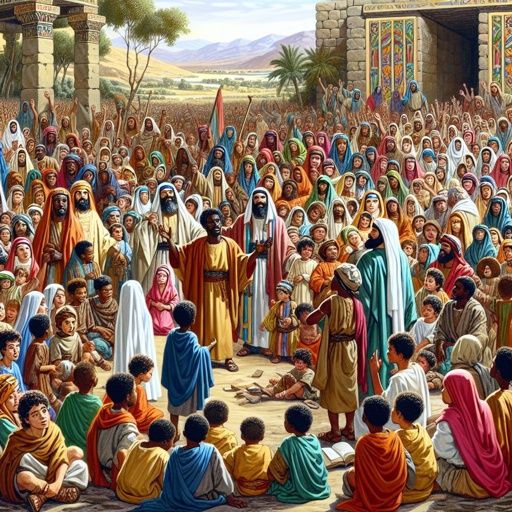
Ezra 2:18 - "The children of Jorah, an hundred and twelve."

Ezra 2:54 - "The children of Neziah, the children of Hatipha."

Ezra 2:20 - "The children of Gibbar, ninety and five."

Ezra 2:24 - "The children of Azmaveth, forty and two."

Ezra 2:39 - "The children of Harim, a thousand and seventeen."

Ezra 2:27 - "The men of Michmas, an hundred twenty and two."

Ezra 2:29 - "The children of Nebo, fifty and two."

Ezra 9:10 - "And now, O our God, what shall we say after this? for we have forsaken thy commandments,"