What does Ezra 7:5 mean?
"The son of Abishua, the son of Phinehas, the son of Eleazar, the son of Aaron the chief priest:" - Ezra 7:5
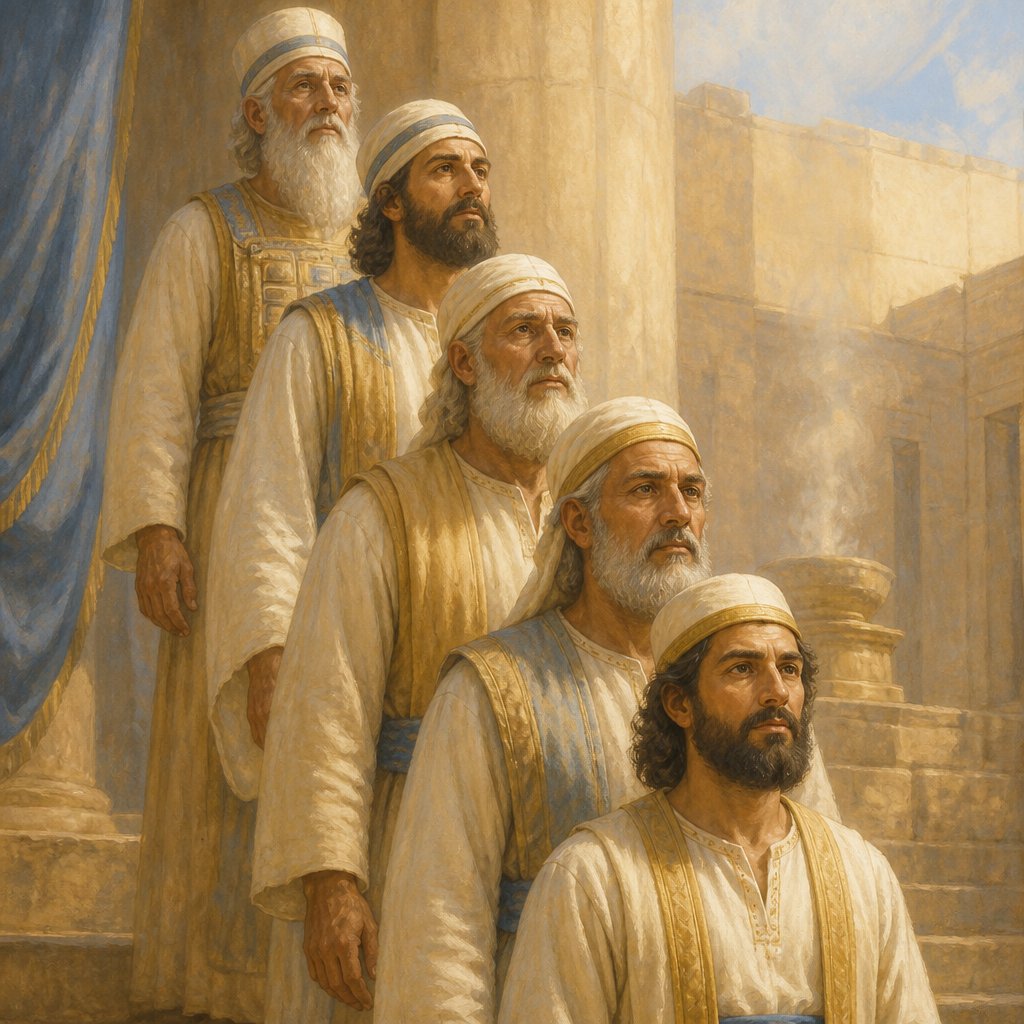
Ezra 7:5 (KJV) reads: "The son of Abishua, the son of Phinehas, the son of Eleazar, the son of Aaron the chief priest." At first glance, this verse may seem like a mere genealogy, listing the ancestors of Ezra. However, when we examine it more closely, we can uncover deeper meanings and insights that are relevant to the themes of lineage, priesthood, and the covenant with God.
In the context of the book of Ezra, this verse is part of a genealogy that traces the lineage of Ezra, who was a priest and scribe. The book of Ezra describes the return of the Israelites from exile in Babylon and their efforts to rebuild the temple in Jerusalem. Ezra, a descendant of Aaron, played a crucial role in this process, as he helped to restore the religious and legal practices of the Israelites and promote adherence to the Mosaic Law.
The mention of Aaron, the chief priest, in this verse holds significant symbolic value. Aaron was the brother of Moses and the first high priest of Israel. As such, he was an important figure in the religious and political life of the Israelites. The mention of Aaron in the lineage of Ezra serves to highlight the priestly heritage and authority of Ezra. It emphasizes his legitimacy and credibility as a leader and teacher of the Law.
Furthermore, the reference to Phinehas and Eleazar, who were also prominent figures in the history of Israel, adds to the significance of this verse. Phinehas was known for his zeal for the Lord, as demonstrated in the account of his actions in Numbers 25:6-15. Eleazar, his son, was his successor as high priest. Their inclusion in Ezra's genealogy signifies the continuity of the priestly line and the faithfulness of the descendants of Aaron to their calling.
The genealogy in this verse also points to the importance of lineage and heritage in the religious and cultural identity of the Israelites. In ancient Israel, one's lineage was closely tied to one's identity and social standing. Being a descendant of Aaron meant that Ezra was part of a privileged and revered lineage, with a direct connection to the priesthood and the covenant with God. This gave him a special role and responsibility in the religious life of the community.
Moreover, the mention of Aaron and his descendants carries a message of continuity and fidelity to the covenant with God. The priesthood was a central institution in Israelite society, and the descendants of Aaron were entrusted with the sacred task of mediating between God and the people. By tracing his lineage back to Aaron, Ezra reaffirms his link to the covenant and his commitment to upholding the religious traditions and laws of the Israelites.
Overall, Ezra 7:5 (KJV) is more than just a list of names; it conveys important themes of lineage, priesthood, and the covenant with God. It serves as a reminder of the role and significance of the priestly lineage in the religious and cultural identity of the Israelites. It also underscores the continuity and fidelity to the covenant with God, which was passed down from generation to generation. As readers, we can glean valuable insights from this verse about the importance of heritage, tradition, and faithfulness in our own spiritual journey.
Have questions about Ezra 7:5?
Dive deeper into this scripture with Bible Chat — an AI-powered tool for exploring God's Word through conversation. Ask questions, get context, and grow in your understanding of the Bible.
Get Our Apps


Ezra 7:5 Artwork

Ezra 7:5 - "The son of Abishua, the son of Phinehas, the son of Eleazar, the son of Aaron the chief priest:"
"The son of Abishua, the son of Phinehas, the son of Eleazar, the son of Aaron the chief priest:" - Ezra 7:5

Ezra 5:7 - "They sent a letter unto him, wherein was written thus; Unto Darius the king, all peace."

Ezra 7:12 - "Artaxerxes, king of kings, unto Ezra the priest, a scribe of the law of the God of heaven, perfect peace, and at such a time."

Ezra 10:5 - "Then arose Ezra, and made the chief priests, the Levites, and all Israel, to swear that they should do according to this word. And they sware."
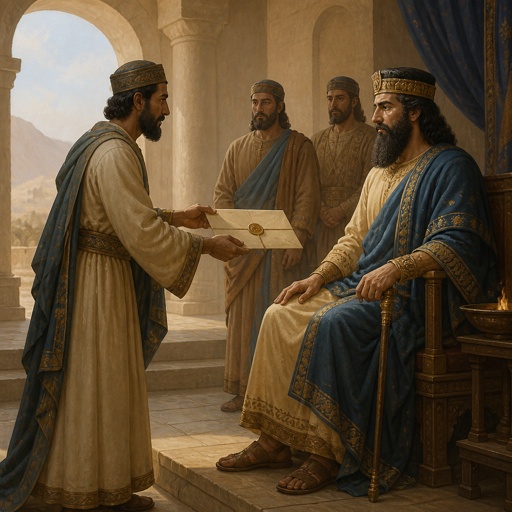
"They sent a letter unto him, wherein was written thus; Unto Darius the king, all peace." - Ezra 5:7

Ezra 7:10 - "For Ezra had prepared his heart to seek the law of the LORD, and to do it, and to teach in Israel statutes and judgments."

Zerubbabel in Ezra chapter 5

Ezra 7:1 - "Now after these things, in the reign of Artaxerxes king of Persia, Ezra the son of Seraiah, the son of Azariah, the son of Hilkiah,"

Ezra 7:11 - "¶ Now this is the copy of the letter that the king Artaxerxes gave unto Ezra the priest, the scribe, even a scribe of the words of the commandments of the LORD, and of his statutes to Israel."

Ezra 7:2 - "The son of Shallum, the son of Zadok, the son of Ahitub,"

Ezra 7:4 - "The son of Zerahiah, the son of Uzzi, the son of Bukki,"

Ezra 2:5 - "The children of Arah, seven hundred seventy and five."

Ezra 7:3 - "The son of Amariah, the son of Azariah, the son of Meraioth,"

Ezra 2:7 - "The children of Elam, a thousand two hundred fifty and four."
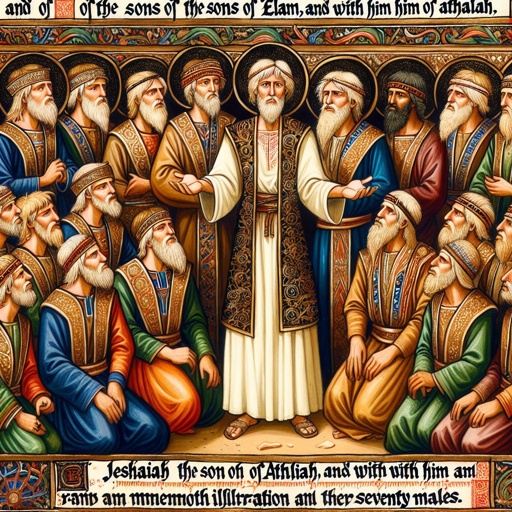
Ezra 8:7 - "And of the sons of Elam; Jeshaiah the son of Athaliah, and with him seventy males."

Zerubbabel in Ezra chapter 5 but zerubbabel is not a priest

Ezra 8:5 - "Of the sons of Shechaniah; the son of Jahaziel, and with him three hundred males."

Ezra 7:8 - "And he came to Jerusalem in the fifth month, which was in the seventh year of the king."

Ezra 7:21 - "And I, even I Artaxerxes the king, do make a decree to all the treasurers which are beyond the river, that whatsoever Ezra the priest, the scribe of the law of the God of heaven, shall require of you, it be done speedily,"

Ezra 7:7 - "And there went up some of the children of Israel, and of the priests, and the Levites, and the singers, and the porters, and the Nethinims, unto Jerusalem, in the seventh year of Artaxerxes the king."

Ezra 5:5 - "But the eye of their God was upon the elders of the Jews, that they could not cause them to cease, till the matter came to Darius: and then they returned answer by letter concerning this matter."

Ezra 7:6 - "This Ezra went up from Babylon; and he was a ready scribe in the law of Moses, which the LORD God of Israel had given: and the king granted him all his request, according to the hand of the LORD his God upon him."

Ezra 5:4 - "Then said we unto them after this manner, What are the names of the men that make this building?"

Ezra 7:25 - "And thou, Ezra, after the wisdom of thy God, that is in thine hand, set magistrates and judges, which may judge all the people that are beyond the river, all such as know the laws of thy God; and teach ye them that know them not."

Ezra 5:13 - "But in the first year of Cyrus the king of Babylon the same king Cyrus made a decree to build this house of God."

"Then arose Ezra, and made the chief priests, the Levites, and all Israel, to swear that they should do according to this word. And they sware." - Ezra 10:5

"Artaxerxes, king of kings, unto Ezra the priest, a scribe of the law of the God of heaven, perfect peace, and at such a time." - Ezra 7:12

"For Ezra had prepared his heart to seek the law of the LORD, and to do it, and to teach in Israel statutes and judgments." - Ezra 7:10

"Now after these things, in the reign of Artaxerxes king of Persia, Ezra the son of Seraiah, the son of Azariah, the son of Hilkiah," - Ezra 7:1