What does Ezra 7:10 mean?
"For Ezra had prepared his heart to seek the law of the LORD, and to do it, and to teach in Israel statutes and judgments." - Ezra 7:10
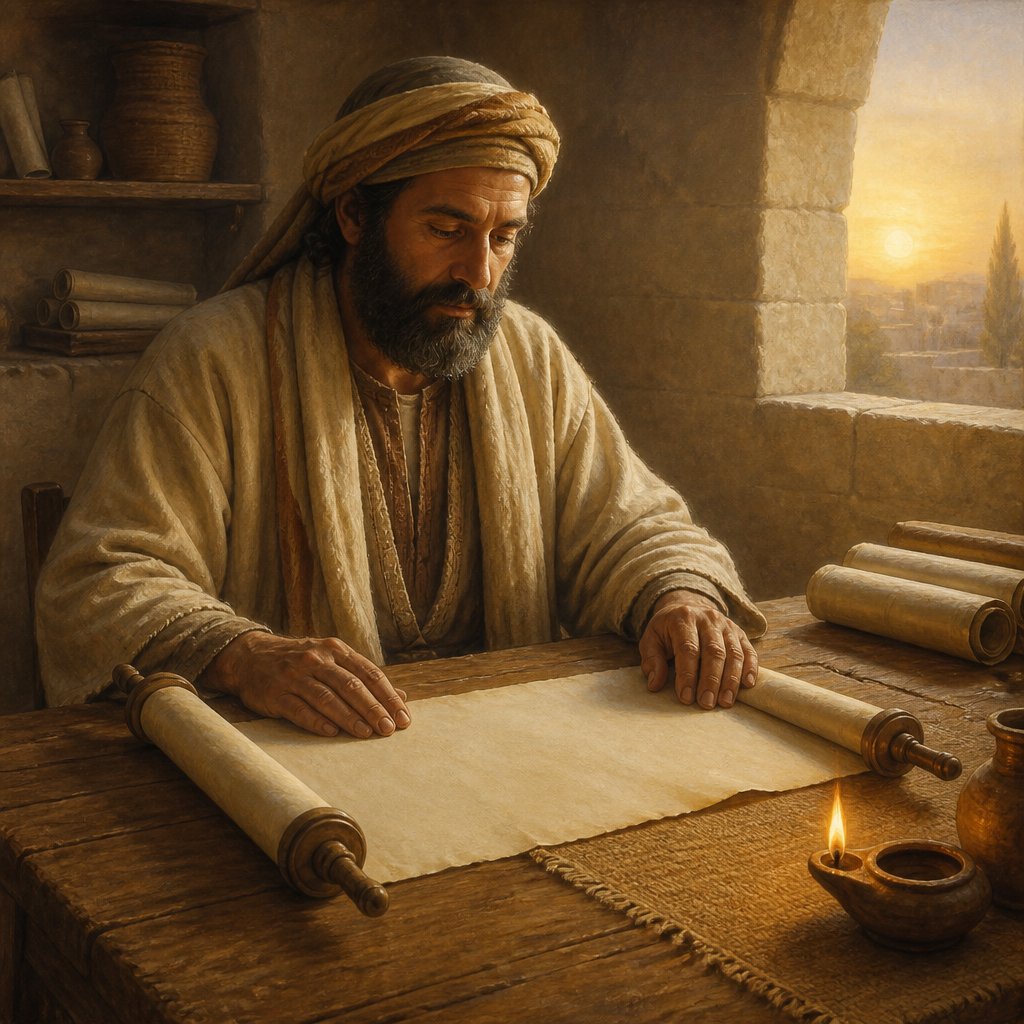
Ezra 7:10 in the King James Version of the Bible reads: "For Ezra had prepared his heart to seek the law of the Lord, and to do it, and to teach in Israel statutes and judgments."
This verse is found in the book of Ezra, which is a book of the Hebrew Bible/Old Testament. It is a historical narrative that details the return of the Israelites from their exile in Babylon and the rebuilding of the temple in Jerusalem. This particular verse describes the character and mission of Ezra, who was a scribe and priest in Israel during this time.
The verse begins with the statement, "For Ezra had prepared his heart to seek the law of the Lord." This indicates that Ezra had made a deliberate and intentional effort to seek and understand the laws and commandments of God. It speaks to his deep commitment and devotion to the teachings of the Lord. This preparation of the heart suggests a deep inner transformation, a turning towards the divine in both mind and spirit.
The verse continues, "and to do it." Here, Ezra not only sought to understand the law but also actively sought to live it out in his own life. This speaks to the idea of obedience and living in accordance with the teachings of the Lord. It suggests that Ezra was not simply a teacher of the law, but also a practitioner of it. His actions aligned with his beliefs, setting an example for others to follow.
Finally, the verse concludes with, "and to teach in Israel statutes and judgments." This highlights Ezra's role as a teacher and leader in Israel. Not only did he seek to understand and live out the law, but he also took on the responsibility of instructing others in the statutes and judgments of the Lord. This demonstrates his commitment to sharing his knowledge and understanding with the community, further emphasizing his role as a spiritual leader.
The verse as a whole reflects the themes of faith, obedience, and leadership. It presents an idealized portrait of a religious figure who is deeply committed to the teachings of the Lord, both in personal practice and in the instruction of others. It also sets a framework for the kind of virtues and qualities that are valued within the religious community.
In a broader context, this verse is situated within the larger narrative of the Israelites' return from exile and the reestablishment of their religious and cultural identity. The rebuilding of the temple and the restoration of the religious practices were central to this process. Ezra, as a key figure in this period, played a crucial role in preserving and transmitting the religious traditions of the Israelites.
Symbolically, Ezra's preparation of the heart can be seen as a metaphor for the inward spiritual journey of seeking God and his righteousness. It emphasizes the importance of an open, receptive, and prepared heart in the pursuit of divine knowledge and understanding. His commitment to teaching and practicing the law also serves as a model for the responsibilities of religious leadership and the passing on of religious traditions from one generation to the next.
In conclusion, Ezra 7:10 encapsulates the virtues and responsibilities of a faithful servant of God. It underscores the importance of seeking, understanding, and living out the teachings of the Lord, as well as the responsibility of sharing that knowledge with others. It serves as a manifesto for those who seek to lead and guide others in matters of faith and religious practice.
Have questions about Ezra 7:10?
Dive deeper into this scripture with Bible Chat — an AI-powered tool for exploring God's Word through conversation. Ask questions, get context, and grow in your understanding of the Bible.
Get Our Apps


Ezra 7:10 Artwork

Ezra 7:10 - "For Ezra had prepared his heart to seek the law of the LORD, and to do it, and to teach in Israel statutes and judgments."

"For Ezra had prepared his heart to seek the law of the LORD, and to do it, and to teach in Israel statutes and judgments." - Ezra 7:10

Ezra 10:7 - "And they made proclamation throughout Judah and Jerusalem unto all the children of the captivity, that they should gather themselves together unto Jerusalem;"

Ezra 10:10-12

Ezra 10:10 - "And Ezra the priest stood up, and said unto them, Ye have transgressed, and have taken strange wives, to increase the trespass of Israel."

Ezra 10:3

Ezra 3:10

Ezra 10:3

Ezra 7:12 - "Artaxerxes, king of kings, unto Ezra the priest, a scribe of the law of the God of heaven, perfect peace, and at such a time."

Ezra 10:5 - "Then arose Ezra, and made the chief priests, the Levites, and all Israel, to swear that they should do according to this word. And they sware."

Ezra 10:38 - "And Bani, and Binnui, Shimei,"

Ezra 10:37 - "Mattaniah, Mattenai, and Jaasau,"

Ezra 10:40 - "Machnadebai, Shashai, Sharai,"

Ezra 10:32 - "Benjamin, Malluch, and Shemariah."

Ezra 7:1 - "Now after these things, in the reign of Artaxerxes king of Persia, Ezra the son of Seraiah, the son of Azariah, the son of Hilkiah,"

Ezra 10:36 - "Vaniah, Meremoth, Eliashib,"

Ezra 10:35 - "Benaiah, Bedeiah, Chelluh,"

Ezra 10:42 - "Shallum, Amariah, and Joseph."

Ezra 10:41 - "Azareel, and Shelemiah, Shemariah,"

Ezra 10:39 - "And Shelemiah, and Nathan, and Adaiah,"

Ezra 10:20 - "And of the sons of Immer; Hanani, and Zebadiah."

Ezra 10:34 - "Of the sons of Bani; Maadai, Amram, and Uel,"

Ezra 7:11 - "¶ Now this is the copy of the letter that the king Artaxerxes gave unto Ezra the priest, the scribe, even a scribe of the words of the commandments of the LORD, and of his statutes to Israel."

Ezra 7:2 - "The son of Shallum, the son of Zadok, the son of Ahitub,"

Ezra 7:4 - "The son of Zerahiah, the son of Uzzi, the son of Bukki,"

Ezra 2:10 - "The children of Bani, six hundred forty and two."

Ezra 10:21 - "And of the sons of Harim; Maaseiah, and Elijah, and Shemaiah, and Jehiel, and Uzziah."

Ezra 10:24 - "Of the singers also; Eliashib: and of the porters; Shallum, and Telem, and Uri."

Ezra 10:28 - "Of the sons also of Bebai; Jehohanan, Hananiah, Zabbai, and Athlai."

Ezra 10:31 - "And of the sons of Harim; Eliezer, Ishijah, Malchiah, Shemaiah, Shimeon,"