What does Ezra 6:5 mean?
"And also let the golden and silver vessels of the house of God, which Nebuchadnezzar took forth out of the temple which is at Jerusalem, and brought unto Babylon, be restored, and brought again unto the temple which is at Jerusalem, every one to his place, and place them in the house of God." - Ezra 6:5
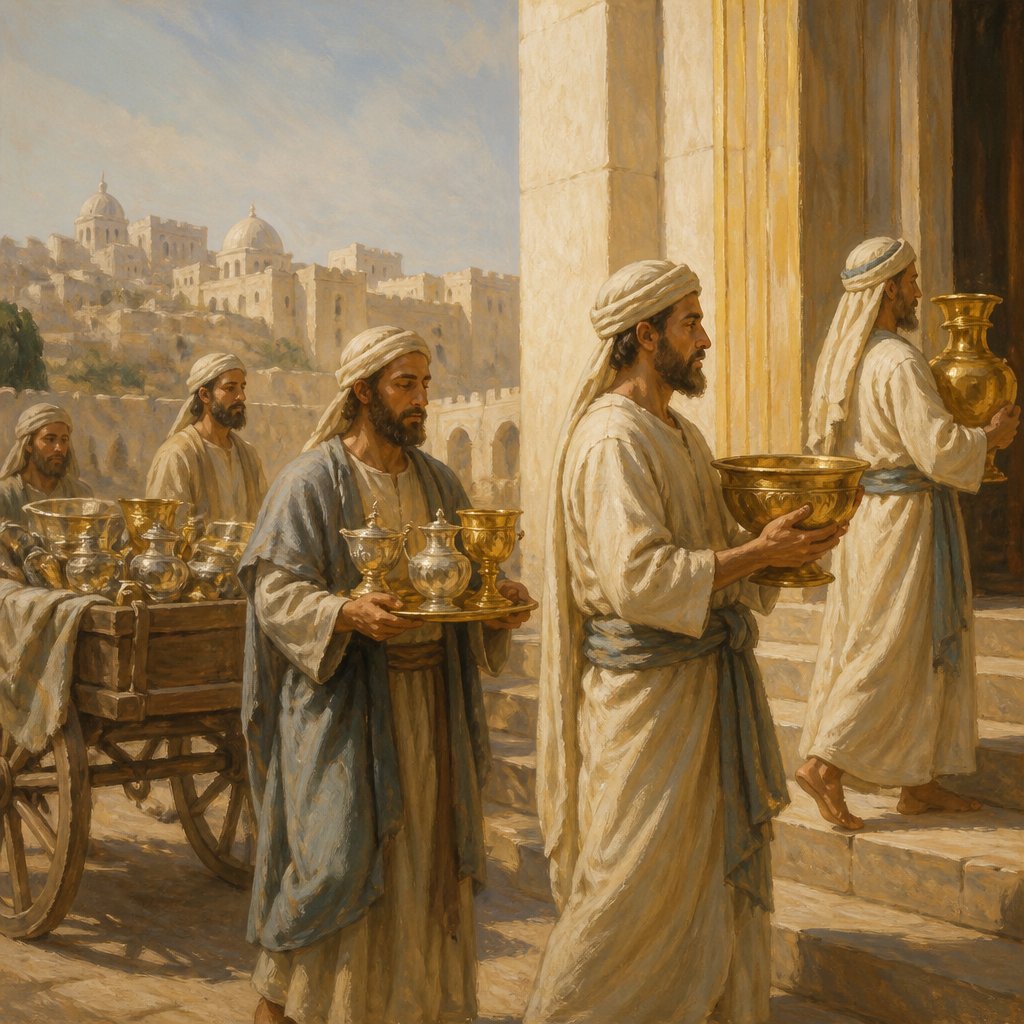
Ezra 6:5 (KJV) states:
"And also let the golden and silver vessels of the house of God, which Nebuchadnezzar took forth out of the temple which is at Jerusalem, and brought unto Babylon, be restored, and brought again unto the temple which is at Jerusalem, every one to his place, and place them in the house of God."
The book of Ezra is a book of the Hebrew Bible and the Old Testament. It tells the story of the Israelites' return from their captivity in Babylon, particularly focusing on the rebuilding of the temple in Jerusalem and the restoration of the Jewish community. The verse in question is part of a decree by King Darius, expressing his support for the rebuilding of the temple and the restoration of the sacred vessels that had been taken by Nebuchadnezzar and brought to Babylon.
In order to fully understand the context and significance of this verse, it is important to delve into the historical and cultural background. The Israelites had been taken captive by the Babylonians and exiled from their land. During this time, Nebuchadnezzar, the king of Babylon, had raided the temple in Jerusalem and taken many of its sacred vessels, including golden and silver items used for worship. These vessels were not only materially valuable but also held deep spiritual and religious significance for the Jewish people. They were an integral part of their sacred rituals and worship practices.
The act of restoring these vessels and returning them to the temple in Jerusalem was symbolic of the Israelites' return to their land and their commitment to the worship of God. The restoration of the temple and the return of the sacred vessels were not simply acts of physical construction and relocation; they held profound spiritual and religious significance for the Jewish community. It represented a reconnection to their faith and heritage, a rebirth of their religious practices, and a renewal of their covenant with God.
Furthermore, this verse also highlights the theme of divine providence and restoration. The fact that King Darius, a foreign ruler, issued a decree for the return of the sacred vessels shows God's sovereignty over the hearts of kings and rulers. It speaks to the belief that God can move the hearts of even the most powerful individuals to fulfill His purposes. The restoration of the sacred vessels is a testament to God's faithfulness in preserving His people and ensuring the continuity of their worship and religious practices.
The symbolism of the golden and silver vessels themselves is also significant. Gold and silver are precious metals often associated with purity, value, and royalty. In the context of the temple, these vessels represented the holiness and sanctity of the worship space. By restoring these vessels to their rightful place in the temple, the Israelites were reaffirming their commitment to the purity and sanctity of their worship and acknowledging God's sovereignty over all aspects of their lives.
In a broader sense, this verse can also be seen as a message of hope and redemption. It conveys the idea that even in the midst of exile and despair, God's plan for restoration and renewal is always at work. The return of the sacred vessels and the rebuilding of the temple in Jerusalem symbolize the restoration of the Israelites' faith, identity, and community.
In conclusion, Ezra 6:5 in the King James Version of the Bible carries deep spiritual, historical, and cultural significance. It reflects the themes of divine providence, restoration, and hope, and serves as a powerful reminder of God's faithfulness to His people. By restoring the sacred vessels and returning them to the temple, the Israelites were not only reclaiming their religious heritage but also reaffirming their commitment to their faith and worship. This verse continues to inspire believers to trust in God's sovereignty and to seek restoration and renewal in their own spiritual journeys.
Have questions about Ezra 6:5?
Dive deeper into this scripture with Bible Chat — an AI-powered tool for exploring God's Word through conversation. Ask questions, get context, and grow in your understanding of the Bible.
Get Our Apps


Ezra 6:5 Artwork

Ezra 6:5 - "And also let the golden and silver vessels of the house of God, which Nebuchadnezzar took forth out of the temple which is at Jerusalem, and brought unto Babylon, be restored, and brought again unto the temple which is at Jerusalem, every one to his place, and place them in the house of God."
"And also let the golden and silver vessels of the house of God, which Nebuchadnezzar took forth out of the temple which is at Jerusalem, and brought unto Babylon, be restored, and brought again unto the temple which is at Jerusalem, every one to his place, and place them in the house of God." - Ezra 6:5

Ezra 5:6 - "¶ The copy of the letter that Tatnai, governor on this side the river, and Shethar-boznai, and his companions the Apharsachites, which were on this side the river, sent unto Darius the king:"

Ezra 9:6

Ezra 6:16

Ezra 10:5 - "Then arose Ezra, and made the chief priests, the Levites, and all Israel, to swear that they should do according to this word. And they sware."

Zerubbabel in Ezra chapter 5

Zerubbabel in Ezra chapter 6

Ezra 6:1-12

Ezra 6:15-16

Ezra 6:15-16

Ezra 2:5 - "The children of Arah, seven hundred seventy and five."

Zerubbabel in Ezra chapter 5 but zerubbabel is not a priest

Ezra 8:5 - "Of the sons of Shechaniah; the son of Jahaziel, and with him three hundred males."

Ezra 6:19 - "And the children of the captivity kept the passover upon the fourteenth day of the first month."

Ezra 8:6 - "Of the sons also of Adin; Ebed the son of Jonathan, and with him fifty males."

Ezra 7:5 - "The son of Abishua, the son of Phinehas, the son of Eleazar, the son of Aaron the chief priest:"

Ezra 6:6 - "Now therefore, Tatnai, governor beyond the river, Shethar-boznai, and your companions the Apharsachites, which are beyond the river, be ye far from thence:"

Ezra 6:2 - "And there was found at Achmetha, in the palace that is in the province of the Medes, a roll, and therein was a record thus written:"

Ezra 5:5 - "But the eye of their God was upon the elders of the Jews, that they could not cause them to cease, till the matter came to Darius: and then they returned answer by letter concerning this matter."

Ezra 2:6 - "The children of Pahath-moab, of the children of Jeshua and Joab, two thousand eight hundred and twelve."

Ezra 7:6 - "This Ezra went up from Babylon; and he was a ready scribe in the law of Moses, which the LORD God of Israel had given: and the king granted him all his request, according to the hand of the LORD his God upon him."

Ezra 5:4 - "Then said we unto them after this manner, What are the names of the men that make this building?"

Ezra 5:13 - "But in the first year of Cyrus the king of Babylon the same king Cyrus made a decree to build this house of God."

"Then arose Ezra, and made the chief priests, the Levites, and all Israel, to swear that they should do according to this word. And they sware." - Ezra 10:5

Ezra 6:15 - "And this house was finished on the third day of the month Adar, which was in the sixth year of the reign of Darius the king."

Ezra 6:18 - "And they set the priests in their divisions, and the Levites in their courses, for the service of God, which is at Jerusalem; as it is written in the book of Moses."

Ezra 6:16 - "¶ And the children of Israel, the priests, and the Levites, and the rest of the children of the captivity, kept the dedication of this house of God with joy,"

Ezra 5:7 - "They sent a letter unto him, wherein was written thus; Unto Darius the king, all peace."

Ezra 6:10 - "That they may offer sacrifices of sweet savours unto the God of heaven, and pray for the life of the king, and of his sons."