What does Ezra 5:10 mean?
"We asked their names also, to certify thee, that we might write the names of the men that were the chief of them." - Ezra 5:10
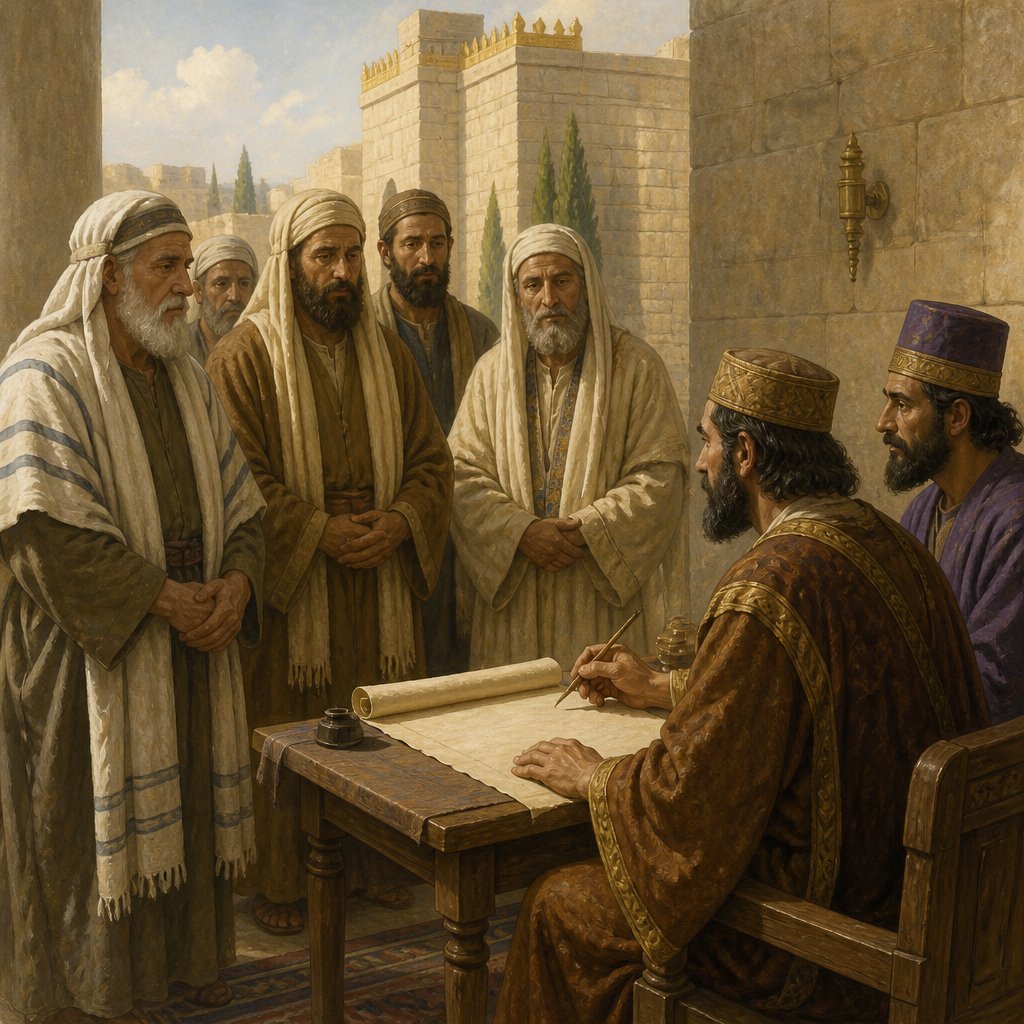
Ezra 5:10 from the King James Version (KJV) of the Bible states, "We asked their names also, to certify thee, that we might write the names of the men that were the chief of them." This verse is part of a larger narrative found in the book of Ezra, which details the history of the Jewish people following their return from exile in Babylon.
The book of Ezra is set during the time of the Persian Empire, shortly after the Babylonian exile. The Jewish people had been allowed to return to Jerusalem by the Persian king, Cyrus the Great, and were tasked with the rebuilding of the temple. However, they faced opposition from the neighboring peoples, who sought to hinder their progress. In this particular passage, the Jewish leaders are addressing the Persian authorities, providing them with the necessary information and documentation to verify their identity and legitimacy.
At first glance, this verse may seem mundane or insignificant, but it actually carries significant thematic and symbolic weight. The request for the names of the Jewish leaders reflects the importance of accountability and transparency in their dealings with the Persian authorities. By providing their names and titles, the Jewish leaders sought to establish their credibility and legitimacy in the eyes of the ruling powers. This demonstrates their commitment to upholding the law and acting with integrity, even in the face of opposition and adversity.
Furthermore, the act of recording and documenting the names of the Jewish leaders serves as a reminder of the importance of individual accountability and responsibility within the community. Each person's name and role within the community was significant, and they sought to ensure that their contributions were recognized and acknowledged. This emphasis on personal accountability and recognition reflects the broader theme of community cohesion and solidarity within the Jewish people as they worked towards the common goal of rebuilding their temple and preserving their identity.
In a broader context, this passage also serves as a reminder of the historical and cultural significance of names within the biblical narrative. Throughout the Bible, names are often used to convey meaning and significance. The naming of individuals, places, and events carries symbolic weight and can convey important messages about identity, purpose, and destiny. In this case, the recording of the names of the Jewish leaders serves as a tangible representation of their identity and role within the community, as well as their commitment to the task at hand.
Overall, Ezra 5:10 serves as a powerful reminder of the importance of transparency, accountability, and individual recognition within the community. The act of recording the names of the Jewish leaders was not simply a bureaucratic formality, but a demonstration of their commitment to integrity and their desire to be recognized for their contributions. This verse also highlights the broader significance of names within the biblical narrative and the symbolic weight they carry. Through this seemingly simple request, the passage conveys important themes of community cohesion, individual accountability, and the cultural importance of names within the biblical context.
Have questions about Ezra 5:10?
Dive deeper into this scripture with Bible Chat — an AI-powered tool for exploring God's Word through conversation. Ask questions, get context, and grow in your understanding of the Bible.
Get Our Apps


Ezra 5:10 Artwork

Ezra 5:10 - "We asked their names also, to certify thee, that we might write the names of the men that were the chief of them."

"We asked their names also, to certify thee, that we might write the names of the men that were the chief of them." - Ezra 5:10

Ezra 10:5 - "Then arose Ezra, and made the chief priests, the Levites, and all Israel, to swear that they should do according to this word. And they sware."

"Then arose Ezra, and made the chief priests, the Levites, and all Israel, to swear that they should do according to this word. And they sware." - Ezra 10:5

Ezra 10:10-12

Ezra 10:10 - "And Ezra the priest stood up, and said unto them, Ye have transgressed, and have taken strange wives, to increase the trespass of Israel."

Ezra 10:3

Ezra 3:10

Ezra 10:3

Ezra 7:10 - "For Ezra had prepared his heart to seek the law of the LORD, and to do it, and to teach in Israel statutes and judgments."

Ezra 10:38 - "And Bani, and Binnui, Shimei,"

Ezra 10:37 - "Mattaniah, Mattenai, and Jaasau,"

Ezra 10:40 - "Machnadebai, Shashai, Sharai,"

Ezra 10:32 - "Benjamin, Malluch, and Shemariah."

Zerubbabel in Ezra chapter 5

Ezra 10:36 - "Vaniah, Meremoth, Eliashib,"

Ezra 10:35 - "Benaiah, Bedeiah, Chelluh,"

Ezra 10:42 - "Shallum, Amariah, and Joseph."

Ezra 10:41 - "Azareel, and Shelemiah, Shemariah,"

Ezra 10:39 - "And Shelemiah, and Nathan, and Adaiah,"

Ezra 10:20 - "And of the sons of Immer; Hanani, and Zebadiah."

Ezra 10:34 - "Of the sons of Bani; Maadai, Amram, and Uel,"

Ezra 2:10 - "The children of Bani, six hundred forty and two."

Ezra 10:21 - "And of the sons of Harim; Maaseiah, and Elijah, and Shemaiah, and Jehiel, and Uzziah."

Ezra 10:24 - "Of the singers also; Eliashib: and of the porters; Shallum, and Telem, and Uri."

Ezra 10:28 - "Of the sons also of Bebai; Jehohanan, Hananiah, Zabbai, and Athlai."

Ezra 10:31 - "And of the sons of Harim; Eliezer, Ishijah, Malchiah, Shemaiah, Shimeon,"

"Azareel, and Shelemiah, Shemariah," - Ezra 10:41

"And Bani, and Binnui, Shimei," - Ezra 10:38

"And Shelemiah, and Nathan, and Adaiah," - Ezra 10:39