What does Ezra 4:6 mean?
"And in the reign of Ahasuerus, in the beginning of his reign, wrote they unto him an accusation against the inhabitants of Judah and Jerusalem." - Ezra 4:6

Ezra 4:6 in the King James Version of the Bible reads, "And in the reign of Ahasuerus, in the beginning of his reign, wrote they unto him an accusation against the inhabitants of Judah and Jerusalem."
This verse is a part of the historical record of the rebuilding of the temple in Jerusalem after the Israelite's return from the Babylonian exile. It is important to understand the historical context in order to fully grasp the meaning and significance of this verse.
During the reign of King Ahasuerus, also known as King Xerxes, there was opposition to the rebuilding of the temple in Jerusalem. The neighboring peoples who had settled in the land of Judah and Jerusalem saw the rebuilding of the temple as a threat to their power and influence. They sought to hinder the progress of the Israelites by writing an accusation against them to King Ahasuerus.
This verse is part of a larger narrative in the Book of Ezra, which describes the efforts of the Israelites to rebuild the temple and the challenges they faced in doing so. The accusation mentioned in this verse reflects the opposition and hostility that the Israelites encountered as they sought to fulfill God's command to rebuild the temple.
The themes in this verse include opposition and adversity, the faithfulness of God, and the perseverance of His people. Despite facing accusations and opposition, the Israelites continued to rebuild the temple, trusting in God's faithfulness and provision. This theme of perseverance in the face of opposition is a recurring motif throughout the Bible, demonstrating the resilience of God's people and the triumph of His will.
The historical context of this verse also highlights the ongoing struggle between the Israelites and the neighboring peoples. The attempt to thwart the rebuilding of the temple reflects the spiritual warfare that is a central theme in the Bible. The opposition faced by the Israelites serves as a reminder of the spiritual battles that believers must contend with as they seek to fulfill God's purposes.
Furthermore, this verse illustrates the corruption and deceitfulness of the world. The accusation brought before King Ahasuerus was a slanderous attempt to malign the Israelites and prevent them from rebuilding the temple. This reflects the worldly opposition that often seeks to thwart God's plans and undermine His people. It serves as a reminder of the deceitful tactics of the enemy and the importance of remaining steadfast in the face of such opposition.
Symbolically, this verse represents the ongoing conflict between the forces of good and evil. The accusation against the Israelites symbolizes the lies and deceitfulness of the enemy, seeking to hinder the work of God. However, the perseverance of the Israelites in the face of this opposition reflects the triumph of righteousness and the faithfulness of God.
In conclusion, Ezra 4:6 is a significant verse that captures the historical and spiritual struggles of the Israelites as they sought to rebuild the temple in Jerusalem. It illustrates the themes of opposition, perseverance, and spiritual warfare, and serves as a reminder of the faithfulness of God and the resilience of His people. This verse encourages believers to remain steadfast in the face of adversity and to trust in God's sovereignty and provision.
Have questions about Ezra 4:6?
Dive deeper into this scripture with Bible Chat — an AI-powered tool for exploring God's Word through conversation. Ask questions, get context, and grow in your understanding of the Bible.
Get Our Apps


Ezra 4:6 Artwork

Ezra 4:6 - "And in the reign of Ahasuerus, in the beginning of his reign, wrote they unto him an accusation against the inhabitants of Judah and Jerusalem."

"And in the reign of Ahasuerus, in the beginning of his reign, wrote they unto him an accusation against the inhabitants of Judah and Jerusalem." - Ezra 4:6

Ezra 6:4 - "With three rows of great stones, and a row of new timber: and let the expenses be given out of the king's house:"

Ezra 4:4

Ezra 4:4

Ezra 9:6

Ezra 6:16

Zerubbabel in Ezra chapter 6

Ezra 6:1-12

Ezra 6:15-16

Ezra 6:15-16

Zerubbabel in Ezra chapter 4

Zerubbabel in Ezra chapter 4

Ezra 4:4 - "Then the people of the land weakened the hands of the people of Judah, and troubled them in building,"
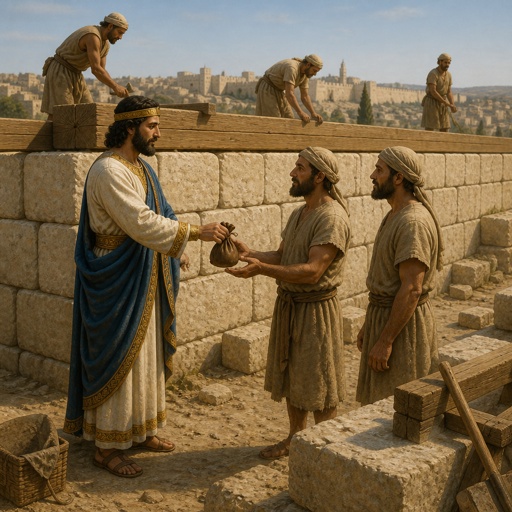
"With three rows of great stones, and a row of new timber: and let the expenses be given out of the king's house:" - Ezra 6:4

Letter to the king in Ezra chapter 4

Ezra 7:4 - "The son of Zerahiah, the son of Uzzi, the son of Bukki,"

Ezra 2:4 - "The children of Shephatiah, three hundred seventy and two."

Ezra 6:19 - "And the children of the captivity kept the passover upon the fourteenth day of the first month."

Ezra 8:6 - "Of the sons also of Adin; Ebed the son of Jonathan, and with him fifty males."

Ezra 6:6 - "Now therefore, Tatnai, governor beyond the river, Shethar-boznai, and your companions the Apharsachites, which are beyond the river, be ye far from thence:"

Ezra 6:2 - "And there was found at Achmetha, in the palace that is in the province of the Medes, a roll, and therein was a record thus written:"

Ezra 2:6 - "The children of Pahath-moab, of the children of Jeshua and Joab, two thousand eight hundred and twelve."

Ezra 8:4 - "Of the sons of Pahath-moab; Elihoenai the son of Zerahiah, and with him two hundred males."

Ezra 7:6 - "This Ezra went up from Babylon; and he was a ready scribe in the law of Moses, which the LORD God of Israel had given: and the king granted him all his request, according to the hand of the LORD his God upon him."

Ezra 6:15 - "And this house was finished on the third day of the month Adar, which was in the sixth year of the reign of Darius the king."

Ezra 6:16 - "¶ And the children of Israel, the priests, and the Levites, and the rest of the children of the captivity, kept the dedication of this house of God with joy,"

Ezra 6:18 - "And they set the priests in their divisions, and the Levites in their courses, for the service of God, which is at Jerusalem; as it is written in the book of Moses."

Ezra 6:10 - "That they may offer sacrifices of sweet savours unto the God of heaven, and pray for the life of the king, and of his sons."

Ezra 4:22 - "Take heed now that ye fail not to do this: why should damage grow to the hurt of the kings?"