What does Ezra 4:4 mean?
"Then the people of the land weakened the hands of the people of Judah, and troubled them in building," - Ezra 4:4

Ezra 4:4 in the King James Version (KJV) reads: "Then the people of the land weakened the hands of the people of Judah, and troubled them in building."
The book of Ezra, from which this verse is taken, is a historical narrative that describes the return of the Israelites from exile in Babylon and their efforts to rebuild the temple in Jerusalem. The verse itself occurs during a period of opposition to the rebuilding efforts, with the people of the land (non-Israelite inhabitants of the region) attempting to undermine and hinder the progress of the Israelites.
This verse speaks to the theme of opposition and adversity in the face of God's work. It illustrates the way in which the enemies of God's people seek to thwart their efforts and weaken their resolve. The people of Judah faced not only physical obstacles in rebuilding the temple, but also spiritual and emotional attacks from their enemies. This verse highlights the importance of perseverance and faith in the face of opposition, and the need for God's people to remain steadfast in their commitment to his purposes.
The context in which this verse occurs is one of significant historical and cultural importance for the Israelites. The Israelites had been exiled to Babylon for 70 years, as a result of their disobedience to God and their worship of false gods. However, God had promised through the prophet Jeremiah that after this period of exile, he would bring them back to their land and restore them. The book of Ezra describes the fulfillment of this promise, as the Israelites are permitted to return to Jerusalem and are given permission by the Persian king to rebuild the temple.
However, the task of rebuilding the temple is not without its challenges. The verse in question occurs during a time when the enemies of the Israelites are actively seeking to hinder their progress. This opposition takes various forms, including attempts to discourage and intimidate the people of Judah.
The symbolism in this verse is powerful and multilayered. The "hands" of the people of Judah symbolize their strength, capability, and ability to work. Weakening their hands represents attempts to undermine their efforts and render them incapable of accomplishing their task. This can be seen as a metaphor for the spiritual warfare that God's people face in their efforts to live out their faith and fulfill his purposes. The "trouble" that the people of Judah experience symbolizes the challenges and obstacles that they face, both within and without. It also represents the emotional and spiritual distress that they undergo as a result of the opposition.
Overall, Ezra 4:4 is a verse that speaks to the universal experience of opposition and adversity that God's people face. It emphasizes the importance of standing firm in the face of opposition, and the need to rely on God's strength and guidance in the midst of challenges. It also serves as a reminder that the work of God will always face resistance from the forces of darkness, but ultimately, His purposes will be fulfilled.
Have questions about Ezra 4:4?
Dive deeper into this scripture with Bible Chat — an AI-powered tool for exploring God's Word through conversation. Ask questions, get context, and grow in your understanding of the Bible.
Get Our Apps


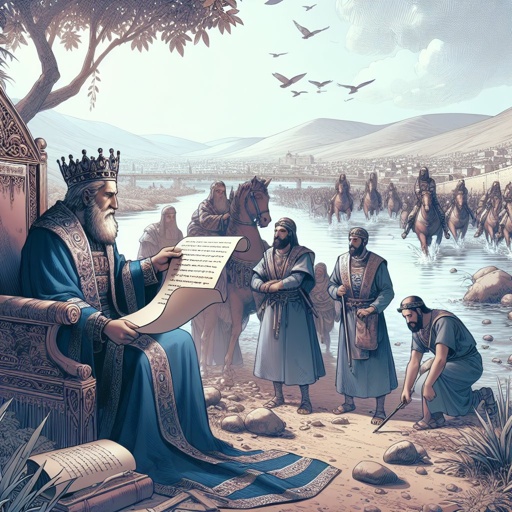
Ezra 4:4 Artwork

Ezra 4:4

Ezra 4:4

Ezra 4:4 - "Then the people of the land weakened the hands of the people of Judah, and troubled them in building,"

"Then the people of the land weakened the hands of the people of Judah, and troubled them in building," - Ezra 4:4

Zerubbabel in Ezra chapter 4

Zerubbabel in Ezra chapter 4

Letter to the king in Ezra chapter 4

Ezra 7:4 - "The son of Zerahiah, the son of Uzzi, the son of Bukki,"

Ezra 2:4 - "The children of Shephatiah, three hundred seventy and two."

Ezra 8:4 - "Of the sons of Pahath-moab; Elihoenai the son of Zerahiah, and with him two hundred males."

Ezra 5:4 - "Then said we unto them after this manner, What are the names of the men that make this building?"

Ezra 4:8 - "Rehum the chancellor and Shimshai the scribe wrote a letter against Jerusalem to Artaxerxes the king in this sort:"

Ezra 10:4 - "Arise; for this matter belongeth unto thee: we also will be with thee: be of good courage, and do it."

Ezra 4:22 - "Take heed now that ye fail not to do this: why should damage grow to the hurt of the kings?"

Ezra 4:18 - "The letter which ye sent unto us hath been plainly read before me."

Ezra 4:6 - "And in the reign of Ahasuerus, in the beginning of his reign, wrote they unto him an accusation against the inhabitants of Judah and Jerusalem."

Ezra 6:4 - "With three rows of great stones, and a row of new timber: and let the expenses be given out of the king's house:"

"The son of Zerahiah, the son of Uzzi, the son of Bukki," - Ezra 7:4

Ezra 4:1 - "Now when the adversaries of Judah and Benjamin heard that the children of the captivity builded the temple unto the LORD God of Israel;"

Ezra 4:10 - "And the rest of the nations whom the great and noble Asnappar brought over, and set in the cities of Samaria, and the rest that are on this side the river, and at such a time."

1 Chronicles 4:17 - "And the sons of Ezra were, Jether, and Mered, and Epher, and Jalon: and she bare Miriam, and Shammai, and Ishbah the father of Eshtemoa."

Ezra 4:24 - "Then ceased the work of the house of God which is at Jerusalem. So it ceased unto the second year of the reign of Darius king of Persia."

"The children of Shephatiah, three hundred seventy and two." - Ezra 2:4

Ezra 4:11 - "¶ This is the copy of the letter that they sent unto him, even unto Artaxerxes the king; Thy servants the men on this side the river, and at such a time."

Ezra 4:21 - "Give ye now commandment to cause these men to cease, and that this city be not builded, until another commandment shall be given from me."

Ezra 3:4 - "¶ They kept also the feast of tabernacles, as it is written, and offered the daily burnt offerings by number, according to the custom, as the duty of every day required;"

Ezra 4:9 - "Then wrote Rehum the chancellor, and Shimshai the scribe, and the rest of their companions; the Dinaites, the Apharsathchites, the Tarpelites, the Apharsites, the Archevites, the Babylonians, the Susanchites, the Dehavites, and the Elamites,"

Ezra 4:5 - "And hired counsellors against them, to frustrate their purpose, all the days of Cyrus king of Persia, even until the reign of Darius king of Persia."

Ezra 4:16 - "We certify the king that, if this city be builded again, and the walls thereof set up, by this means thou shalt have no portion on this side the river."
Ezra 4:17 - "¶ Then sent the king an answer unto Rehum the chancellor, and to Shimshai the scribe, and to the rest of their companions that dwell in Samaria, and unto the rest beyond the river, Peace, and at such a time."