What does Ezra 4:21 mean?
"Give ye now commandment to cause these men to cease, and that this city be not builded, until another commandment shall be given from me." - Ezra 4:21
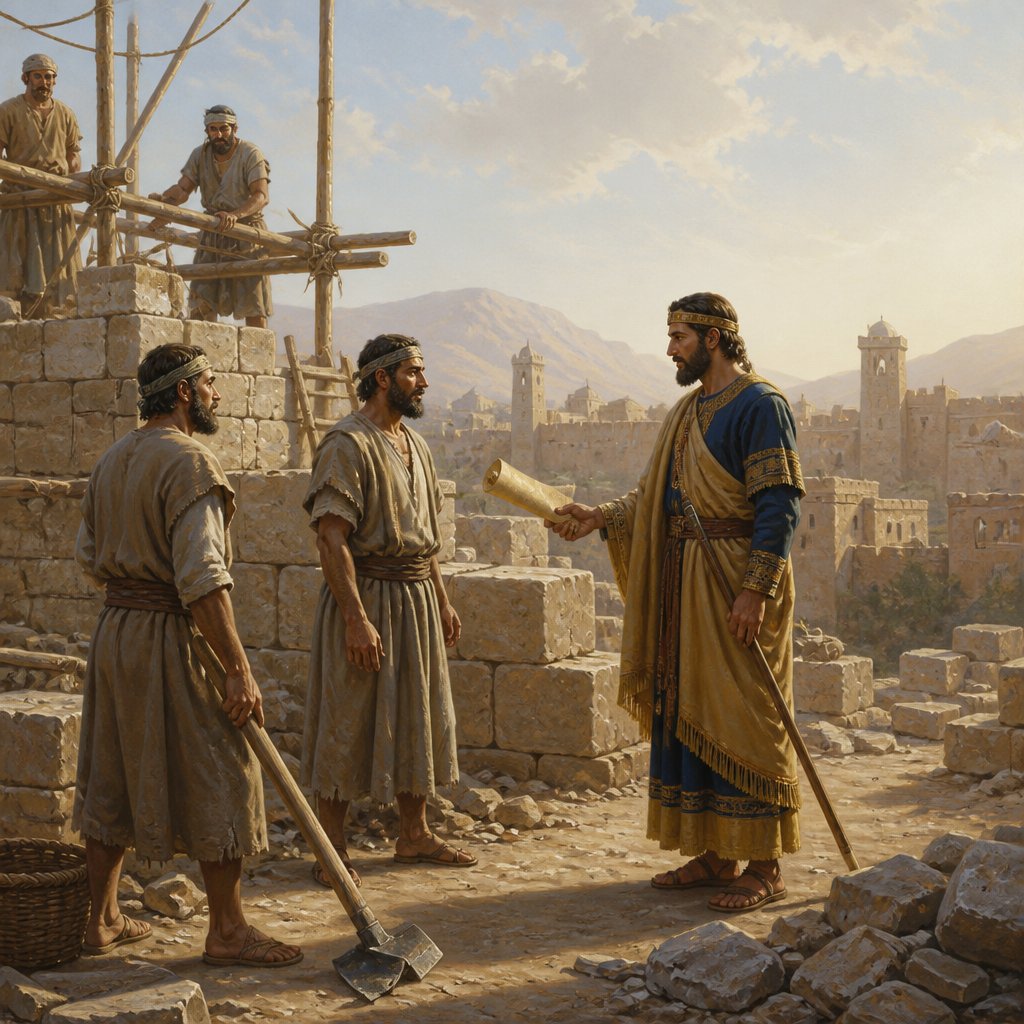
Ezra 4:21 in the King James Version of the Bible reads: "Give ye now commandment to cause these men to cease, and that this city be not builded, until another commandment shall be given from me."
This verse is part of a historical narrative found in the book of Ezra, which tells the story of the return of the Jewish exiles from Babylon to Jerusalem and the rebuilding of the temple. In this particular verse, the adversaries of the Jews who were living in the land, sent a letter to King Artaxerxes of Persia, attempting to persuade him to halt the reconstruction of Jerusalem.
In order to understand the full significance of this verse, it is important to consider the historical and cultural context in which it was written. After the Babylonian exile, a remnant of the Jewish people returned to the land of Judah to rebuild the temple in Jerusalem, under the leadership of Zerubbabel and later Ezra. However, they faced opposition from neighboring peoples and local officials who did not want to see the city and the temple rebuilt. These adversaries tried various tactics to disrupt and stop the work, including appealing to the Persian king to intervene.
The letter referenced in this verse is a part of the adversaries' efforts to hinder the progress of the Jews in rebuilding the city. The key demand in the letter is for the king to issue a decree to stop the construction of the city until further orders are given. This was a direct attempt to disrupt the work and delay the fulfillment of the Jewish people's mission to restore Jerusalem.
This verse serves as a reminder of the obstacles and opposition that can arise when individuals seek to carry out God's plans and purposes. It shows the determination of those who opposed God's people and their efforts to thwart the divine will. However, it also highlights the need for faith and perseverance in the face of adversity.
From a theological perspective, this verse illustrates the ongoing battle between good and evil, as well as the spiritual warfare that occurs when God's people seek to accomplish His work. It demonstrates that the enemy will utilize any means to hinder the progress of God's kingdom, including appealing to earthly authorities.
In terms of symbolism, the city of Jerusalem and the temple can be seen as representations of God's presence and His kingdom on earth. The adversaries' attempts to prevent the rebuilding of Jerusalem can be interpreted as an attack on the establishment of God's reign and the restoration of His people. However, the determination of the Jews to continue the work in the face of opposition reflects their faith in God's promises and their commitment to fulfill His will.
In this verse, there is a theme of obedience and trust in God's timing and sovereignty. Despite the pressure and threats from the outside, the Jews continued to work, trusting that God would ultimately overcome the obstacles and bring about His purposes. This serves as a powerful lesson for believers today, reminding them to remain steadfast in their faith and to trust in God's ultimate victory, even when facing opposition and setbacks.
In conclusion, Ezra 4:21, as part of the larger narrative in the book of Ezra, conveys important themes of opposition, perseverance, and trust in God's sovereignty. It serves as a valuable lesson for believers, encouraging them to remain faithful and steadfast in carrying out God's work, even in the face of adversity. This verse reminds us that God's plans will ultimately prevail, despite the efforts of the enemy to hinder or delay them.
Have questions about Ezra 4:21?
Dive deeper into this scripture with Bible Chat — an AI-powered tool for exploring God's Word through conversation. Ask questions, get context, and grow in your understanding of the Bible.
Get Our Apps


Ezra 4:21 Artwork

Ezra 4:21 - "Give ye now commandment to cause these men to cease, and that this city be not builded, until another commandment shall be given from me."
"Give ye now commandment to cause these men to cease, and that this city be not builded, until another commandment shall be given from me." - Ezra 4:21

Ezra 8:21

Ezra 4:4

Ezra 4:4

Ezra 2:21 - "The children of Beth-lehem, an hundred twenty and three."

Ezra 10:21 - "And of the sons of Harim; Maaseiah, and Elijah, and Shemaiah, and Jehiel, and Uzziah."

Zerubbabel in Ezra chapter 4

Zerubbabel in Ezra chapter 4

Ezra 4:4 - "Then the people of the land weakened the hands of the people of Judah, and troubled them in building,"

Ezra 7:21 - "And I, even I Artaxerxes the king, do make a decree to all the treasurers which are beyond the river, that whatsoever Ezra the priest, the scribe of the law of the God of heaven, shall require of you, it be done speedily,"

Letter to the king in Ezra chapter 4

Ezra 7:4 - "The son of Zerahiah, the son of Uzzi, the son of Bukki,"

Ezra 2:4 - "The children of Shephatiah, three hundred seventy and two."

"The children of Beth-lehem, an hundred twenty and three." - Ezra 2:21

Ezra 8:4 - "Of the sons of Pahath-moab; Elihoenai the son of Zerahiah, and with him two hundred males."

"And of the sons of Harim; Maaseiah, and Elijah, and Shemaiah, and Jehiel, and Uzziah." - Ezra 10:21

Ezra 4:22 - "Take heed now that ye fail not to do this: why should damage grow to the hurt of the kings?"

Ezra 5:4 - "Then said we unto them after this manner, What are the names of the men that make this building?"

Ezra 4:8 - "Rehum the chancellor and Shimshai the scribe wrote a letter against Jerusalem to Artaxerxes the king in this sort:"

Ezra 10:4 - "Arise; for this matter belongeth unto thee: we also will be with thee: be of good courage, and do it."

"Then the people of the land weakened the hands of the people of Judah, and troubled them in building," - Ezra 4:4

Ezra 4:18 - "The letter which ye sent unto us hath been plainly read before me."

"The son of Zerahiah, the son of Uzzi, the son of Bukki," - Ezra 7:4

Ezra 4:6 - "And in the reign of Ahasuerus, in the beginning of his reign, wrote they unto him an accusation against the inhabitants of Judah and Jerusalem."

Ezra 6:4 - "With three rows of great stones, and a row of new timber: and let the expenses be given out of the king's house:"

Ezra 4:10 - "And the rest of the nations whom the great and noble Asnappar brought over, and set in the cities of Samaria, and the rest that are on this side the river, and at such a time."

Ezra 4:24 - "Then ceased the work of the house of God which is at Jerusalem. So it ceased unto the second year of the reign of Darius king of Persia."

1 Chronicles 4:17 - "And the sons of Ezra were, Jether, and Mered, and Epher, and Jalon: and she bare Miriam, and Shammai, and Ishbah the father of Eshtemoa."

Ezra 4:1 - "Now when the adversaries of Judah and Benjamin heard that the children of the captivity builded the temple unto the LORD God of Israel;"