What does Ezra 3:4 mean?
"¶ They kept also the feast of tabernacles, as it is written, and offered the daily burnt offerings by number, according to the custom, as the duty of every day required;" - Ezra 3:4
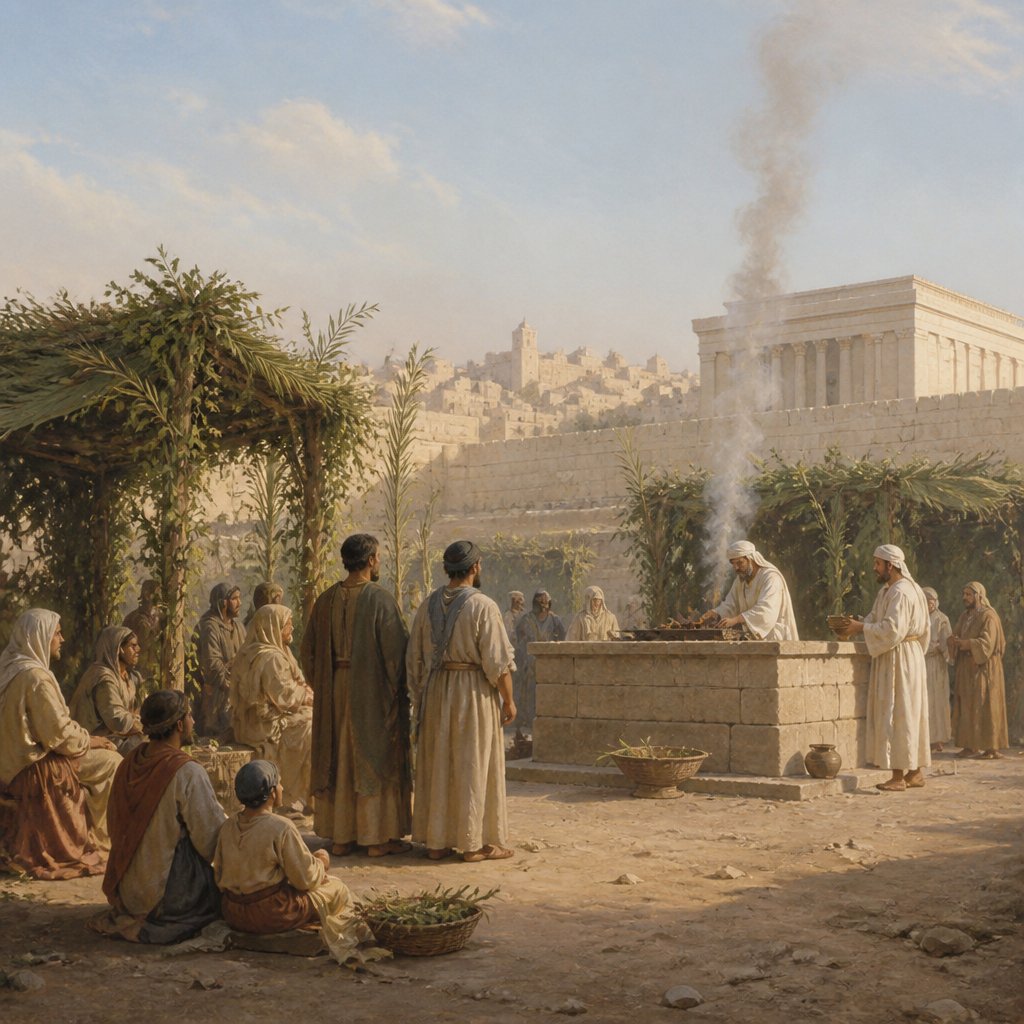
Ezra 3:4 (KJV) says, "They kept also the feast of tabernacles, as it is written, and offered the daily burnt offerings by number, according to the custom, as the duty of every day required." This verse comes from the book of Ezra in the Old Testament, where the Israelites have returned to Jerusalem after being exiled in Babylon. The verse is part of the passage that describes the rebuilding of the temple and the restoration of the worship practices.
The Feast of Tabernacles was one of the three pilgrimage festivals in ancient Israel, in which the people would live in temporary, booth-like shelters to remember their time wandering in the desert after the exodus from Egypt. The feast was a time of celebration and thanksgiving for the harvest and for God's provision. The offering of daily burnt offerings was a central part of the sacrificial system in the Hebrew Bible, symbolizing the people's dedication to God and their desire for forgiveness and reconciliation.
The context of this verse is essential for understanding its significance. The Israelites had just returned to their homeland, and one of their first priorities was rebuilding the temple and reestablishing the worship practices that had been disrupted during the exile. The fact that the people were keeping the Feast of Tabernacles and offering the daily burnt offerings according to the custom demonstrates their commitment to honoring God and following the laws and traditions of their ancestors.
One of the key themes of this verse is the importance of maintaining religious traditions and observances. Even after a period of exile and upheaval, the Israelites were intent on preserving their religious heritage and continuing to worship God in the way that they had been taught. The emphasis on "as it is written" and "according to the custom" indicates that the people were dedicated to following the laws and teachings of their faith as they had been handed down to them.
Another theme in this verse is the idea of continuity and restoration. The return to Jerusalem and the rebuilding of the temple symbolized a new beginning for the Israelite community, a chance to renew their relationship with God and reestablish their identity as a people. By keeping the Feast of Tabernacles and offering the daily burnt offerings, they were signaling their commitment to preserving their religious heritage and rekindling their connection to their spiritual roots.
Symbolism is also present in this verse, particularly in the actions of keeping the feast and offering sacrifices. The Feast of Tabernacles symbolizes the Israelites' dependence on God for sustenance and protection, as well as their gratitude for his provision. The daily burnt offerings symbolize the people's desire to be in right relationship with God and their acknowledgment of their need for forgiveness and reconciliation. These practices were not just religious rituals; they carried deep spiritual and symbolic significance for the Israelites.
In conclusion, Ezra 3:4 from the King James Version of the Bible is a verse that captures the commitment of the Israelites to preserving their religious traditions and reestablishing their worship practices after a period of exile and upheaval. It reflects themes of continuity, restoration, and dedication to God, as well as the symbolic significance of the Feast of Tabernacles and the daily burnt offerings. This verse reminds us of the importance of honoring our spiritual heritage and maintaining our connection to our religious traditions, even in the face of adversity.
Have questions about Ezra 3:4?
Dive deeper into this scripture with Bible Chat — an AI-powered tool for exploring God's Word through conversation. Ask questions, get context, and grow in your understanding of the Bible.
Get Our Apps


Ezra 3:4 Artwork

Ezra 3:4 - "¶ They kept also the feast of tabernacles, as it is written, and offered the daily burnt offerings by number, according to the custom, as the duty of every day required;"
"¶ They kept also the feast of tabernacles, as it is written, and offered the daily burnt offerings by number, according to the custom, as the duty of every day required;" - Ezra 3:4

Ezra 4:4

Ezra 4:4

Ezra 3:2

Ezra 10:3

Ezra 3:2

Ezra 3:10

Ezra 3:9

Ezra 3:2

Ezra 9:3

Ezra 3:2

Ezra 3:2

Ezra 10:3

Zerubbabel in Ezra chapter 4

Zerubbabel in Ezra chapter 4

Zerubbabel in Ezra chapter 3

Ezra 4:4 - "Then the people of the land weakened the hands of the people of Judah, and troubled them in building,"

Altar rebuilt in Jerusalem. Ezra 3:1-3

Letter to the king in Ezra chapter 4

Ezra 7:4 - "The son of Zerahiah, the son of Uzzi, the son of Bukki,"

Ezra 7:3 - "The son of Amariah, the son of Azariah, the son of Meraioth,"

Ezra 2:4 - "The children of Shephatiah, three hundred seventy and two."

Ezra 2:3 - "The children of Parosh, two thousand an hundred seventy and two."

Ezra 4:3 - "But Zerubbabel, and Jeshua, and the rest of the chief of the fathers of Israel, said unto them, Ye have nothing to do with us to build an house unto our God; but we ourselves together will build unto the LORD God of Israel, as king Cyrus the king of Persia hath commanded us."

Pagan women leave with their children ezra 10:3

Ezra 8:4 - "Of the sons of Pahath-moab; Elihoenai the son of Zerahiah, and with him two hundred males."

Pagan women leave with their children ezra 10:3

Ezra 4:22 - "Take heed now that ye fail not to do this: why should damage grow to the hurt of the kings?"

Ezra 5:4 - "Then said we unto them after this manner, What are the names of the men that make this building?"