What does Ezra 2:4 mean?
"The children of Shephatiah, three hundred seventy and two." - Ezra 2:4

Ezra 2:4 in the King James Version of the Bible reads, "The children of Shephatiah, three hundred seventy and two."
This verse is part of a passage that lists the number of Israelites who returned from the Babylonian exile to Jerusalem. The entire chapter of Ezra 2 provides a detailed account of the people who returned, listing the names of the families and their respective numbers. This particular verse focuses on the descendants of Shephatiah, one of the families that returned to Jerusalem.
In order to fully understand the meaning and significance of this verse, it is important to examine its context within the larger narrative of Ezra. The book of Ezra is part of the historical books of the Bible, and it tells the story of the Jewish people returning to Jerusalem from exile in Babylon. The main focus of the book is on the rebuilding of the temple and the restoration of Jerusalem as a center of worship for the Israelites. The list of returnees in Ezra 2 is significant because it provides a record of the people who participated in this momentous event in Jewish history.
The verse itself, though seemingly straightforward, holds deeper meanings when considered in the context of the entire chapter. The fact that the descendants of Shephatiah numbered exactly 372 is not merely a statistical record. In the Bible, numbers often carry symbolic meanings, and the number 372 may hold significance beyond its numerical value. In numerology, the number 3 represents completeness and wholeness, while the number 7 is often associated with perfection and spiritual fulfillment. The combination of these numbers in 372 could be seen as a representation of the completeness and perfection of the group of Shephatiah's descendants who returned to Jerusalem.
Furthermore, the inclusion of specific numbers in the Bible often serves to highlight the individuality and significance of each person within the larger community. In this case, the listing of the specific number of descendants of Shephatiah emphasizes the importance of each individual in contributing to the collective return of the Israelites to Jerusalem. It underscores the idea that every person has a role to play in the unfolding of God's plan and in the restoration of the nation.
On a deeper level, the verse can also be seen as a reminder of God's faithfulness and providence. The return of the Israelites from exile was a fulfillment of God's promise to bring his people back to their land. The meticulous record-keeping of the returnees in Ezra 2 serves as a testament to the faithfulness of God in preserving his people and ensuring the continuation of his covenant with them.
In addition to its numerical and narrative significance, the verse also carries symbolism in the name "Shephatiah." The meaning of the name Shephatiah is "God has judged," which can be interpreted as a reflection of the prophetic nature of the return from exile. The restoration of the Israelites to Jerusalem can be seen as a form of divine judgment and redemption, as God brings the people back to their land and reestablishes their worship.
Overall, Ezra 2:4 is a verse that holds a rich tapestry of meanings and symbolism within the larger narrative of the return from exile. It serves to highlight the individual significance of each person within the community, while also emphasizing the faithfulness and providence of God in fulfilling his promises to his people. The verse stands as a testament to the completeness and perfection of God's plan for the restoration of the Israelites, and it carries a message of hope, redemption, and divine judgment.
Have questions about Ezra 2:4?
Dive deeper into this scripture with Bible Chat — an AI-powered tool for exploring God's Word through conversation. Ask questions, get context, and grow in your understanding of the Bible.
Get Our Apps


Ezra 2:4 Artwork

Ezra 2:4 - "The children of Shephatiah, three hundred seventy and two."

"The children of Shephatiah, three hundred seventy and two." - Ezra 2:4

Ezra 4:4

Ezra 4:4

Zerubbabel in Ezra chapter 4

Zerubbabel in Ezra chapter 4

Ezra 4:4 - "Then the people of the land weakened the hands of the people of Judah, and troubled them in building,"

Letter to the king in Ezra chapter 4

Ezra 7:4 - "The son of Zerahiah, the son of Uzzi, the son of Bukki,"

Ezra 3:2

Ezra 3:2

Ezra 3:2

Ezra 3:2

Ezra 3:2

Ezra 9:1-2

Zerubbabel in Ezra chapter 2

Ezra 8:4 - "Of the sons of Pahath-moab; Elihoenai the son of Zerahiah, and with him two hundred males."

Ezra 2:22 - "The men of Netophah, fifty and six."
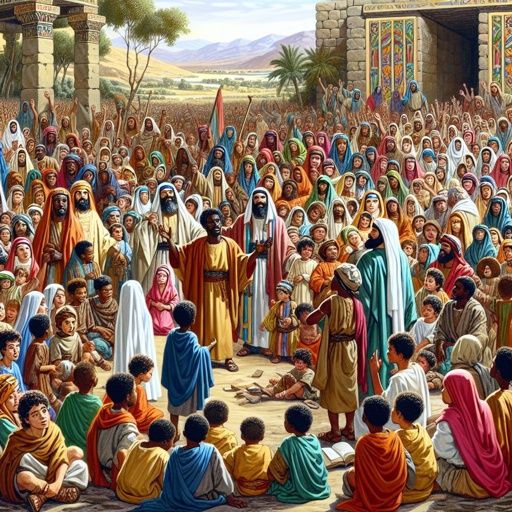
Ezra 2:18 - "The children of Jorah, an hundred and twelve."

Ezra 2:54 - "The children of Neziah, the children of Hatipha."

Ezra 2:20 - "The children of Gibbar, ninety and five."

Ezra 2:24 - "The children of Azmaveth, forty and two."

Ezra 2:39 - "The children of Harim, a thousand and seventeen."

Ezra 9:1-2

Ezra 2:9 - "The children of Zaccai, seven hundred and threescore."

Ezra 2:27 - "The men of Michmas, an hundred twenty and two."

Ezra 2:29 - "The children of Nebo, fifty and two."

Ezra 4:22 - "Take heed now that ye fail not to do this: why should damage grow to the hurt of the kings?"

Ezra 5:4 - "Then said we unto them after this manner, What are the names of the men that make this building?"

Ezra 4:8 - "Rehum the chancellor and Shimshai the scribe wrote a letter against Jerusalem to Artaxerxes the king in this sort:"