What does Ezra 2:37 mean?
"The children of Immer, a thousand fifty and two." - Ezra 2:37
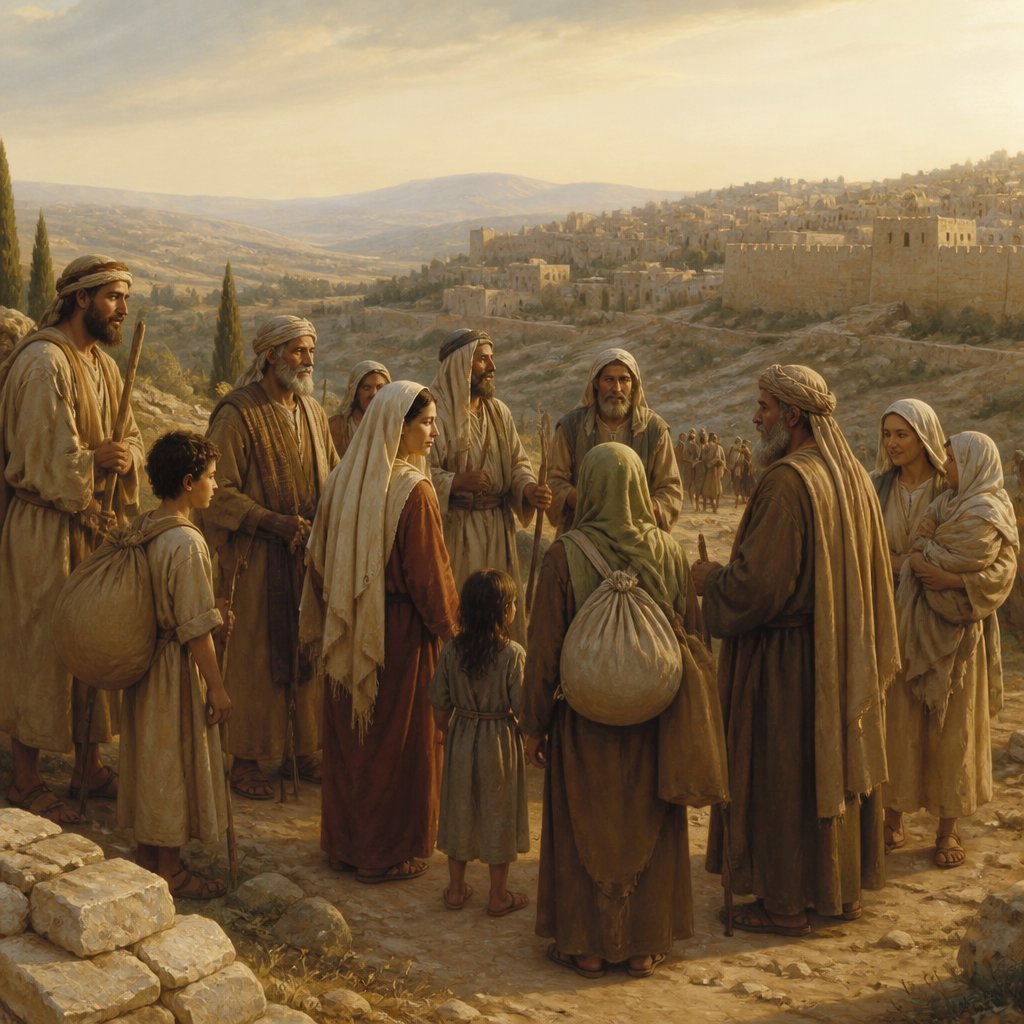
Ezra 2:37 (KJV) - The children of Lod, Hadid, and Ono, seven hundred twenty and one.
This verse comes from the book of Ezra, which details the story of the Jewish people returning to Jerusalem from Babylonian captivity. The verse specifically mentions three towns - Lod, Hadid, and Ono - and the number of people who came from each town to join in the journey back to Jerusalem.
The significance of this verse lies in the larger context of the book of Ezra, as well as the broader themes found in the Old Testament. The return from exile in Babylon was a pivotal moment in Jewish history, as it symbolized a new beginning for the Jewish people. After years of exile and suffering, they were finally able to return to their homeland and rebuild their lives and their faith.
One theme that is prominent in the book of Ezra is the importance of identity and belonging. The Jewish people were scattered and oppressed during their time in Babylon, and the return to Jerusalem was a way for them to reclaim their identity as a nation and a people. The mention of specific towns and the number of people from each town in this verse serves to emphasize the idea of community and belonging. It shows that the Jewish people were not returning to Jerusalem alone, but were part of a larger group connected by their shared history and faith.
Additionally, the verse reflects the theme of restoration and renewal. The fact that the Jewish people were able to return to their land and rebuild their lives after years of suffering and exile speaks to the idea of God's faithfulness and the potential for new beginnings. The specific mention of the number of people from each town serves as a reminder that God's plan for restoration includes individuals and communities from all walks of life.
Symbolically, the number 721 holds significance in biblical numerology. In Christianity, the number 7 represents completion and perfection, while the number 1 represents unity and new beginnings. Together, the numbers emphasize the idea of a complete and unified community returning to their homeland to start anew.
In a broader context, this verse serves as a reminder of the faithfulness of God and the importance of community and belonging. It is a testament to the resilience of the Jewish people and their unwavering faith in God's promises. The mention of specific towns and the number of people from each town serves as a reminder that God's plan for restoration includes individuals and communities from all walks of life. It reflects the idea that no one is overlooked or forgotten in God's plan for redemption and renewal.
In conclusion, Ezra 2:37 is a verse that holds significance within the larger narrative of the book of Ezra and the broader themes of the Old Testament. It speaks to the importance of identity and belonging, the themes of restoration and renewal, and the faithfulness of God. The specific mention of the number of people from each town serves as a reminder of the unity and diversity within the community of believers. Ultimately, this verse reminds us of the power of God's plan for redemption and the significance of community in the journey of faith.
Have questions about Ezra 2:37?
Dive deeper into this scripture with Bible Chat — an AI-powered tool for exploring God's Word through conversation. Ask questions, get context, and grow in your understanding of the Bible.
Get Our Apps


Ezra 2:37 Artwork

Ezra 2:37 - "The children of Immer, a thousand fifty and two."
"The children of Immer, a thousand fifty and two." - Ezra 2:37

Ezra 10:37 - "Mattaniah, Mattenai, and Jaasau,"

"Mattaniah, Mattenai, and Jaasau," - Ezra 10:37

Ezra 3:2

Ezra 3:2

Ezra 3:2

Ezra 3:2

Ezra 3:2

Ezra 9:1-2

Zerubbabel in Ezra chapter 2

Ezra 2:22 - "The men of Netophah, fifty and six."
Ezra 2:18 - "The children of Jorah, an hundred and twelve."

Ezra 2:54 - "The children of Neziah, the children of Hatipha."

Ezra 2:20 - "The children of Gibbar, ninety and five."

Ezra 2:24 - "The children of Azmaveth, forty and two."

Ezra 2:39 - "The children of Harim, a thousand and seventeen."

Ezra 9:1-2

Ezra 2:29 - "The children of Nebo, fifty and two."

Ezra 2:9 - "The children of Zaccai, seven hundred and threescore."

Ezra 2:27 - "The men of Michmas, an hundred twenty and two."

Ezra 2:32 - "The children of Harim, three hundred and twenty."

Ezra 2:30 - "The children of Magbish, an hundred fifty and six."

Ezra 2:16 - "The children of Ater of Hezekiah, ninety and eight."

Ezra 2:23 - "The men of Anathoth, an hundred twenty and eight."

Ezra 2:56 - "The children of Jaalah, the children of Darkon, the children of Giddel,"

Ezra 2:11 - "The children of Bebai, six hundred twenty and three."

Ezra 2:53 - "The children of Barkos, the children of Sisera, the children of Thamah,"

Ezra 2:45 - "The children of Lebanah, the children of Hagabah, the children of Akkub,"

Ezra 2:48 - "The children of Rezin, the children of Nekoda, the children of Gazzam,"