What does Ezra 2:23 mean?
"The men of Anathoth, an hundred twenty and eight." - Ezra 2:23
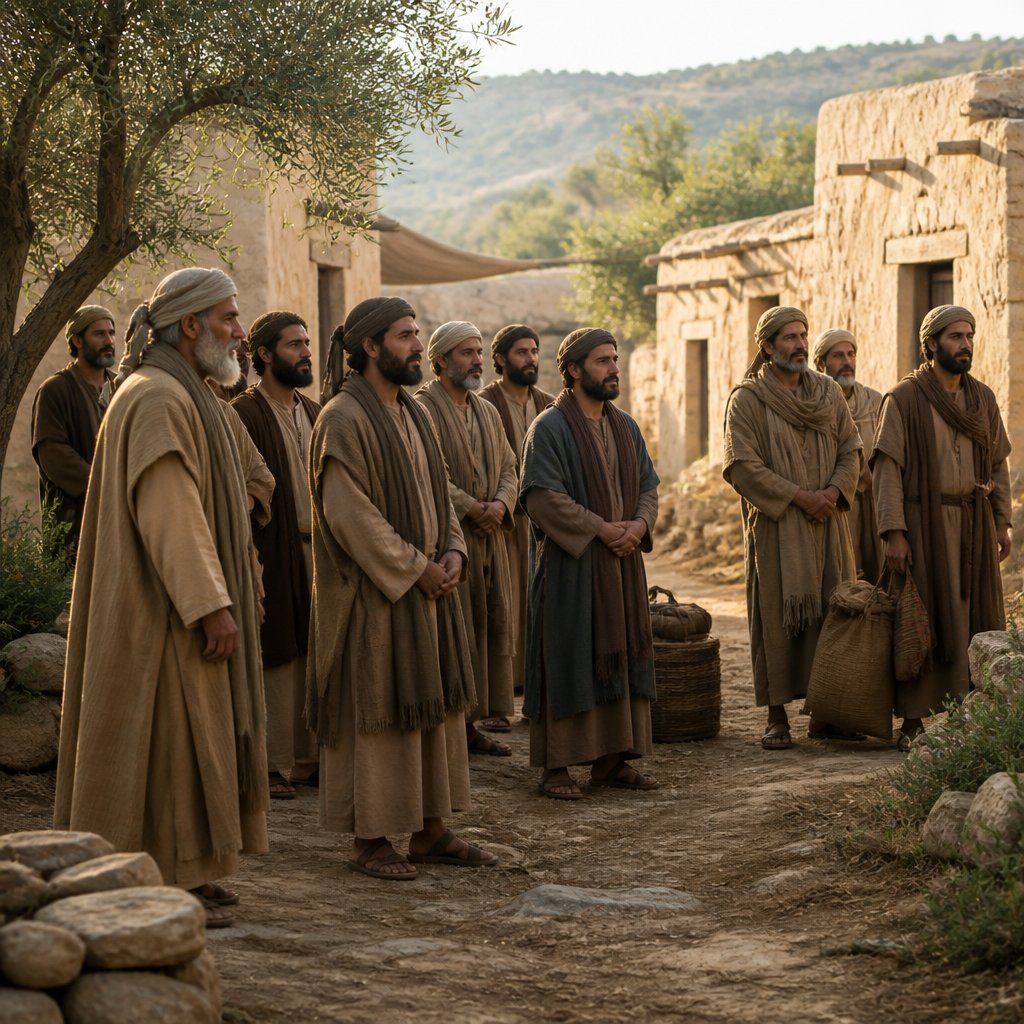
Ezra 2:23 in the King James Version of the Bible reads, "The men of Anathoth, an hundred twenty and eight." This verse is a part of the genealogy of the priests who returned from exile in Babylon to Jerusalem. It is a list of the families and numbers of the people who returned with Ezra to Jerusalem after being allowed to leave Babylonian captivity.
In order to fully understand the meaning and significance of this verse, it is important to consider the broader context in which it is situated. The book of Ezra is primarily concerned with the return of the Jews from exile in Babylon, and the rebuilding of the temple in Jerusalem. The verse in question is a part of a larger list of the returning exiles, specifically the priests who were returning to Jerusalem to serve in the temple.
The significance of the number 128 in this verse is not explicitly stated in the text, but it can be inferred that it represents the size and strength of the community of Anathoth. The fact that the number is given in such detail suggests that it was of significance to the original audience of the text, and can be seen as a representation of the meticulous attention to detail that is found throughout the Bible.
Anathoth itself is a significant location in the Bible, as it was the hometown of the prophet Jeremiah. Anathoth was a town allocated to the priests and Levites in the tribe of Benjamin, and it is highly probable that the men of Anathoth listed in this verse were descendants of the priestly line. This would have held great significance to the original audience, as the priesthood was a central aspect of Jewish religious and cultural life.
Beyond the literal meaning of the verse, there are also symbolic and allegorical interpretations that can be gleaned from this passage. The return of the exiles to Jerusalem and the re-establishment of the priesthood can be seen as a metaphor for spiritual restoration and renewal. It represents the fulfillment of God's promise to restore the fortunes of His people, and the reestablishment of the covenant between God and the Israelites.
The specific number mentioned in the verse, 128, can also have symbolic significance. In biblical numerology, the number 12 is often associated with completion and wholeness, as it represents the 12 tribes of Israel. When multiplied by 10, as in the number 128, it can be seen as a representation of abundance and completeness. This would have been a powerful symbol for the original audience, emphasizing the fullness and richness of the community of Anathoth.
Furthermore, the entire book of Ezra can be seen as a larger allegory for the restoration and redemption of God's people. The return from exile in Babylon represents a return to the promised land and a recommitment to the covenant with God. The specific mention of the men of Anathoth highlights the importance of the priesthood and the continuity of the religious traditions of the Israelites.
In conclusion, Ezra 2:23 is a verse that may seem simple at first glance, but upon closer examination, it reveals layers of meaning and symbolism. It is a representation of the restoration of the priesthood and the return of the exiles to Jerusalem, and it holds symbolic significance for the spiritual renewal and abundance of God's people. The meticulous listing of the number of men from Anathoth serves as a reminder of the attention to detail and the richness of the biblical narrative. Overall, this verse is a testament to the faithfulness and providence of God in bringing His people back to their promised land and restoring their religious traditions.
Have questions about Ezra 2:23?
Dive deeper into this scripture with Bible Chat — an AI-powered tool for exploring God's Word through conversation. Ask questions, get context, and grow in your understanding of the Bible.
Get Our Apps


Ezra 2:23 Artwork

Ezra 2:23 - "The men of Anathoth, an hundred twenty and eight."
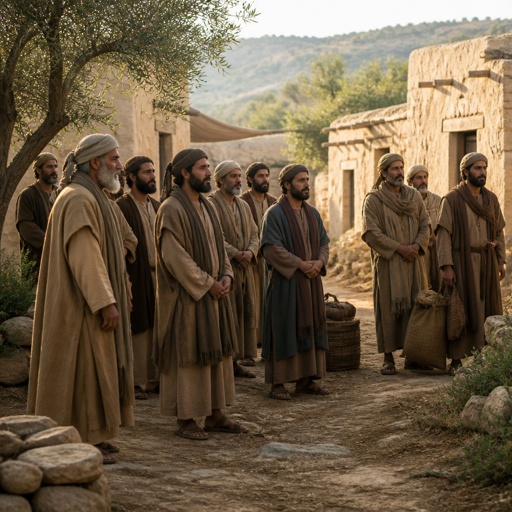
"The men of Anathoth, an hundred twenty and eight." - Ezra 2:23

Ezra 2:3 - "The children of Parosh, two thousand an hundred seventy and two."

Ezra 8:23 - "So we fasted and besought our God for this: and he was intreated of us."

"The children of Parosh, two thousand an hundred seventy and two." - Ezra 2:3

Ezra 10:23 - "Also of the Levites; Jozabad, and Shimei, and Kelaiah, (the same is Kelita,) Pethahiah, Judah, and Eliezer."

Ezra 3:2

Ezra 3:2

Ezra 3:2

Ezra 3:2

Ezra 3:2

Ezra 9:1-2

Zerubbabel in Ezra chapter 2

Ezra 2:22 - "The men of Netophah, fifty and six."
Ezra 2:18 - "The children of Jorah, an hundred and twelve."

Ezra 2:54 - "The children of Neziah, the children of Hatipha."

Ezra 2:20 - "The children of Gibbar, ninety and five."

Ezra 2:24 - "The children of Azmaveth, forty and two."

Ezra 2:39 - "The children of Harim, a thousand and seventeen."

Ezra 9:1-2

Ezra 2:29 - "The children of Nebo, fifty and two."

Ezra 2:9 - "The children of Zaccai, seven hundred and threescore."

Ezra 2:27 - "The men of Michmas, an hundred twenty and two."

Ezra 7:23 - "Whatsoever is commanded by the God of heaven, let it be diligently done for the house of the God of heaven: for why should there be wrath against the realm of the king and his sons?"

"So we fasted and besought our God for this: and he was intreated of us." - Ezra 8:23

Ezra 2:37 - "The children of Immer, a thousand fifty and two."

Ezra 2:32 - "The children of Harim, three hundred and twenty."

Ezra 2:30 - "The children of Magbish, an hundred fifty and six."

Ezra 2:16 - "The children of Ater of Hezekiah, ninety and eight."

Ezra 2:56 - "The children of Jaalah, the children of Darkon, the children of Giddel,"