What does Ezra 2:2 mean?
"Which came with Zerubbabel: Jeshua, Nehemiah, Seraiah, Reelaiah, Mordecai, Bilshan, Mispar, Bigvai, Rehum, Baanah. The number of the men of the people of Israel:" - Ezra 2:2
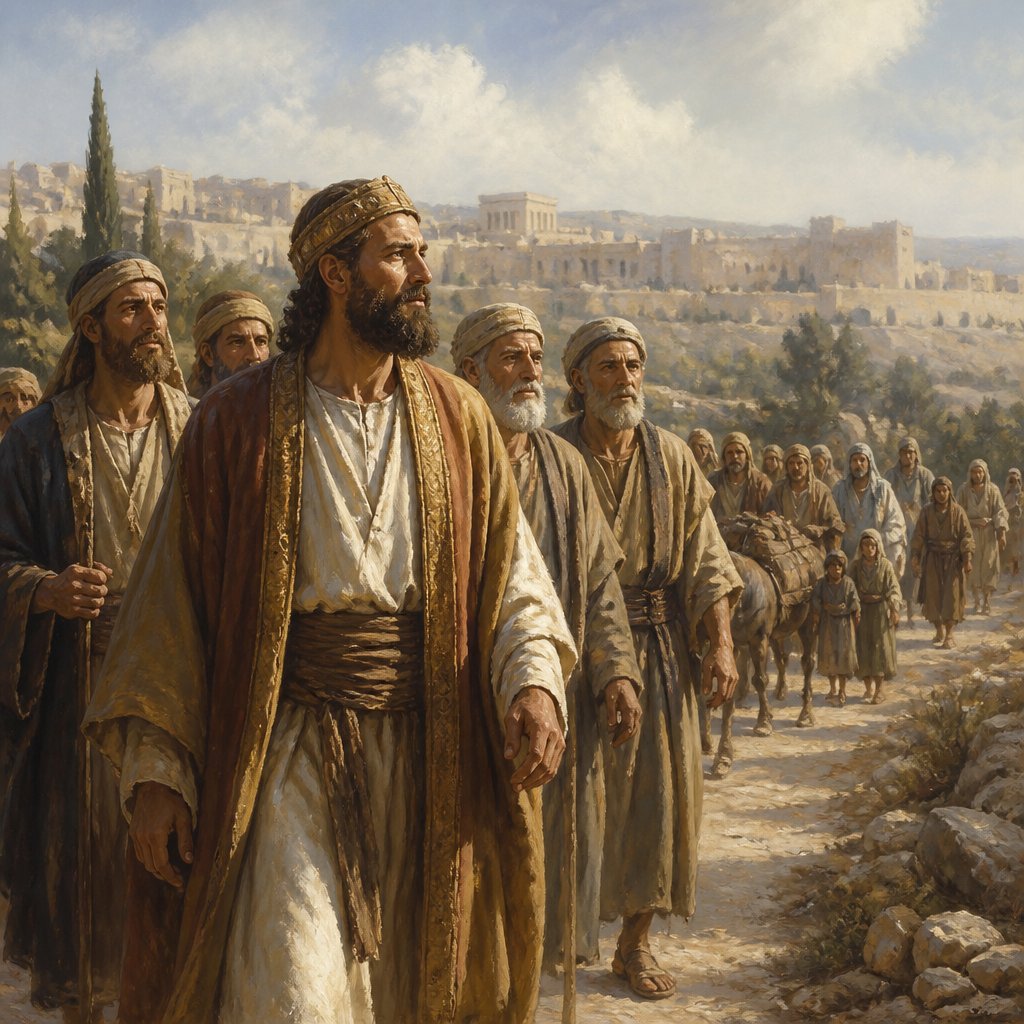
Ezra 2:2 in the King James Version of the Bible reads, "Which came with Zerubbabel: Jeshua, Nehemiah, Seraiah, Reelaiah, Mordecai, Bilshan, Mispar, Bigvai, Rehum, Baanah. The number of the men of the people of Israel."
This verse is part of a list of the heads of the families of those who returned from the Babylonian exile to Jerusalem. The Book of Ezra details the story of the Israelites returning to Jerusalem after being exiled for 70 years in Babylon. This return is significant in Jewish history as it marks the re-establishment of Jerusalem as the religious and administrative center of the Jewish people.
The context of this verse is the return of the Israelites to Jerusalem under the leadership of Zerubbabel, who was a governor of Judah appointed by the king of Persia. This return was a pivotal moment for the Jewish people, as it signified the fulfillment of God's promise to restore them to their homeland after the exile.
One of the primary themes of this verse is the faithfulness of God in fulfilling his promises. Throughout the Old Testament, God made numerous promises to the people of Israel, and the return from exile is a tangible example of his faithfulness. Despite their disobedience and exile, God remained faithful to his covenant with the Israelites, and he fulfilled his promise to bring them back to their land.
Another theme in this verse is the importance of leadership. The mention of Zerubbabel, Jeshua, and Nehemiah as leaders of the returnees emphasizes the role of strong and faithful leaders in guiding the people. Zerubbabel, in particular, is noted for his leadership in rebuilding the temple in Jerusalem, which was crucial for the restoration of the Jewish religious practices.
Symbolism is also present in this verse, particularly in the names mentioned. In biblical literature, names often carry deep significance, and the names of the leaders listed in this verse hold symbolic meaning. For example, the name Jeshua means "God is salvation," emphasizing the role of God in the return of the Israelites. The name Mordecai is also noteworthy, as it is the same name as the hero of the Book of Esther, which is another story of deliverance for the Jewish people.
Furthermore, the number of the men of the people of Israel is not only a literal count but also holds symbolic significance. The returning of the people to Israel was not just a physical reestablishment but also a spiritual revival. The return from exile was a time of renewal and restoration for the Jewish people, and the counting of the men signifies the reconstitution of the community.
In analyzing Ezra 2:2, it becomes clear that this verse holds significant historical, theological, and symbolic importance. It serves as a reminder of God's faithfulness, the importance of leadership, and the symbolic nature of the return from exile. It also speaks to the themes of restoration, renewal, and spiritual revival, which are central to the story of the Israelites' return to Jerusalem. As such, this verse continues to be a source of inspiration and encouragement for believers in God's promises and his ability to restore and renew his people.
Have questions about Ezra 2:2?
Dive deeper into this scripture with Bible Chat — an AI-powered tool for exploring God's Word through conversation. Ask questions, get context, and grow in your understanding of the Bible.
Get Our Apps


Ezra 2:2 Artwork

Ezra 2:2 - "Which came with Zerubbabel: Jeshua, Nehemiah, Seraiah, Reelaiah, Mordecai, Bilshan, Mispar, Bigvai, Rehum, Baanah. The number of the men of the people of Israel:"
"Which came with Zerubbabel: Jeshua, Nehemiah, Seraiah, Reelaiah, Mordecai, Bilshan, Mispar, Bigvai, Rehum, Baanah. The number of the men of the people of Israel:" - Ezra 2:2

Ezra 3:2

Ezra 3:2

Ezra 3:2

Ezra 3:2

Ezra 3:2

Zerubbabel in Ezra chapter 2

Ezra 9:1-2

Ezra 2:22 - "The men of Netophah, fifty and six."
Ezra 2:18 - "The children of Jorah, an hundred and twelve."

Ezra 2:54 - "The children of Neziah, the children of Hatipha."

Ezra 2:20 - "The children of Gibbar, ninety and five."

Ezra 2:24 - "The children of Azmaveth, forty and two."

Ezra 2:39 - "The children of Harim, a thousand and seventeen."

Ezra 9:1-2

Ezra 2:29 - "The children of Nebo, fifty and two."

Ezra 2:9 - "The children of Zaccai, seven hundred and threescore."

Ezra 2:27 - "The men of Michmas, an hundred twenty and two."

Ezra 2:32 - "The children of Harim, three hundred and twenty."

Ezra 2:37 - "The children of Immer, a thousand fifty and two."

Ezra 2:30 - "The children of Magbish, an hundred fifty and six."

Ezra 2:16 - "The children of Ater of Hezekiah, ninety and eight."

Ezra 2:23 - "The men of Anathoth, an hundred twenty and eight."

Ezra 2:56 - "The children of Jaalah, the children of Darkon, the children of Giddel,"

Ezra 2:11 - "The children of Bebai, six hundred twenty and three."

Ezra 2:53 - "The children of Barkos, the children of Sisera, the children of Thamah,"

Ezra 2:48 - "The children of Rezin, the children of Nekoda, the children of Gazzam,"

Ezra 2:15 - "The children of Adin, four hundred fifty and four."

Ezra 7:2 - "The son of Shallum, the son of Zadok, the son of Ahitub,"