What does Ezra 2:16 mean?
"The children of Ater of Hezekiah, ninety and eight." - Ezra 2:16

Ezra 2:16 in the King James Version reads: "The children of Ater of Hezekiah, ninety and eight."
This verse comes from the book of Ezra in the Old Testament, which details the return of the Israelites from Babylonian exile and the rebuilding of the temple in Jerusalem. In this chapter, the Israelites are counted as they return to their homeland, revealing the vast numbers who were returning to reestablish their lives in their ancestral land.
The verse itself may seem to be simply a record of the number of descendants of Ater and Hezekiah who returned to Jerusalem, but like many passages in the Bible, it holds deeper meaning and significance within the broader context of the text and historical background.
First, it is important to understand the significance of the names Ater and Hezekiah. Ater is believed to mean "bond" or "shut up," and Hezekiah means "Yahweh strengthens." These names can be seen as symbolic of the Israelite people's experience in Babylonian exile. They were "shut up" or held in bondage in a foreign land, but through the strength and support of Yahweh, they were able to return to their homeland.
The number ninety-eight also holds symbolic significance. In biblical numerology, the number nine often represents completeness or finality, while the number eight represents new beginnings or resurrection. Therefore, the combination of these numbers in this verse may symbolize the completion of a cycle or the final stage of the Israelites' exile and the beginning of a new chapter in their history.
Another important theme in this verse is the idea of restoration. The return of the Israelites to Jerusalem marked a period of religious and cultural restoration for the Jewish people. The rebuilding of the temple, which is the central focus of the book of Ezra, symbolized the restoration of their spiritual identity and the renewal of their covenant with Yahweh. The mention of the descendants of Ater and Hezekiah among the returnees underscores the idea of restoration and renewal, as they were among those who were reclaiming their ancestral heritage in Jerusalem.
Furthermore, this verse highlights the importance of genealogy and lineage in the Bible. The meticulous record-keeping of the Israelite families demonstrates the value placed on preserving their ancestral heritage and ties to the promises of God. This emphasis on genealogy also serves to underscore the legitimacy of the returning exiles as the rightful heirs to the land and the covenant with Yahweh.
In a broader sense, this verse serves as a reminder of the faithfulness of God and His commitment to His people. The return of the Israelites from exile and the restoration of their land and temple were all part of God's plan to fulfill His promises to His chosen people. The mention of the descendants of Ater and Hezekiah among the returnees serves as a testimony to God's faithfulness and His ability to bring about restoration and new beginnings even in the midst of exile and hardship.
In conclusion, Ezra 2:16 may appear to be a simple verse recording a count of returning Israelites, but within the broader context of the book of Ezra and the historical background of the Israelites' exile and restoration, it holds deep significance. It symbolizes the completion of a cycle, the beginning of a new chapter, and the restoration of the Israelites' spiritual and cultural identity. It also underscores the importance of genealogy and God's faithfulness in fulfilling His promises to His people.
Have questions about Ezra 2:16?
Dive deeper into this scripture with Bible Chat — an AI-powered tool for exploring God's Word through conversation. Ask questions, get context, and grow in your understanding of the Bible.
Get Our Apps


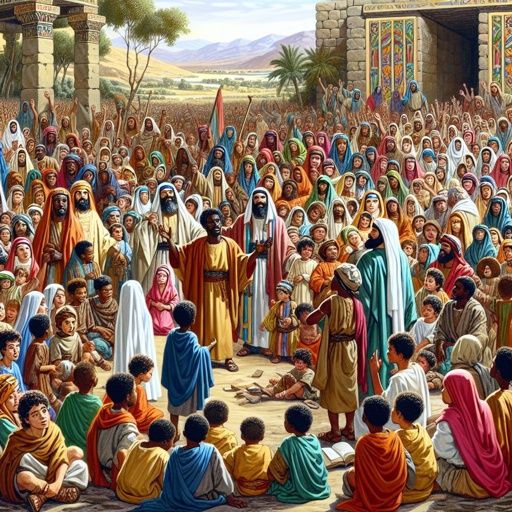
Ezra 2:16 Artwork

Ezra 2:16 - "The children of Ater of Hezekiah, ninety and eight."

"The children of Ater of Hezekiah, ninety and eight." - Ezra 2:16

Ezra 6:16

Ezra 6:15-16

Ezra 6:15-16

Ezra 10:16 - "And the children of the captivity did so. And Ezra the priest, with certain chief of the fathers, after the house of their fathers, and all of them by their names, were separated, and sat down in the first day of the tenth month to examine the matter."

Ezra 3:2

Ezra 3:2

Ezra 3:2

Ezra 3:2

Ezra 3:2

Ezra 6:16 - "¶ And the children of Israel, the priests, and the Levites, and the rest of the children of the captivity, kept the dedication of this house of God with joy,"

Ezra 9:1-2

Zerubbabel in Ezra chapter 2

Ezra 2:22 - "The men of Netophah, fifty and six."
Ezra 2:18 - "The children of Jorah, an hundred and twelve."

Ezra 2:54 - "The children of Neziah, the children of Hatipha."

Ezra 2:20 - "The children of Gibbar, ninety and five."

Ezra 2:24 - "The children of Azmaveth, forty and two."

Ezra 2:39 - "The children of Harim, a thousand and seventeen."

Ezra 9:1-2

Ezra 2:29 - "The children of Nebo, fifty and two."

Ezra 2:9 - "The children of Zaccai, seven hundred and threescore."

Ezra 2:27 - "The men of Michmas, an hundred twenty and two."

Ezra 4:16 - "We certify the king that, if this city be builded again, and the walls thereof set up, by this means thou shalt have no portion on this side the river."

Ezra 2:37 - "The children of Immer, a thousand fifty and two."

Ezra 2:32 - "The children of Harim, three hundred and twenty."

Ezra 2:30 - "The children of Magbish, an hundred fifty and six."

Ezra 2:23 - "The men of Anathoth, an hundred twenty and eight."

Ezra 2:56 - "The children of Jaalah, the children of Darkon, the children of Giddel,"