What does Ezra 2:13 mean?
"The children of Adonikam, six hundred sixty and six." - Ezra 2:13
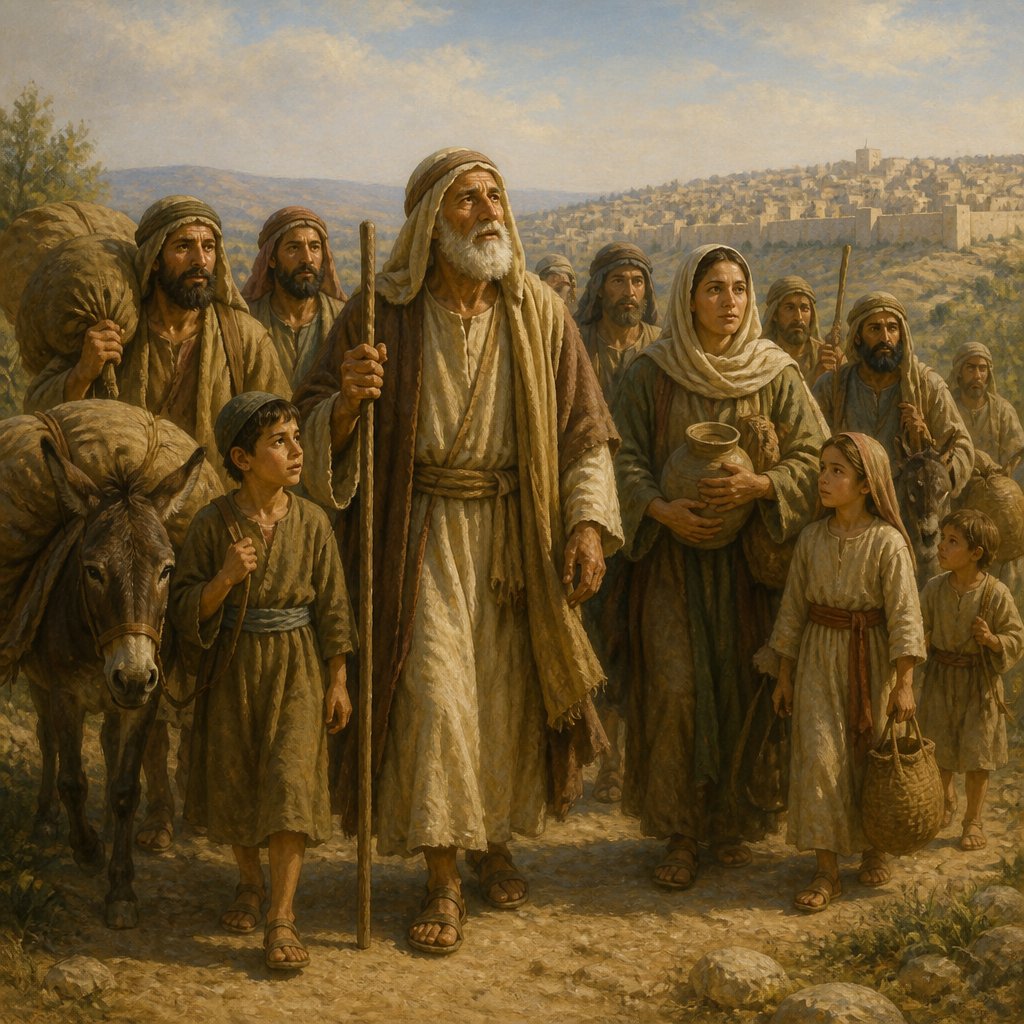
Ezra 2:13 (KJV) - The children of Adonikam, six hundred sixty and six.
This verse is from the book of Ezra in the Old Testament, which narrates the return of the Israelites from captivity in Babylon and the rebuilding of the temple in Jerusalem. This particular verse lists the number of the descendants of Adonikam who returned from exile to Judah. The significance of this verse lies not only in the specific number mentioned but also in the broader themes of restoration, identity, and divine providence.
The mention of the children of Adonikam and their specific number, six hundred sixty-six, may seem rather mundane and unremarkable at first glance. However, when placed in the greater context of the book of Ezra and the biblical narrative as a whole, this verse takes on deeper significance. The returning exiles were making a conscious effort to rebuild their community and reestablish their identity as the people of God. The careful recording of the number of individuals from each family reflects the importance of their lineage and the preservation of their heritage. Each family's return to Judah was a step toward the restoration of a nation that had been devastated by exile.
The number six hundred sixty-six has also garnered attention for its potential symbolism. In the Book of Revelation, the number 666 is associated with a mark of the beast, representing rebellion and opposition to God. It has been the subject of much speculation and interpretation, often tied to apocalyptic and eschatological themes. However, in the context of Ezra 2:13, it is important to note that the use of the number is purely numerical and does not carry the same connotations as in Revelation. Here, it simply serves as a record of the size and strength of the returning community.
The broader theme of restoration is evident throughout the book of Ezra. The return from exile marked a pivotal moment in the history of the Israelites, as they sought to reestablish their religious practices, cultural identity, and social cohesion. The rebuilding of the temple in Jerusalem was a concrete symbol of their commitment to renewing their covenant with God and reclaiming their status as His chosen people. The meticulous enumeration of the returning exiles underscores the significance of this restoration, showing that each individual was valued and accounted for in the process of rebuilding their community.
Moreover, this verse highlights the theme of divine providence. The fact that the descendants of Adonikam were able to return from exile and contribute to the reconstruction of their homeland was ultimately due to God's faithfulness and intervention. Throughout the book of Ezra, we see how God orchestrated the events that led to the return of the exiles and provided for them as they sought to rebuild their lives. The recording of the exact number of individuals from each family serves as a testament to God's sovereignty and care for His people.
In conclusion, while Ezra 2:13 may appear to be a simple list of names and numbers, it carries profound significance within the broader biblical narrative. It speaks to the themes of restoration, identity, and divine providence, highlighting the Israelites' determination to reclaim their heritage and the faithfulness of God in guiding and sustaining them. As readers engage with this verse, they are reminded of the importance of their own spiritual lineage and the enduring promise of God's presence in times of restoration and renewal.
Have questions about Ezra 2:13?
Dive deeper into this scripture with Bible Chat — an AI-powered tool for exploring God's Word through conversation. Ask questions, get context, and grow in your understanding of the Bible.
Get Our Apps


Ezra 2:13 Artwork
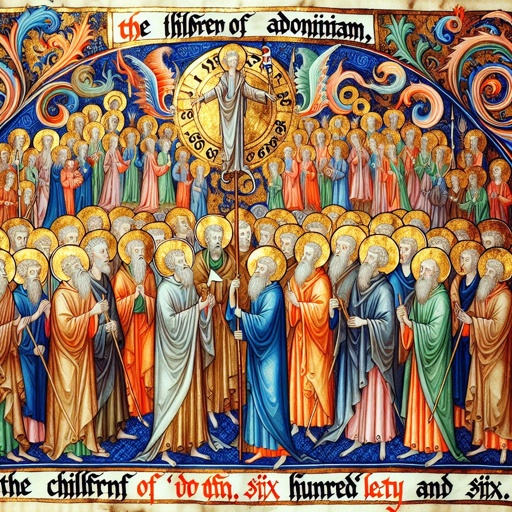
Ezra 2:13 - "The children of Adonikam, six hundred sixty and six."
"The children of Adonikam, six hundred sixty and six." - Ezra 2:13

Ezra 9:13-15

Nehemiah 12:13 - "Of Ezra, Meshullam; of Amariah, Jehohanan;"

"Of Ezra, Meshullam; of Amariah, Jehohanan;" - Nehemiah 12:13

Ezra 3:2

Ezra 3:2

Ezra 3:2

Ezra 8:13 - "And of the last sons of Adonikam, whose names are these, Eliphelet, Jeiel, and Shemaiah, and with them threescore males."

Ezra 3:2

Ezra 3:2

Ezra 9:1-2

Zerubbabel in Ezra chapter 2

Ezra 5:13 - "But in the first year of Cyrus the king of Babylon the same king Cyrus made a decree to build this house of God."

Ezra 2:22 - "The men of Netophah, fifty and six."
Ezra 2:18 - "The children of Jorah, an hundred and twelve."

Ezra 2:54 - "The children of Neziah, the children of Hatipha."

Ezra 2:20 - "The children of Gibbar, ninety and five."

Ezra 2:24 - "The children of Azmaveth, forty and two."

Ezra 2:39 - "The children of Harim, a thousand and seventeen."

Ezra 9:1-2

Ezra 2:9 - "The children of Zaccai, seven hundred and threescore."

Ezra 2:27 - "The men of Michmas, an hundred twenty and two."

Ezra 2:29 - "The children of Nebo, fifty and two."

Ezra 2:56 - "The children of Jaalah, the children of Darkon, the children of Giddel,"

Ezra 2:11 - "The children of Bebai, six hundred twenty and three."

Ezra 2:53 - "The children of Barkos, the children of Sisera, the children of Thamah,"

Ezra 2:48 - "The children of Rezin, the children of Nekoda, the children of Gazzam,"

Ezra 2:15 - "The children of Adin, four hundred fifty and four."

Ezra 7:2 - "The son of Shallum, the son of Zadok, the son of Ahitub,"