What does Ezra 10:4 mean?
"Arise; for this matter belongeth unto thee: we also will be with thee: be of good courage, and do it." - Ezra 10:4
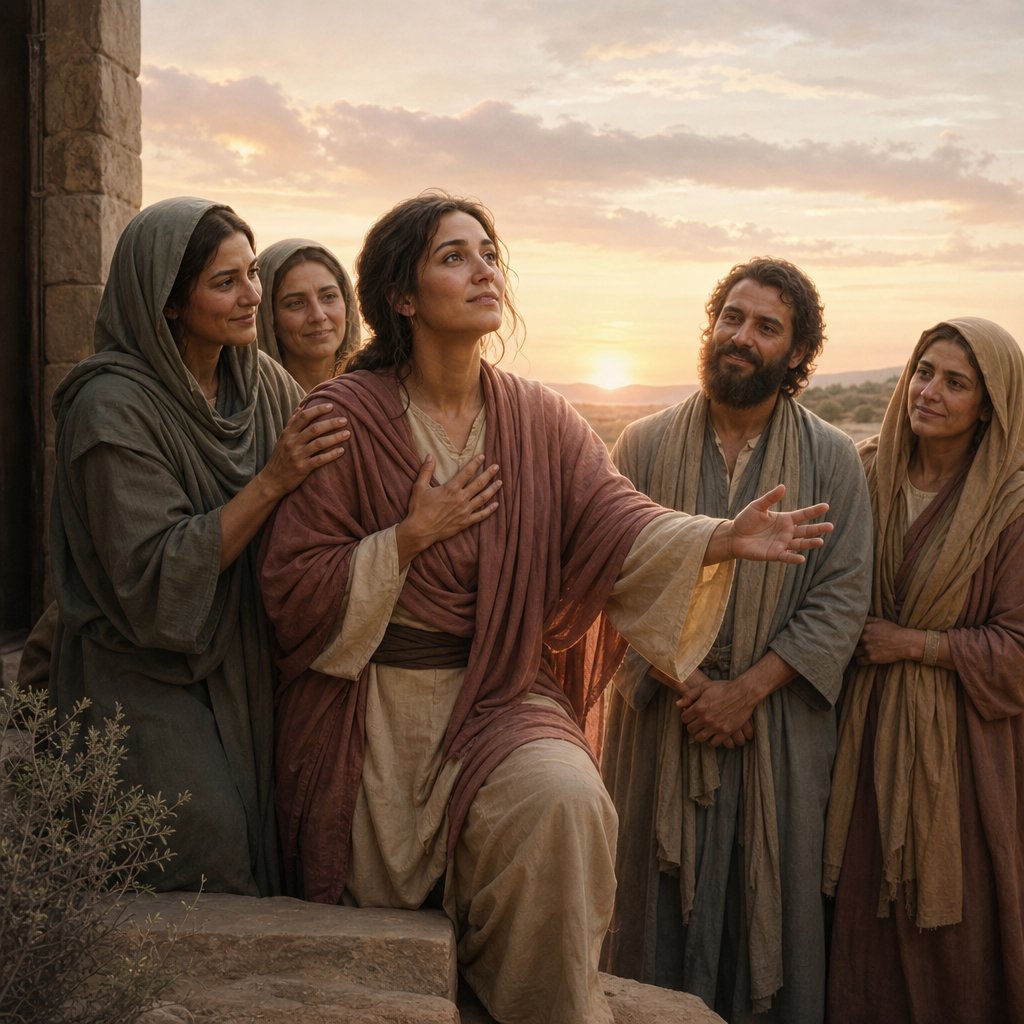
Ezra 10:4 in the King James Version reads, “Arise; for this matter belongeth unto thee: we also will be with thee: be of good courage, and do it.” The verse is spoken to Ezra, and its meaning comes into focus when it is heard inside the moral crisis that has just been uncovered in Jerusalem. Ezra has learned that many of the returned remnant, including some of the princes and rulers, have taken wives from the surrounding peoples, contrary to the covenant pattern God had set for Israel. In response he is overwhelmed with grief, tears, and confession, sitting astonished and humbling himself before God. Ezra’s sorrow is not private despair; it becomes a public act of repentance that draws the community into the seriousness of their sin. Ezra 10:4 is the moment when another voice—Shechaniah—speaks into Ezra’s paralysis of grief and urges him from mourning into obedient action.
The first word, “Arise,” carries the force of a summons. It signals a transition from lament to responsibility, from sitting in abasement to standing in covenant resolve. In Scripture, rising often marks readiness to obey, to judge rightly, to rebuild, or to lead. Here it functions as a call to spiritual leadership: Ezra is not being asked merely to feel the weight of the nation’s unfaithfulness but to respond as the appointed scribe and reformer. The verse assumes that godly sorrow must move toward godly correction; tears are not the final goal. This is repentance that bears fruit in deeds.
“For this matter belongeth unto thee” recognizes Ezra’s particular calling and authority. Ezra is a priestly scribe “skilful in the law of Moses,” entrusted to teach statutes and judgments, and to order the community according to the law of the LORD. The phrase does not mean Ezra is guilty in the same sense as those who sinned, but that the burden of leading the remedy falls upon him. It acknowledges a divine stewardship: when covenant life is threatened, God raises leaders to apply His word, not as mere administrators, but as shepherds of holiness. The significance is that reform is not simply a collective feeling of remorse; it requires a clear, lawful, covenant-guided process. Ezra must take ownership of the matter in the sense of guiding it to a righteous resolution.
“We also will be with thee” speaks to shared repentance and communal support. Shechaniah does not leave Ezra alone to carry the cost of reform. The people’s sin has become the people’s concern, and the people pledge themselves to stand with the leader who must confront it. This is important because obedience in hard matters is often resisted; Ezra will need the backing of those who fear God. The words also soften the loneliness that often accompanies faithful leadership. In biblical terms, restoration is not achieved by a solitary hero but by a community that turns together. The verse therefore holds out a picture of corporate responsibility: leaders lead, but the people must follow in earnestness.
“Be of good courage, and do it” binds the whole exhortation together with a moral imperative. Courage here is not mere confidence or personality; it is the strength to obey God when obedience will be painful, complex, and socially costly. The issue at hand involved families, marriages, and children, and would stir deep emotion and opposition. To “do it” emphasizes that the needed response is not theoretical or symbolic only; it must be enacted. In the KJV, the bluntness of “do it” underscores that delayed obedience or partial measures will not heal covenant breach. The verse therefore presents courage as the companion of holiness: where God’s will confronts human entanglements, courage is required to carry righteousness through to completion.
The broader context of Ezra 10 shows why the verse is so weighty. The returned exiles were a restored people, brought back from captivity by God’s mercy. The temple had been rebuilt, worship had resumed, and the community stood again on the land as a testimony to God’s faithfulness. Yet the very identity of the restored remnant was endangered by assimilation into surrounding idolatries and practices. The forbidden marriages were not merely ethnic prejudice; they represented spiritual compromise and the reintroduction of the very covenant-breaking patterns that had previously led to judgment and exile. Thus Ezra’s grief is covenant grief: the fear that the mercy of return could be squandered by repeating the sins that brought ruin.
Within that setting, Ezra 10:4 carries themes of covenant fidelity, repentance, leadership, and communal holiness. It also carries a symbolic movement from posture to action. Ezra begins in sackcloth and astonishment, a picture of humility and confession. “Arise” symbolizes the point at which humility becomes obedience. In biblical symbolism, dust and sitting often represent mourning; standing and rising represent readiness to serve the LORD. The verse does not reject mourning; it completes it. True repentance both mourns sin and turns from it.
There is also a subtle but significant interplay between human responsibility and communal encouragement. “This matter belongeth unto thee” places accountability on Ezra’s office, while “we also will be with thee” shows that the people must not treat reform as someone else’s problem. The verse therefore portrays a healthy covenant community: one in which God’s word is applied through rightful leadership, and the people strengthen the leader’s hands rather than undermining them.
Finally, the verse’s significance lies in its moral clarity. In moments of spiritual crisis, people can be trapped either in denial or in despair. Ezra 10:4 rejects both. It acknowledges the seriousness of the matter, yet insists that obedience is possible and must be pursued. It is a call to decisive faithfulness: rise up, accept the stewardship God has given, receive the support of those who repent with you, and courageously carry out what the covenant requires. In this way, Ezra 10:4 stands as a turning point from national shame toward national cleansing, from sorrow that confesses to repentance that acts, so that the restored people might again live distinctly as the LORD’s.
Have questions about Ezra 10:4?
Dive deeper into this scripture with Bible Chat — an AI-powered tool for exploring God's Word through conversation. Ask questions, get context, and grow in your understanding of the Bible.
Get Our Apps


Ezra 10:4 Artwork

Ezra 10:4 - "Arise; for this matter belongeth unto thee: we also will be with thee: be of good courage, and do it."
"Arise; for this matter belongeth unto thee: we also will be with thee: be of good courage, and do it." - Ezra 10:4

Ezra 4:10 - "And the rest of the nations whom the great and noble Asnappar brought over, and set in the cities of Samaria, and the rest that are on this side the river, and at such a time."

Ezra 10:10-12

Ezra 4:4

Ezra 10:10 - "And Ezra the priest stood up, and said unto them, Ye have transgressed, and have taken strange wives, to increase the trespass of Israel."

Ezra 4:4

Ezra 10:3

Ezra 3:10

Ezra 10:3

Ezra 10:5 - "Then arose Ezra, and made the chief priests, the Levites, and all Israel, to swear that they should do according to this word. And they sware."

Ezra 7:10 - "For Ezra had prepared his heart to seek the law of the LORD, and to do it, and to teach in Israel statutes and judgments."

Ezra 10:38 - "And Bani, and Binnui, Shimei,"

Ezra 10:37 - "Mattaniah, Mattenai, and Jaasau,"

Ezra 10:40 - "Machnadebai, Shashai, Sharai,"

Ezra 10:32 - "Benjamin, Malluch, and Shemariah."

Ezra 10:35 - "Benaiah, Bedeiah, Chelluh,"

Ezra 10:41 - "Azareel, and Shelemiah, Shemariah,"

Ezra 10:36 - "Vaniah, Meremoth, Eliashib,"

Ezra 10:42 - "Shallum, Amariah, and Joseph."

Ezra 10:39 - "And Shelemiah, and Nathan, and Adaiah,"

Ezra 10:20 - "And of the sons of Immer; Hanani, and Zebadiah."

Ezra 10:34 - "Of the sons of Bani; Maadai, Amram, and Uel,"

Zerubbabel in Ezra chapter 4

Zerubbabel in Ezra chapter 4

Ezra 4:4 - "Then the people of the land weakened the hands of the people of Judah, and troubled them in building,"

Ezra 2:10 - "The children of Bani, six hundred forty and two."

Ezra 10:24 - "Of the singers also; Eliashib: and of the porters; Shallum, and Telem, and Uri."

Ezra 10:21 - "And of the sons of Harim; Maaseiah, and Elijah, and Shemaiah, and Jehiel, and Uzziah."

Ezra 10:31 - "And of the sons of Harim; Eliezer, Ishijah, Malchiah, Shemaiah, Shimeon,"