What does Ezra 10:37 mean?
"Mattaniah, Mattenai, and Jaasau," - Ezra 10:37
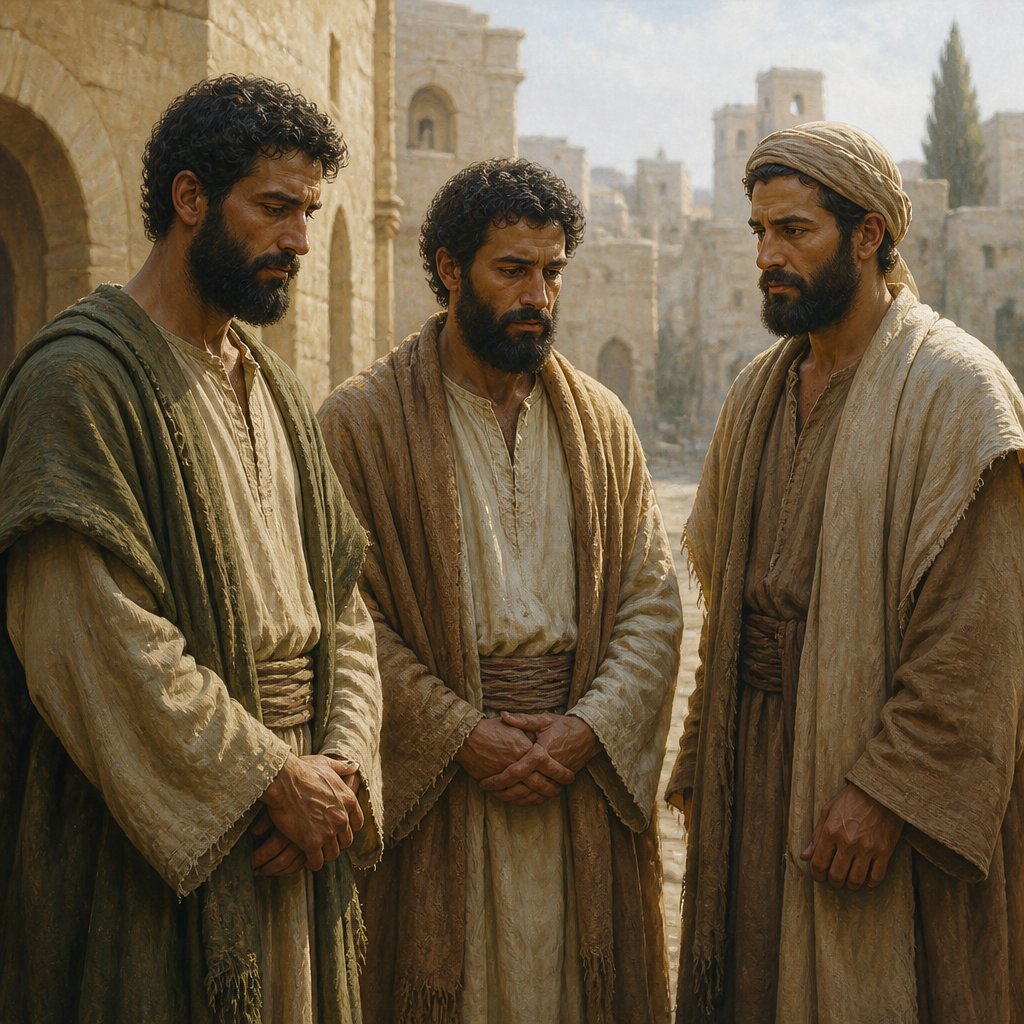
Ezra 10:37 in the King James Version (KJV) reads: "And of the sons of Bani; Maadai, Amram, and Uel,". To truly understand and appreciate the full meaning and significance of this verse, it is important to examine it within the larger context of the Book of Ezra and the historical and cultural background of the ancient Israelites.
The Book of Ezra is set in the time period following the Babylonian exile, when the Israelites were allowed to return to Jerusalem and rebuild the temple. It focuses on the efforts of Ezra, a scribe and priest, to restore the religious and moral integrity of the Israelites. The verse in question is part of a list of names of those who had taken foreign wives and were now facing the consequences of their actions.
In the historical and cultural context of the ancient Israelites, marriage was not just a personal or social union, but a religious and covenantal relationship. The Israelites were commanded to marry within their own community to preserve their identity as the chosen people of God. Therefore, when some of the Israelites began to intermarry with foreign women, it was seen as a violation of their religious and cultural identity.
The verse lists the names of the sons of Bani, emphasizing individual accountability and the consequences of their actions. By mentioning these specific names, the verse underscores the personal nature of the issue at hand. The individuals listed were responsible for their choices and actions, and were now facing the challenges and consequences of their decisions.
One theme that emerges from this verse is the importance of personal accountability and responsibility. The Bible often emphasizes the concept of personal accountability, stressing that individuals are responsible for their own actions and the consequences that follow. The verse highlights the significance of individual choices and the impact they can have on the community as a whole.
The verse also serves as a reminder of the dangers of compromising one's beliefs and values. The intermarriage with foreign women was not simply a matter of personal preference, but a compromise of the Israelites' religious and cultural identity. It serves as a cautionary tale, warning against the temptations of assimilation and the potential loss of one's heritage and faith.
Symbolically, the names mentioned in the verse represent the individual members of the community who had strayed from the path of righteousness. By including specific names, the verse conveys a sense of personal identification and relevance. It underscores the idea that each person's choices and actions have a direct impact on the community as a whole.
In conclusion, Ezra 10:37 from the King James Version of the Bible holds a deeper meaning within the larger context of the Book of Ezra and the historical and cultural background of the ancient Israelites. It serves as a reminder of the importance of personal accountability, the dangers of compromising one's beliefs, and the impact of individual choices on the community. It emphasizes the need to uphold one's religious and cultural identity and the consequences of straying from the path of righteousness. The specific names mentioned in the verse symbolize the personal nature of the issue at hand and the individual responsibility of each member of the community.
Have questions about Ezra 10:37?
Dive deeper into this scripture with Bible Chat — an AI-powered tool for exploring God's Word through conversation. Ask questions, get context, and grow in your understanding of the Bible.
Get Our Apps


Ezra 10:37 Artwork

Ezra 10:37 - "Mattaniah, Mattenai, and Jaasau,"

"Mattaniah, Mattenai, and Jaasau," - Ezra 10:37

Ezra 2:37 - "The children of Immer, a thousand fifty and two."

Ezra 10:10-12
"The children of Immer, a thousand fifty and two." - Ezra 2:37

Ezra 10:10 - "And Ezra the priest stood up, and said unto them, Ye have transgressed, and have taken strange wives, to increase the trespass of Israel."

Ezra 10:3

Ezra 3:10

Ezra 10:3

Ezra 10:5 - "Then arose Ezra, and made the chief priests, the Levites, and all Israel, to swear that they should do according to this word. And they sware."

Ezra 7:10 - "For Ezra had prepared his heart to seek the law of the LORD, and to do it, and to teach in Israel statutes and judgments."

Ezra 10:38 - "And Bani, and Binnui, Shimei,"

Ezra 10:40 - "Machnadebai, Shashai, Sharai,"

Ezra 10:32 - "Benjamin, Malluch, and Shemariah."

Ezra 10:35 - "Benaiah, Bedeiah, Chelluh,"

Ezra 10:41 - "Azareel, and Shelemiah, Shemariah,"

Ezra 10:36 - "Vaniah, Meremoth, Eliashib,"

Ezra 10:42 - "Shallum, Amariah, and Joseph."

Ezra 10:39 - "And Shelemiah, and Nathan, and Adaiah,"

Ezra 10:20 - "And of the sons of Immer; Hanani, and Zebadiah."

Ezra 10:34 - "Of the sons of Bani; Maadai, Amram, and Uel,"

Ezra 2:10 - "The children of Bani, six hundred forty and two."

Ezra 10:24 - "Of the singers also; Eliashib: and of the porters; Shallum, and Telem, and Uri."

Ezra 10:21 - "And of the sons of Harim; Maaseiah, and Elijah, and Shemaiah, and Jehiel, and Uzziah."

Ezra 10:31 - "And of the sons of Harim; Eliezer, Ishijah, Malchiah, Shemaiah, Shimeon,"

Ezra 10:28 - "Of the sons also of Bebai; Jehohanan, Hananiah, Zabbai, and Athlai."

"Azareel, and Shelemiah, Shemariah," - Ezra 10:41

"And Bani, and Binnui, Shimei," - Ezra 10:38

"And Shelemiah, and Nathan, and Adaiah," - Ezra 10:39

"Vaniah, Meremoth, Eliashib," - Ezra 10:36