What does Ezra 10:16 mean?
"And the children of the captivity did so. And Ezra the priest, with certain chief of the fathers, after the house of their fathers, and all of them by their names, were separated, and sat down in the first day of the tenth month to examine the matter." - Ezra 10:16

The Bible verse Ezra 10:16 in the King James Version (KJV) states, "And the children of the captivity did so. And Ezra the priest, with certain chief of the fathers, after the house of their fathers, and all of them by their names, were separated, and sat down in the first day of the tenth month to examine the matter."
This verse comes from the book of Ezra, which is a historical and prophetic book in the Old Testament. The context of this verse is the return of the exiled Israelites from Babylon to Jerusalem after the decree of King Cyrus of Persia. The Israelites had intermarried with the local people in Babylon, which was against the law of God. The verse describes Ezra, a priest and scribe, leading the people in a process of repentance and separation from their foreign wives.
In this verse, the theme of repentance and obedience to God's law is prominent. The Israelites, upon hearing the word of God through Ezra, took immediate action to rectify their disobedience. This demonstrates their willingness to submit to God's authority and seek His forgiveness. The verse also emphasizes the importance of accountability, as each person was separated and named, taking responsibility for their actions.
The symbolism in this verse is significant. The act of separation symbolizes the Israelites' renewed commitment to their faith and their desire to be pure and obedient to God's commands. It also symbolizes their understanding of the importance of maintaining their cultural and spiritual identity as the chosen people of God.
The reference to the "first day of the tenth month" is also symbolic. The number ten often represents completeness and perfection in the Bible. It may indicate that this act of repentance and separation was a complete and perfect response to God's call for obedience and holiness.
Ezra, as a priest and leader, represents the role of spiritual authority and guidance. His involvement in the process of separation reflects the importance of righteous leadership in guiding the people back to God. The participation of the "fathers" and leaders further emphasizes the communal aspect of repentance and obedience, showing that it is a collective effort that requires the involvement of all members of the community.
Overall, Ezra 10:16 is a powerful verse that conveys the themes of repentance, obedience, and accountability. It serves as an example of how God's people should respond when they realize they have strayed from His commands. The verse also highlights the importance of spiritual leadership and the communal nature of repentance. As such, it continues to serve as a timeless lesson for believers in all generations about the necessity of true repentance and obedience to God's will.
Have questions about Ezra 10:16?
Dive deeper into this scripture with Bible Chat — an AI-powered tool for exploring God's Word through conversation. Ask questions, get context, and grow in your understanding of the Bible.
Get Our Apps


Ezra 10:16 Artwork

Ezra 10:16 - "And the children of the captivity did so. And Ezra the priest, with certain chief of the fathers, after the house of their fathers, and all of them by their names, were separated, and sat down in the first day of the tenth month to examine the matter."
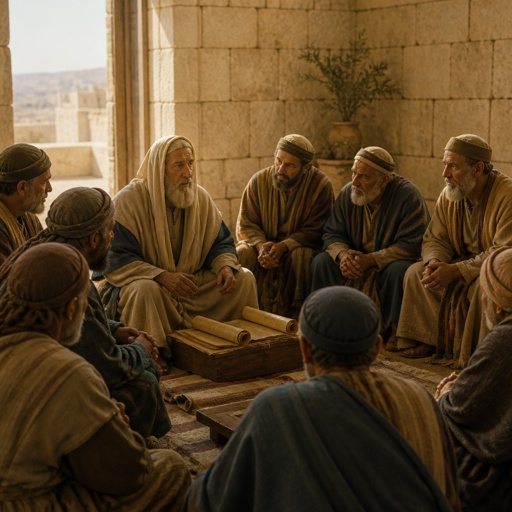
"And the children of the captivity did so. And Ezra the priest, with certain chief of the fathers, after the house of their fathers, and all of them by their names, were separated, and sat down in the first day of the tenth month to examine the matter." - Ezra 10:16

Ezra 10:10-12

Ezra 6:16

Ezra 10:10 - "And Ezra the priest stood up, and said unto them, Ye have transgressed, and have taken strange wives, to increase the trespass of Israel."

Ezra 10:3

Ezra 3:10

Ezra 10:3

Ezra 6:15-16

Ezra 6:15-16

Ezra 10:5 - "Then arose Ezra, and made the chief priests, the Levites, and all Israel, to swear that they should do according to this word. And they sware."

Ezra 7:10 - "For Ezra had prepared his heart to seek the law of the LORD, and to do it, and to teach in Israel statutes and judgments."

Ezra 10:38 - "And Bani, and Binnui, Shimei,"

Ezra 10:37 - "Mattaniah, Mattenai, and Jaasau,"

Ezra 10:40 - "Machnadebai, Shashai, Sharai,"

Ezra 10:32 - "Benjamin, Malluch, and Shemariah."

Ezra 10:36 - "Vaniah, Meremoth, Eliashib,"

Ezra 10:35 - "Benaiah, Bedeiah, Chelluh,"

Ezra 10:42 - "Shallum, Amariah, and Joseph."

Ezra 10:41 - "Azareel, and Shelemiah, Shemariah,"

Ezra 10:39 - "And Shelemiah, and Nathan, and Adaiah,"

Ezra 2:16 - "The children of Ater of Hezekiah, ninety and eight."

Ezra 10:20 - "And of the sons of Immer; Hanani, and Zebadiah."

Ezra 10:34 - "Of the sons of Bani; Maadai, Amram, and Uel,"

Ezra 2:10 - "The children of Bani, six hundred forty and two."

Ezra 10:21 - "And of the sons of Harim; Maaseiah, and Elijah, and Shemaiah, and Jehiel, and Uzziah."

Ezra 10:24 - "Of the singers also; Eliashib: and of the porters; Shallum, and Telem, and Uri."

Ezra 10:28 - "Of the sons also of Bebai; Jehohanan, Hananiah, Zabbai, and Athlai."

Ezra 10:31 - "And of the sons of Harim; Eliezer, Ishijah, Malchiah, Shemaiah, Shimeon,"

"Azareel, and Shelemiah, Shemariah," - Ezra 10:41