What does Ezra 10:14 mean?
"Let now our rulers of all the congregation stand, and let all them which have taken strange wives in our cities come at appointed times, and with them the elders of every city, and the judges thereof, until the fierce wrath of our God for this matter be turned from us." - Ezra 10:14
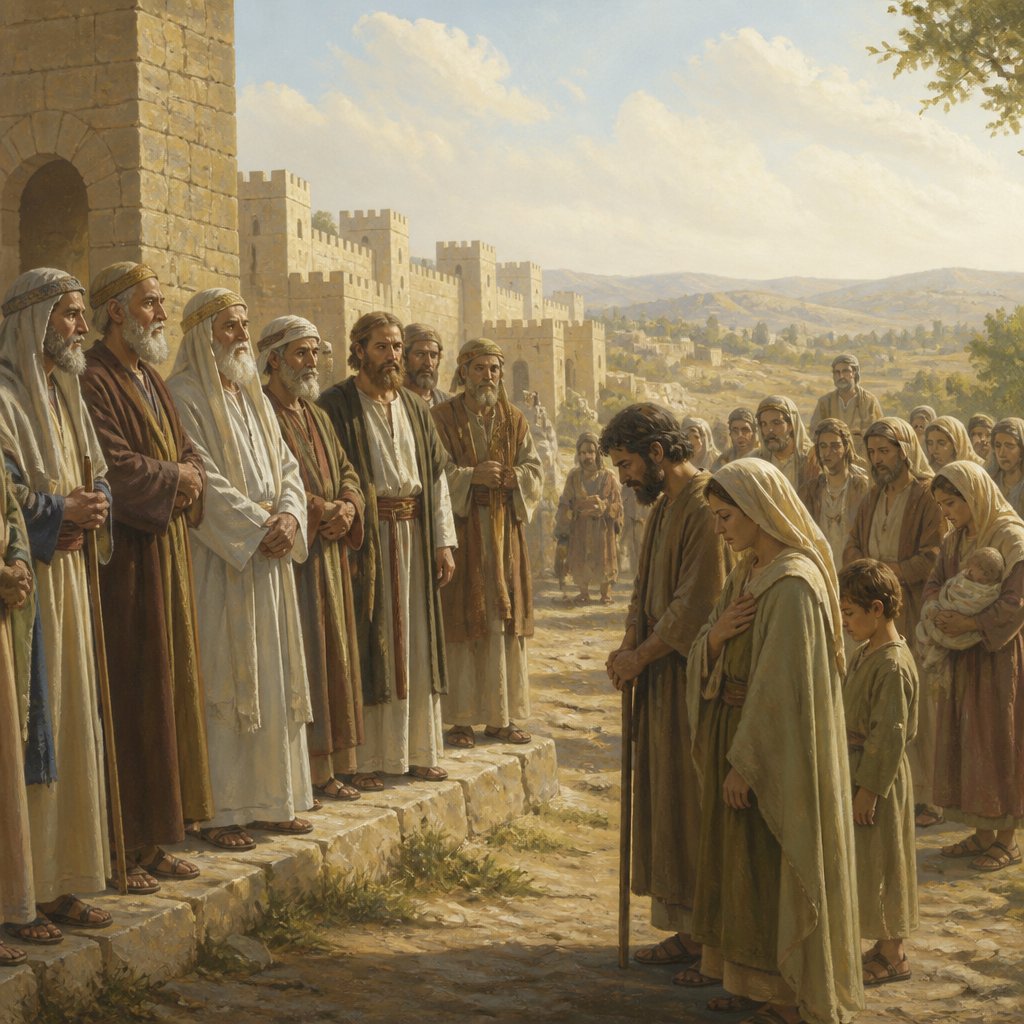
Ezra 10:14 in the King James Version of the Bible reads: "Let now our rulers of all the congregation stand, and let all them which have taken strange wives in our cities come at appointed times, and with them the elders of every city, and the judges thereof, until the fierce wrath of our God for this matter be turned from us."
The book of Ezra, from which this verse comes, is primarily concerned with the restoration of the Jewish community in Judah following their exile in Babylon. Ezra, a scribe and priest, is tasked with leading a group of exiles back to Jerusalem in order to rebuild the temple and reestablish the worship of God according to Mosaic law.
The verse in question is part of a larger narrative that describes the people of Israel confessing their sin of intermarrying with foreigners, which was forbidden under Mosaic law. The leaders of the community call for the people who had married foreign women to come forward and confess their wrongdoing. This act of repentance is seen as necessary in order to reconcile the community with God and to atone for their disobedience.
The themes present in this verse are those of obedience to God's law, repentance, and the restoration of the community. Throughout the book of Ezra, there is an emphasis on the importance of maintaining the purity of the Jewish community and adhering strictly to the laws laid out in the Torah. The act of repentance and confession is seen as crucial in order to restore the people's relationship with God and to prevent his wrath from being poured out upon them.
The context of this verse is important in understanding its significance. Following their exile in Babylon, the Jewish people faced the challenge of maintaining their identity and faith in the midst of a foreign culture. Intermarriage with non-Israelites was seen as a threat to the purity of the community and a potential source of idolatry and unfaithfulness to God. The leaders of the community recognized the seriousness of this issue and took steps to address it in order to ensure the survival and faithfulness of the Jewish people.
The symbolism present in this verse is also significant. The call for the people to come forward and confess their sin represents a turning point in the community's relationship with God. It demonstrates a willingness to acknowledge wrongdoing and to seek reconciliation with God and one another. The elders and judges representing the cities also symbolize the need for communal accountability and the importance of upholding the covenant as a united community.
Ultimately, this verse serves as a reminder of the importance of obedience to God's law and the need for repentance and reconciliation in the face of sin. It speaks to the challenges of maintaining faithfulness in the midst of a changing and often hostile world. The narrative of Ezra's restoration of the Jewish community serves as a powerful example of the enduring significance of obedience, repentance, and the restoration of God's people.
Have questions about Ezra 10:14?
Dive deeper into this scripture with Bible Chat — an AI-powered tool for exploring God's Word through conversation. Ask questions, get context, and grow in your understanding of the Bible.
Get Our Apps


Ezra 10:14 Artwork

Ezra 10:14 - "Let now our rulers of all the congregation stand, and let all them which have taken strange wives in our cities come at appointed times, and with them the elders of every city, and the judges thereof, until the fierce wrath of our God for this matter be turned from us."
"Let now our rulers of all the congregation stand, and let all them which have taken strange wives in our cities come at appointed times, and with them the elders of every city, and the judges thereof, until the fierce wrath of our God for this matter be turned from us." - Ezra 10:14

Ezra 10:10-12

Ezra 10:10 - "And Ezra the priest stood up, and said unto them, Ye have transgressed, and have taken strange wives, to increase the trespass of Israel."

Ezra 10:3

Ezra 3:10

Ezra 10:3

Ezra 10:5 - "Then arose Ezra, and made the chief priests, the Levites, and all Israel, to swear that they should do according to this word. And they sware."

Ezra 7:10 - "For Ezra had prepared his heart to seek the law of the LORD, and to do it, and to teach in Israel statutes and judgments."

Ezra 10:38 - "And Bani, and Binnui, Shimei,"

Ezra 10:37 - "Mattaniah, Mattenai, and Jaasau,"

Ezra 10:40 - "Machnadebai, Shashai, Sharai,"

Ezra 10:32 - "Benjamin, Malluch, and Shemariah."

Ezra 10:35 - "Benaiah, Bedeiah, Chelluh,"

Ezra 10:41 - "Azareel, and Shelemiah, Shemariah,"

Ezra 10:36 - "Vaniah, Meremoth, Eliashib,"

Ezra 10:42 - "Shallum, Amariah, and Joseph."

Ezra 10:39 - "And Shelemiah, and Nathan, and Adaiah,"

Ezra 10:20 - "And of the sons of Immer; Hanani, and Zebadiah."

Ezra 10:34 - "Of the sons of Bani; Maadai, Amram, and Uel,"

Ezra 2:14 - "The children of Bigvai, two thousand fifty and six."

Ezra 2:10 - "The children of Bani, six hundred forty and two."

Ezra 10:24 - "Of the singers also; Eliashib: and of the porters; Shallum, and Telem, and Uri."

Ezra 10:21 - "And of the sons of Harim; Maaseiah, and Elijah, and Shemaiah, and Jehiel, and Uzziah."

Ezra 10:31 - "And of the sons of Harim; Eliezer, Ishijah, Malchiah, Shemaiah, Shimeon,"

Ezra 10:28 - "Of the sons also of Bebai; Jehohanan, Hananiah, Zabbai, and Athlai."

Ezra 8:14 - "Of the sons also of Bigvai; Uthai, and Zabbud, and with them seventy males."

"Azareel, and Shelemiah, Shemariah," - Ezra 10:41

"And Bani, and Binnui, Shimei," - Ezra 10:38

"And Shelemiah, and Nathan, and Adaiah," - Ezra 10:39