What does Ezekiel 27:25 mean?
"The ships of Tarshish did sing of thee in thy market: and thou wast replenished, and made very glorious in the midst of the seas." - Ezekiel 27:25
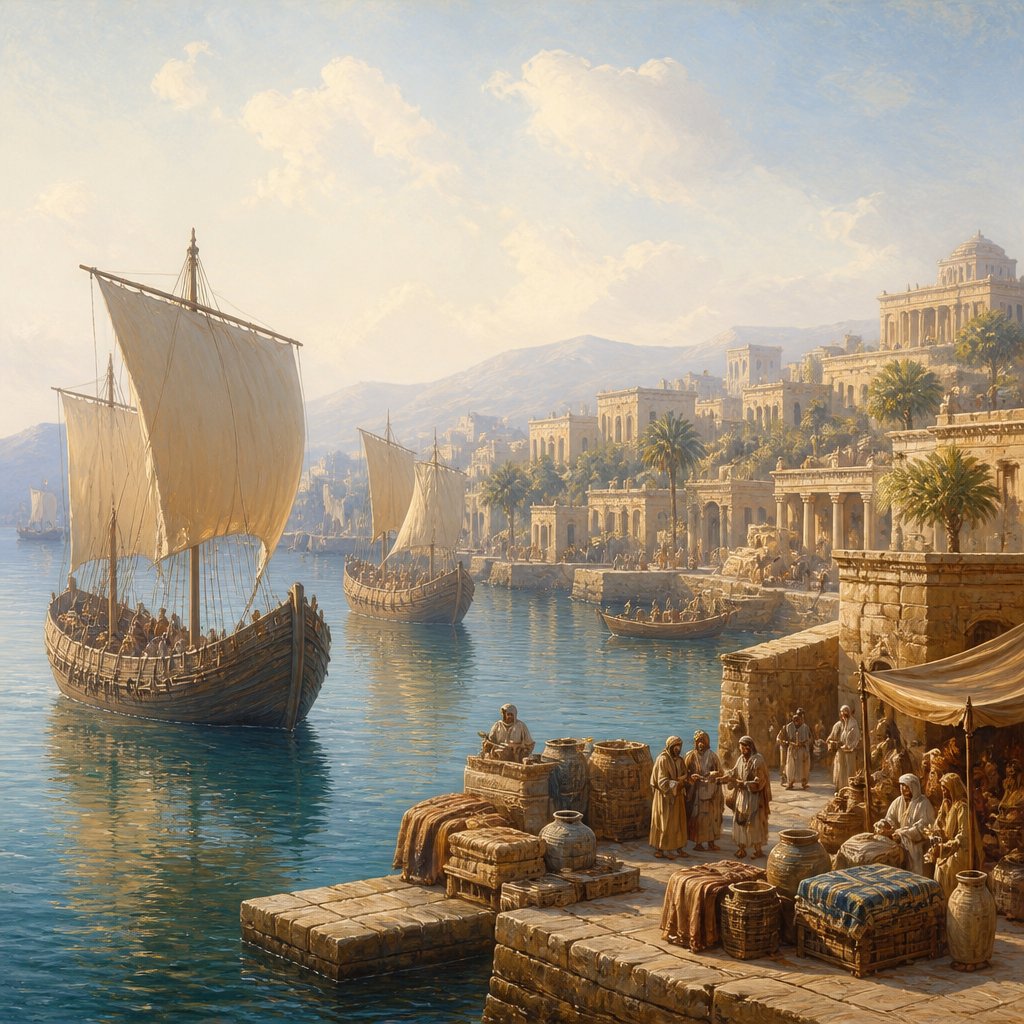
Ezekiel 27:25 in the King James Version of the Bible states, "The ships of Tarshish did sing of thee in thy market: and thou wast replenished, and made very glorious in the midst of the seas." This verse comes from a larger passage in the book of Ezekiel, which is a prophetic book in the Old Testament. The book of Ezekiel contains a series of visions and prophecies given to Ezekiel, a prophet living in exile in Babylon, regarding the impending destruction of Jerusalem and the restoration of the Israelites.
In this particular verse, the prophet Ezekiel is speaking about the destruction of the city of Tyre, a city known for its wealth and trade. The ships of Tarshish, which may refer to large merchant vessels from the distant ports of Tarshish, are said to have "sung" of Tyre in its marketplace. This could be understood to mean that Tyre's prosperity and influence were widely acknowledged and celebrated by those who traded with the city.
The imagery of singing and rejoicing in the marketplace serves to emphasize the city's wealth and success in trade. The mention of being "replenished, and made very glorious in the midst of the seas" further emphasizes the city's prosperity and its strategic location as a center of maritime commerce.
In terms of context, it's important to understand the historical and cultural significance of Tyre in the ancient world. Tyre was a powerful Phoenician city-state known for its maritime trade and wealth. It was situated on a strategically important location along the coast, and its merchants engaged in trade with various nations throughout the Mediterranean. This verse reflects the city's prominence as a prosperous trading hub, and the wealth and influence it derived from its maritime activities.
From a spiritual and symbolic perspective, this verse can also be interpreted as a cautionary tale about the dangers of pride and materialism. The city of Tyre's wealth and success led to arrogance and a false sense of security, ultimately leading to its downfall. The verse serves as a reminder that earthly wealth and achievements are fleeting, and true security and prosperity can only be found in a deeper relationship with God.
In addition, the imagery of ships and the sea can be seen as symbolic of the instability of earthly wealth and power. Just as ships are at the mercy of the sea, so too are the fortunes of earthly kingdoms subject to the ebb and flow of time and circumstance. This serves as a warning to those who place their trust solely in material wealth and success, rather than in a deeper spiritual foundation.
Overall, Ezekiel 27:25 is a poignant reminder of the transient nature of worldly achievements and the importance of humility and faith. It also serves as a historical reminder of the rise and fall of powerful nations and cities, and the spiritual consequences of pride and materialism. As with all of Ezekiel's prophecies, the ultimate message is one of hope and restoration, as the prophet looks forward to the redemption and renewal of God's people despite their current circumstances.
Have questions about Ezekiel 27:25?
Dive deeper into this scripture with Bible Chat — an AI-powered tool for exploring God's Word through conversation. Ask questions, get context, and grow in your understanding of the Bible.
Get Our Apps


Ezekiel 27:25 Artwork

Ezekiel 27:25 - "The ships of Tarshish did sing of thee in thy market: and thou wast replenished, and made very glorious in the midst of the seas."
"The ships of Tarshish did sing of thee in thy market: and thou wast replenished, and made very glorious in the midst of the seas." - Ezekiel 27:25

1 Corinthians 9:25-27

1 Corinthians 9:25-27

Genesis 25-27

1 Corinthians 9:25-27

1 Corinthians 9:25-27

John 19:25-27

John 19:25-27

Ezekiel 27:20 - "Dedan was thy merchant in precious clothes for chariots."

John 19:25-27 with emphasis on Mary

Ezekiel 27:28 - "The suburbs shall shake at the sound of the cry of thy pilots."

Ezekiel 27:1 - "The word of the LORD came again unto me, saying,"

Ezekiel 7:25 - "Destruction cometh; and they shall seek peace, and there shall be none."

Exodus 25:27 - "Over against the border shall the rings be for places of the staves to bear the table."

Ezekiel 27:2 - "Now, thou son of man, take up a lamentation for Tyrus;"

Ezekiel 27:14 - "They of the house of Togarmah traded in thy fairs with horses and horsemen and mules."

Ezekiel 25:1 - "The word of the LORD came again unto me, saying,"

Proverbs 27:25 - "The hay appeareth, and the tender grass sheweth itself, and herbs of the mountains are gathered."

Matthew 27:25 - "Then answered all the people, and said, His blood be on us, and on our children."

1 Chronicles 25:27 - "The twentieth to Eliathah, he, his sons, and his brethren, were twelve:"

Proverbs 25:27 - "It is not good to eat much honey: so for men to search their own glory is not glory."

Acts 25:27 - "For it seemeth to me unreasonable to send a prisoner, and not withal to signify the crimes laid against him."

Ezekiel 27:4 - "Thy borders are in the midst of the seas, thy builders have perfected thy beauty."

Ezekiel 27:23 - "Haran, and Canneh, and Eden, the merchants of Sheba, Asshur, and Chilmad, were thy merchants."

Ezekiel 48:27 - "And by the border of Zebulun, from the east side unto the west side, Gad a portion."

Ezekiel 36:25-27 - "I will sprinkle clean water on you, and you will be clean; I will cleanse you from all your impurities and from all your idols. I will give you a new heart and put a new spirit in you; I will remove from you your heart of stone and give you a heart of flesh. And I will put my Spirit in you and move you to follow my decrees and be careful to keep my laws."

Acts 27:25 - "Wherefore, sirs, be of good cheer: for I believe God, that it shall be even as it was told me."

Leviticus 27:25 - "And all thy estimations shall be according to the shekel of the sanctuary: twenty gerahs shall be the shekel."

Genesis 25:27 - "And the boys grew: and Esau was a cunning hunter, a man of the field; and Jacob was a plain man, dwelling in tents."