What does Ezekiel 19:4 mean?
"The nations also heard of him; he was taken in their pit, and they brought him with chains unto the land of Egypt." - Ezekiel 19:4
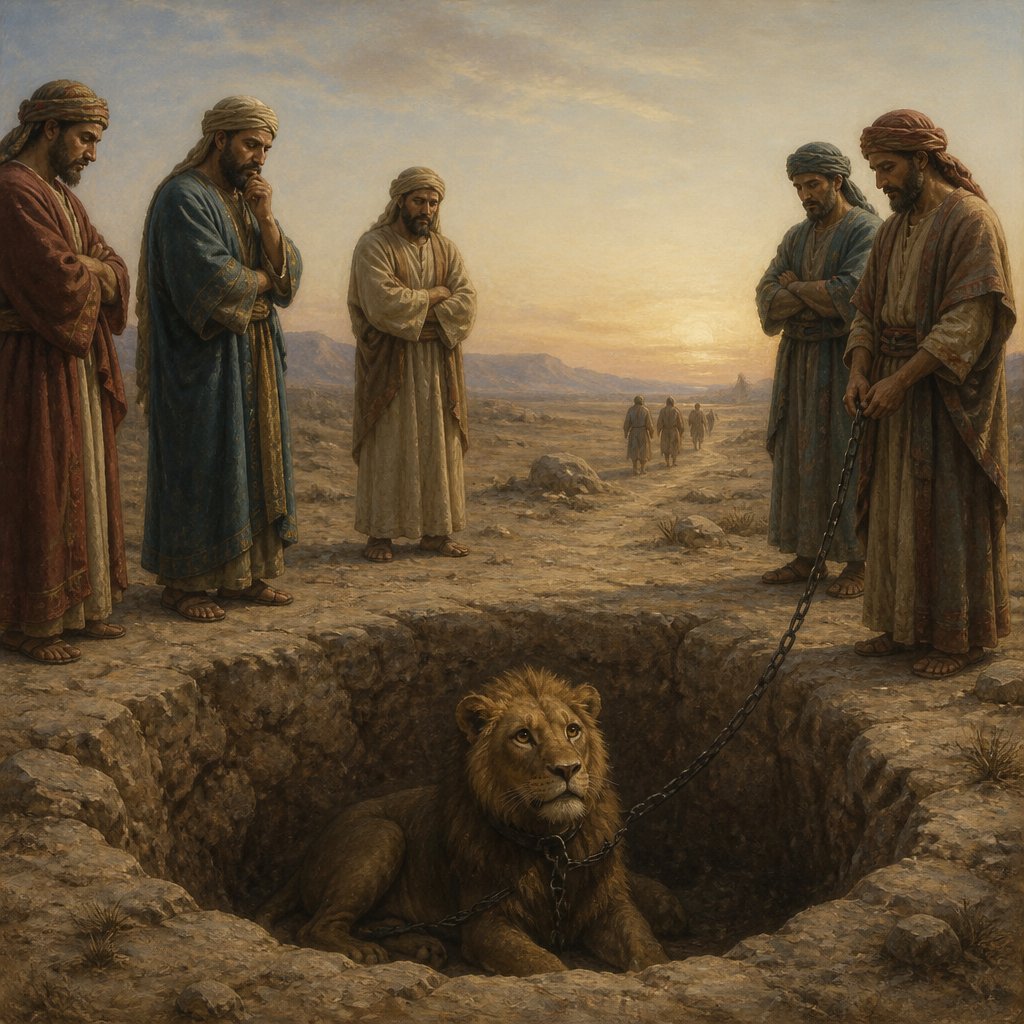
Ezekiel 19:4 in the King James Version of the Bible reads: "The nations also heard of him; he was taken in their pit, and they brought him with chains unto the land of Egypt." This verse is part of a lamentation spoken by the prophet Ezekiel against the princes of Judah. In this particular verse, he uses the metaphor of a lion to describe the fall and capture of the princes.
To fully understand the meaning and significance of this verse, it is important to provide some context. The Book of Ezekiel is set during the Babylonian exile, a period when the people of Judah were taken captive and exiled from their land. Ezekiel, a priest and prophet, was among those taken to Babylon, and he prophesied during this time of national crisis and suffering. The book is a mix of prophecy, apocalyptic visions, and symbolic acts, all with the aim of providing hope and guidance to the exiled Israelites.
In Ezekiel 19, the prophet uses the imagery of a lioness and her cubs to describe the rulers of Judah. The lioness represents the royal house of Judah, and her cubs are the princes who ruled over the nation. The first three verses of the chapter depict the fall of these princes, describing how they were captured and taken to Babylon. In verse 4, the focus shifts to the reaction of other nations to the capture of the princes.
The phrase "the nations also heard of him" conveys the idea that the downfall of the princes of Judah was not only significant to their own people, but it also had implications for the surrounding nations. The capture of the princes had become a spectacle, and it brought shame not only to the rulers themselves but also to the entire nation of Judah.
The mention of the princes being "taken in their pit" and "brought... with chains unto the land of Egypt" emphasizes the ignominy and humiliation of their capture. In the ancient Near East, being taken captive and paraded in chains was a sign of utter defeat and subjugation. The reference to Egypt as the destination of the princes is particularly poignant, as Egypt had been a traditional place of refuge for Israel in times of trouble. The fact that the princes were taken there in chains symbolizes the complete reversal of fortunes for the royal house of Judah.
Overall, Ezekiel 19:4 is a powerful and evocative expression of the shame and disgrace that befell the rulers of Judah. Through the use of vivid imagery and symbolism, the prophet conveys the depth of the nation's suffering and the extent of its fall from grace. The verse serves as a cautionary tale, highlighting the consequences of failed leadership and the importance of remaining faithful to God.
One of the key themes in this passage is the concept of divine judgment. The capture and humiliation of the princes is portrayed as a direct result of their sinful and unfaithful conduct. Throughout the Book of Ezekiel, there is a consistent emphasis on the idea of divine justice, with the prophet repeatedly calling the people to repentance and warning them of the consequences of their actions. In this context, the fall of the princes serves as a stark reminder of the reality of God's judgment and the need for righteousness and obedience.
Another important theme in this passage is the idea of national pride and identity. The capture of the princes and the subsequent shame brought upon Judah is portrayed as a tragedy that reverberates throughout the land. The loss of their leaders and the humiliation of their rulers had a profound impact on the entire nation, leading to a sense of collective mourning and despair. This theme of national identity speaks to the broader experience of exile and displacement that characterized the Israelites' experience during this period.
In conclusion, Ezekiel 19:4 is a poignant and powerful verse that captures the sense of loss, shame, and despair that characterized the fall of the princes of Judah. Through vivid imagery and symbolism, the prophet conveys the depth of the nation's suffering and the consequences of its leaders' unfaithfulness. The verse serves as a cautionary tale and a reminder of the importance of remaining faithful to God and the consequences of failing to do so.
Have questions about Ezekiel 19:4?
Dive deeper into this scripture with Bible Chat — an AI-powered tool for exploring God's Word through conversation. Ask questions, get context, and grow in your understanding of the Bible.
Get Our Apps


Ezekiel 19:4 Artwork

Ezekiel 19:4 - "The nations also heard of him; he was taken in their pit, and they brought him with chains unto the land of Egypt."
"The nations also heard of him; he was taken in their pit, and they brought him with chains unto the land of Egypt." - Ezekiel 19:4

Ezekiel 28:11-19

Ezekiel 28:11-19

Ezekiel 28:11-19

Ezekiel 28:11-19

Ezekiel 28:11-19

Ezekiel 28:11-19

Ezekiel 19:13 - "And now she is planted in the wilderness, in a dry and thirsty ground."

Ezekiel 19:1 - "Moreover take thou up a lamentation for the princes of Israel,"

Ezekiel 11:19 in pointillism style with no text

Ezekiel 48:19 - "And they that serve the city shall serve it out of all the tribes of Israel."

Ezekiel 30:19 - "Thus will I execute judgments in Egypt: and they shall know that I am the LORD."

Ezekiel 34:3–4

Ezekiel 4:1-3

Ezekiel 1:4-28

Ezekiel 42:19 - "¶ He turned about to the west side, and measured five hundred reeds with the measuring reed."

Philippians 4:19

Genesis 19-4

Philippians 4:19

Revelation 19:4

Ezekiel 1:4-28 – The vision of the four living creatures and the wheels.

Ezekiel 20:19 - "I am the LORD your God; walk in my statutes, and keep my judgments, and do them;"

Ezekiel 33:19 - "But if the wicked turn from his wickedness, and do that which is lawful and right, he shall live thereby."

Joshua 19:4 - "And Eltolad, and Bethul, and Hormah,"

Psalm 19:3-4

Ezekiel 19:3 - "And she brought up one of her whelps: it became a young lion, and it learned to catch the prey; it devoured men."

Bible Art of the bible verse Ezekiel 32:19 - "Whom dost thou pass in beauty? go down, and be thou laid with the uncircumcised."

Ezekiel 24:19 - "¶ And the people said unto me, Wilt thou not tell us what these things are to us, that thou doest so?"

Ezekiel 13:4 - "O Israel, thy prophets are like the foxes in the deserts."