What does Ezekiel 17:1-10 mean?
"The Word of the Lord came unto me, saying, Son of man, put forth a riddle, and speak a parable unto the house of Israel; And say, Thus saith the Lord God; A great eagle with great wings, long-winged, full of feathers, which had divers colours, came unto Lebanon, and took the highest branch of the cedar: He cropped off the top of his young twigs, and carried it into a land of traffick; he set it in a city of merchants. He took also of the seed of the land, and planted it in a fruitful field; he placed it by great waters, and set it as a willow tree. And it grew, and became a spreading vine of low stature, whose branches turned toward him, and the roots thereof were under him: so it became a vine, and brought forth branches, and shot forth sprigs. There was also another great eagle with great wings and many feathers: and, behold, this vine did bend her roots toward him, and shot forth her branches toward him, that he might water it by the furrows of her plantation. It was planted in a good soil by great waters, that it might bring forth branches, and that it might bear fruit, that it might be a goodly vine. Say thou, Thus saith the Lord God; Shall it prosper? shall he not pull up the roots thereof, and cut off the fruit thereof, that it wither? it shall wither in all the leaves of her spring, even without great power or many people to pluck it up by the roots thereof. Yea, behold, being planted, shall it prosper? shall it not utterly wither, when the east wind toucheth it? it shall wither in the furrows where it grew." - Ezekiel 17:1-10
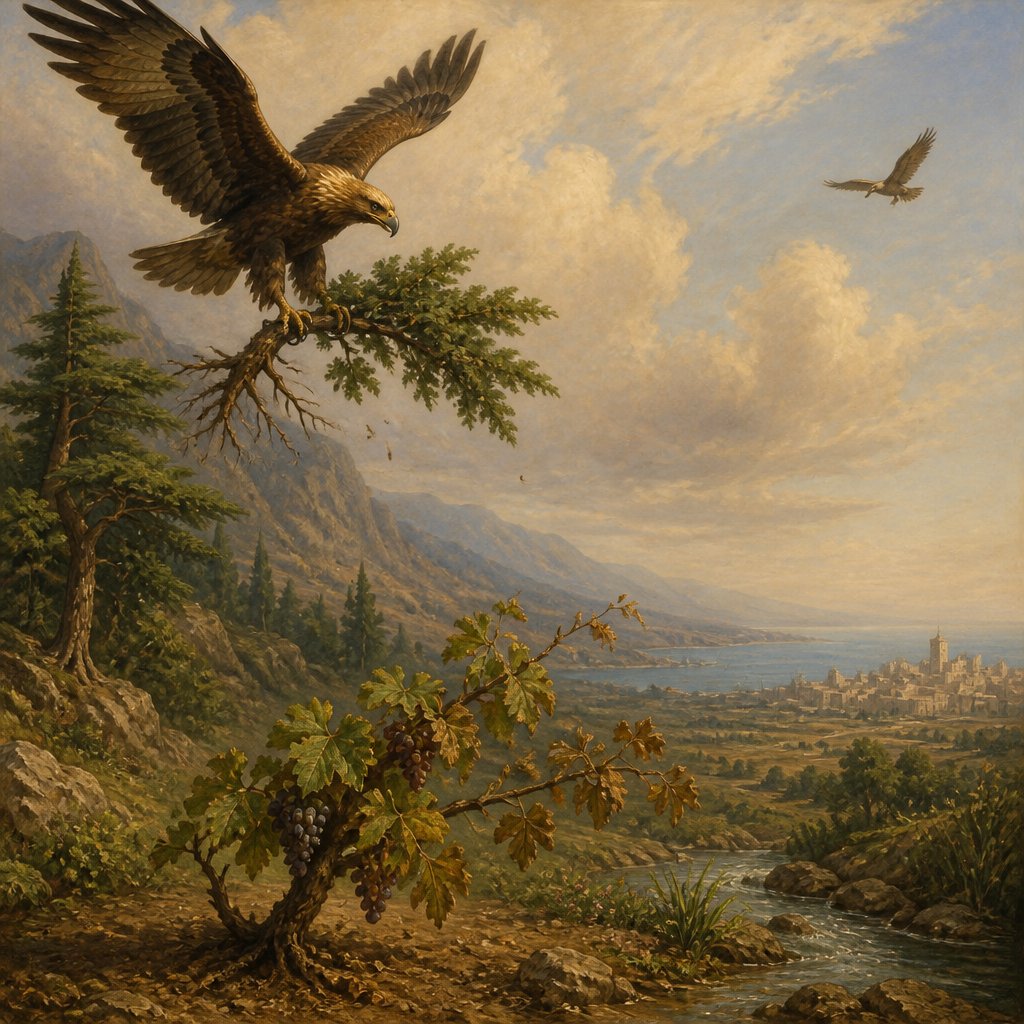
Ezekiel 17:1-10 in the King James Version of the Bible reads:
"And the word of the Lord came unto me, saying, Son of man, put forth a riddle, and speak a parable unto the house of Israel; and say, Thus saith the Lord God; A great eagle with great wings, long-winged, full of feathers, which had divers colours, came unto Lebanon, and took the highest branch of the cedar: he cropped off the top of his young twigs, and carried it into a land of traffic; he set it in a city of merchants. He took also of the seed of the land, and planted it in a fruitful field; he placed it by great waters, and set it as a willow tree. And it grew, and became a spreading vine of low stature, whose branches turned toward him, and the roots thereof were under him: so it became a vine, and brought forth branches, and shot forth sprigs. There was also another great eagle with great wings and many feathers: and, behold, this vine did bend her roots toward him, and shot forth her branches toward him, that he might water it by the furrows of her plantation. It was planted in a good soil by great waters, that it might bring forth branches, and that it might bear fruit, that it might be a goodly vine. Say thou, Thus saith the Lord God; Shall it prosper? shall he not pull up the roots thereof, and cut off the fruit thereof, that it wither? it shall wither in all the leaves of her spring, even without great power or many people to pluck it up by the roots thereof. Yea, behold, being planted, shall it prosper? shall it not utterly wither, when the east wind toucheth it? it shall wither in the furrows where it grew."
In this passage, the Lord speaks to Ezekiel instructing him to put forth a riddle and speak a parable to the house of Israel. The riddle centers around two great eagles and a vine. The first eagle, with great wings and many feathers, takes the highest branch of a cedar tree in Lebanon, crops off its top twigs, and carries it to a land of traffic, where it is planted in a city of merchants. The eagle then takes the seed of the land, plants it in a fruitful field by great waters, and sets it as a willow tree, which grows into a spreading vine. The vine turns and spreads its branches toward the second great eagle, which waters it by the furrows of her plantation. The vine is planted in good soil by great waters, in order to bear fruit and prosper. However, the Lord questions whether the vine will indeed prosper, or if it will wither and be cut off.
This riddle and parable holds deep meaning and several themes that are relevant to the context in which it was spoken. One of the key themes in this passage is the relationship between God and his people, particularly the nation of Israel. The first eagle represents King Nebuchadnezzar of Babylon, who conquered and took captive the people of Jerusalem. The highest branch of the cedar tree represents King Jehoiachin, who was taken into captivity. The great eagle's actions symbolize the setting up of a vassal king, Zedekiah, in Jerusalem by Babylon. The vine that is planted and watered by the second great eagle represents the people of Judah who were enticed by Egypt to rebel against Babylon. The eagles' actions and the vine's response symbolize the political alliances and outcomes of Judah during this historical period.
Another important theme in this passage is the concept of faithfulness and obedience. The eagles and the vine represent the choices and actions of the people of Judah. The first eagle's actions in taking the highest branch of the cedar tree and planting it in a city of merchants symbolize the people's disobedience and exile. The second eagle watering the vine represents the people's continued reliance on political alliances and earthly powers, rather than placing their trust in God. The Lord's questioning of whether the vine will prosper or wither emphasizes the consequences of disobedience and the need for faithfulness to God.
Symbolism is also prevalent in this passage. The great eagle with great wings represents the powerful kingdoms of Babylon and Egypt. The cedar tree and the vine symbolize the nation of Judah and its leaders. The actions of the eagles and the vine symbolize the political and spiritual choices and consequences of the people. The imagery of planting in good soil by great waters, as well as the spreading vine, represents the potential for prosperity and flourishing when the people are faithful to God.
In conclusion, Ezekiel 17:1-10 is a rich and layered passage that offers profound insight into the relationship between God and his people, as well as the consequences of faithfulness and disobedience. It serves as a powerful reminder of the importance of placing one's trust in God and remaining faithful to His will. The themes, context, and symbolism within this passage provide a deeper understanding of the historical and spiritual significance of the events that transpired during Ezekiel's time, and offer timeless lessons that remain relevant today.
Have questions about Ezekiel 17:1-10?
Dive deeper into this scripture with Bible Chat — an AI-powered tool for exploring God's Word through conversation. Ask questions, get context, and grow in your understanding of the Bible.
Get Our Apps


Ezekiel 17:1-10 Artwork

Ezekiel 17:1-10 - "The word of the Lord came to me: “Son of man, set forth an allegory and tell it to the Israelites as a parable. Say to them, ‘This is what the Sovereign Lord says: A great eagle with powerful wings, long feathers and full plumage of varied colors came to Lebanon. Taking hold of the top of a cedar, he broke off its topmost shoot and carried it away to a land of merchants, where he planted it in a city of traders. He took one of the seedlings of the land and put it in fertile soil. He planted it like a willow by abundant water, and it sprouted and became a low, spreading vine. Its branches turned toward him, but its roots remained under it. So it became a vine and produced branches and put out leafy boughs. But there was another great eagle with powerful wings and full plumage. The vine now sent out its roots toward him from the plot where it was planted and stretched out its branches to him for water. It had been planted in good soil by abundant water so that it would produce branches, bear fruit and become a splendid vine.’ Say to them, ‘This is what the Sovereign Lord says: Will it thrive? Will it not be uprooted and stripped of its fruit so that it withers? All its new growth will wither. It will not take a strong arm or many people to pull it up by the roots. Even if it is transplanted, will it thrive? Will it not wither completely when the east wind strikes it—wither away in the plot where it grew?’”"
"The word of the Lord came to me: “Son of man, set forth an allegory and tell it to the Israelites as a parable. Say to them, ‘This is what the Sovereign Lord says: A great eagle with powerful wings, long feathers and full plumage of varied colors came to Lebanon. Taking hold of the top of a cedar, he broke off its topmost shoot and carried it away to a land of merchants, where he planted it in a city of traders. He took one of the seedlings of the land and put it in fertile soil. He planted it like a willow by abundant water, and it sprouted and became a low, spreading vine. Its branches turned toward him, but its roots remained under it. So it became a vine and produced branches and put out leafy boughs. But there was another great eagle with powerful wings and full plumage. The vine now sent out its roots toward him from the plot where it was planted and stretched out its branches to him for water. It had been planted in good soil by abundant water so that it would produce branches, bear fruit and become a splendid vine.’ Say to them, ‘This is what the Sovereign Lord says: Will it thrive? Will it not be uprooted and stripped of its fruit so that it withers? All its new growth will wither. It will not take a strong arm or many people to pull it up by the roots. Even if it is transplanted, will it thrive? Will it not wither completely when the east wind strikes it—wither away in the plot where it grew?’”" - Ezekiel 17:1-10

Ezekiel 17:1 - "And the word of the LORD came unto me, saying,"
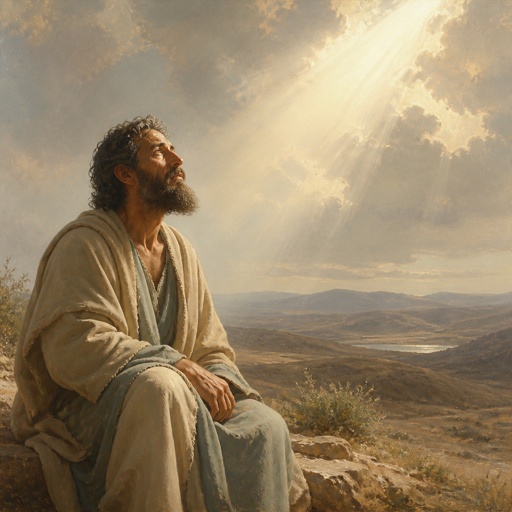
"And the word of the LORD came unto me, saying," - Ezekiel 17:1

Ezekiel 37:1-10 – The valley of dry bones.

Ezekiel 10:17 - "When they stood, these stood; and when they were lifted up, these lifted up themselves also: for the spirit of the living creature was in them."

Ezekiel 1:10-11

Ezekiel 37:1-10 – The vision of the valley of dry bones.

Ezekiel 37:1-10 – The vision of the valley of dry bones.

Ezekiel 17:10 - "Yea, behold, being planted, shall it prosper? shall it not utterly wither, when the east wind toucheth it? it shall wither in the furrows where it grew."

Ezekiel 1:17 - "When they went, they went upon their four sides: and they turned not when they went."

1 Samuel 10:17 - "¶ And Samuel called the people together unto the LORD to Mizpeh;"

Combine the authority theme described in Romans 13:1-7 and Revelation 13:1-10.

Ezekiel 10:10

Ezekiel 10:10

Ezekiel 10:10

Ezekiel 10:10

Ezekiel 10:1 - "Then I looked, and, behold, in the firmament that was above the head of the cherubims there appeared over them as it were a sapphire stone, as the appearance of the likeness of a throne."

Ezekiel 3:17

"When they went, they went upon their four sides: and they turned not when they went." - Ezekiel 1:17

1 Corinthians 10:17 - "For we being many are one bread, and one body: for we are all partakers of that one bread."

1 Samuel 17:10 - "And the Philistine said, I defy the armies of Israel this day; give me a man, that we may fight together."
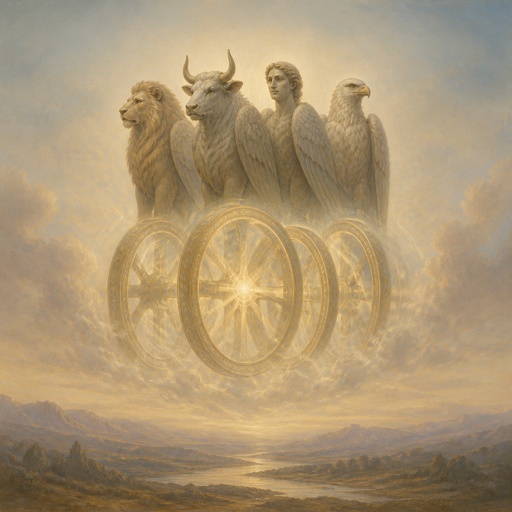
"When they stood, these stood; and when they were lifted up, these lifted up themselves also: for the spirit of the living creature was in them." - Ezekiel 10:17
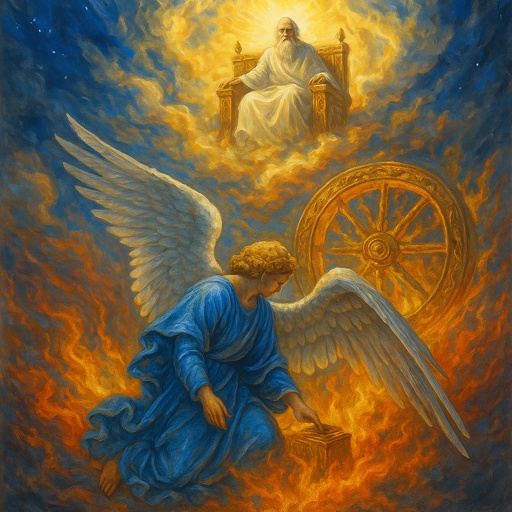
"Then I looked, and, behold, in the firmament that was above the head of the cherubims there appeared over them as it were a sapphire stone, as the appearance of the likeness of a throne." - Ezekiel 10:1

Ezekiel 1:10 - "As for the likeness of their faces, they four had the face of a man, and the face of a lion, on the right side: and they four had the face of an ox on the left side; they four also had the face of an eagle."

Ezekiel 22:17 - "And the word of the LORD came unto me, saying,"

Ezekiel 12:17 - "¶ Moreover the word of the LORD came to me, saying,"

Romans 10:17

Romans 10:17

Romans 10:17