What does Exodus 9:31 mean?
"And the flax and the barley was smitten: for the barley was in the ear, and the flax was bolled." - Exodus 9:31
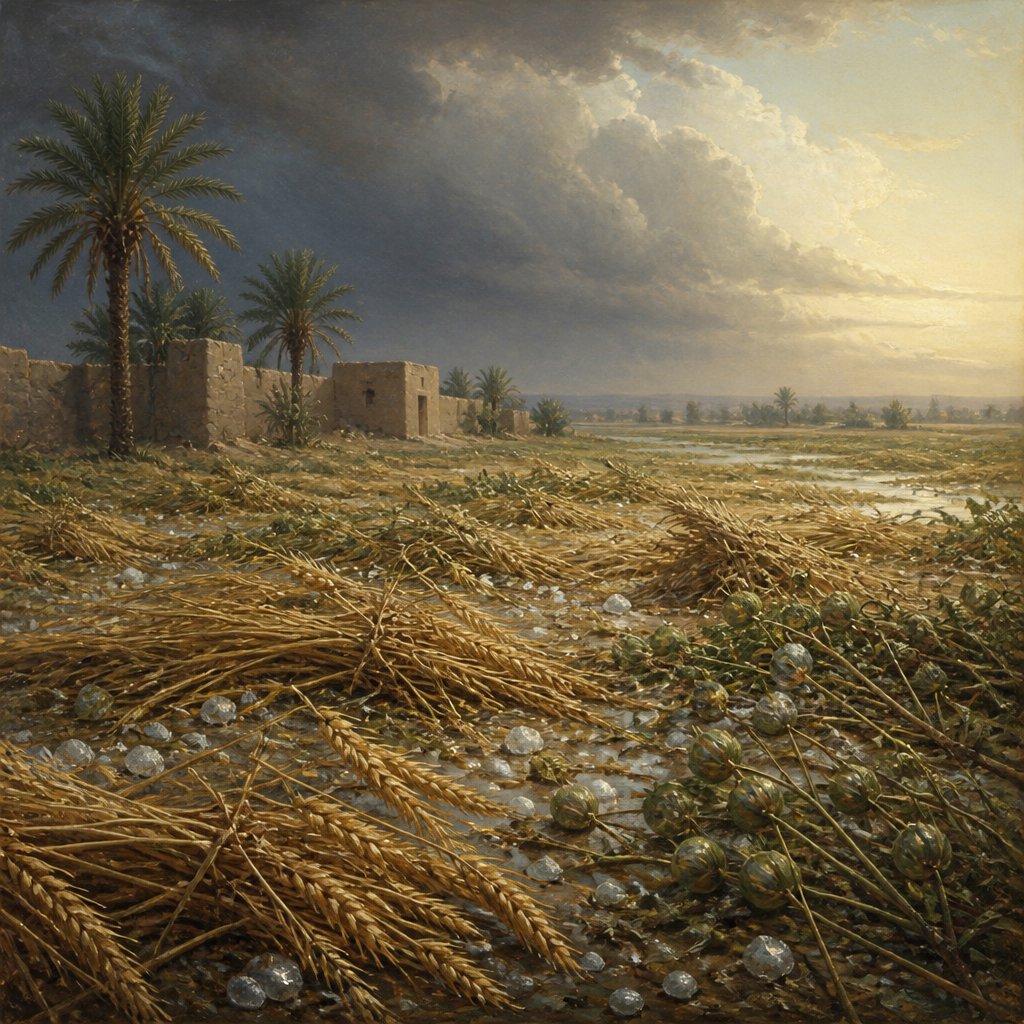
Exodus 9:31 (KJV) states, "And the flax and the barley was smitten: for the barley was in the ear, and the flax was bolled." This verse is part of the larger narrative of the ten plagues of Egypt, which were sent by God in order to persuade Pharaoh to release the Israelites from slavery.
In this particular verse, God has already sent a devastating hailstorm upon Egypt, destroying crops and livestock. However, despite the hail, the barley and flax were already at a vulnerable stage of growth. The barley was "in the ear", which means it was producing grain, and the flax was "bolled", meaning it was beginning to flower and produce its valuable fibers. Typically, these stages of growth would be seen as signs of promise and abundance for the Egyptian farmers. However, in this case, God's judgment was upon these crops as well, and they were destroyed along with the rest.
The overarching theme of this verse is the power and sovereignty of God. Throughout the book of Exodus, God demonstrates His unmatched power over all creation, including the natural elements. The plagues were a display of God's authority and a direct challenge to the false gods of Egypt. In this instance, the destruction of the barley and flax at such a crucial stage of their growth serves as a clear demonstration of God's ability to disrupt the natural order and bring about destruction as a sign of His judgment.
Additionally, this verse also carries a larger symbolic meaning. In biblical context, the barley and flax are often associated with sustenance and provision. The destruction of these crops would have been a severe blow to the agricultural economy of Egypt, leading to scarcity and hunger. This serves as a powerful reminder of the consequences of disobedience and the enormity of God's judgment. Furthermore, the destruction of these crops can also be seen as a symbol of God's ability to disrupt the plans and efforts of humans. Despite the best efforts of the Egyptian farmers, their crops were ultimately subject to the will of God.
Another important aspect of this verse is the idea of timing. The fact that the barley and flax were in such a crucial stage of their growth when they were destroyed highlights the precision and intentionality of God's actions. This precise timing serves as a reminder that God's judgment is both just and deliberate, and that His plans are executed with perfect timing and purpose.
Overall, Exodus 9:31 is a powerful testament to the sovereignty and authority of God. It serves as a reminder of His ability to disrupt the natural order, bring about judgment, and demonstrate His power over creation. The destruction of the barley and flax serves as a symbol of God's ability to disrupt human plans and bring about consequences for disobedience. Ultimately, this verse invites reflection on the nature of God's judgment and the importance of obedience and submission to His will. It is a sobering reminder of the consequences of defying the Almighty.
Have questions about Exodus 9:31?
Dive deeper into this scripture with Bible Chat — an AI-powered tool for exploring God's Word through conversation. Ask questions, get context, and grow in your understanding of the Bible.
Get Our Apps


Exodus 9:31 Artwork

Exodus 9:31 - "And the flax and the barley was smitten: for the barley was in the ear, and the flax was bolled."
"And the flax and the barley was smitten: for the barley was in the ear, and the flax was bolled." - Exodus 9:31

Exodus 31:9 - "And the altar of burnt offering with all his furniture, and the laver and his foot,"
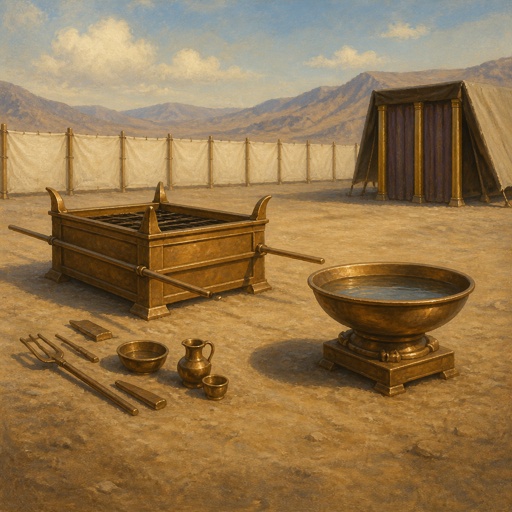
"And the altar of burnt offering with all his furniture, and the laver and his foot," - Exodus 31:9

Exodus 31: 18

Exodus 25:31

Exodus 26:31

Exodus 26:31

Exodus 26:31

Exodus 28:31-43

Exodus 28:31-34

Exodus 28:31-43

Exodus 28:31-34

Exodus 28:31-34

Exodus 26:31-33

Exodus 31:12 - "¶ And the LORD spake unto Moses, saying,"

Exodus 31:1 - "And the LORD spake unto Moses, saying,"

Exodus 28:31 - "¶ And thou shalt make the robe of the ephod all of blue."

Exodus 31:4 - "To devise cunning works, to work in gold, and in silver, and in brass,"

Exodus 25:31-40 This is an oil lampstand.

Exodus 40:31 - "And Moses and Aaron and his sons washed their hands and their feet thereat:"

Exodus 29:31 - "¶ And thou shalt take the ram of the consecration, and seethe his flesh in the holy place."

Exodus 31:7 - "The tabernacle of the congregation, and the ark of the testimony, and the mercy seat that is thereupon, and all the furniture of the tabernacle,"

Exodus 31:5 - "And in cutting of stones, to set them, and in carving of timber, to work in all manner of workmanship."

Exodus 31:8 - "And the table and his furniture, and the pure candlestick with all his furniture, and the altar of incense,"

Exodus 36:31 - "¶ And he made bars of shittim wood; five for the boards of the one side of the tabernacle,"

Exodus 39:31 - "And they tied unto it a lace of blue, to fasten it on high upon the mitre; as the LORD commanded Moses."

"And the LORD spake unto Moses, saying," - Exodus 31:1

"¶ And the LORD spake unto Moses, saying," - Exodus 31:12

Exodus 25:31 This is an oil lampstand. No actual candles are used.