What does Exodus 8:17 mean?
"And they did so; for Aaron stretched out his hand with his rod, and smote the dust of the earth, and it became lice in man, and in beast; all the dust of the land became lice throughout all the land of Egypt." - Exodus 8:17
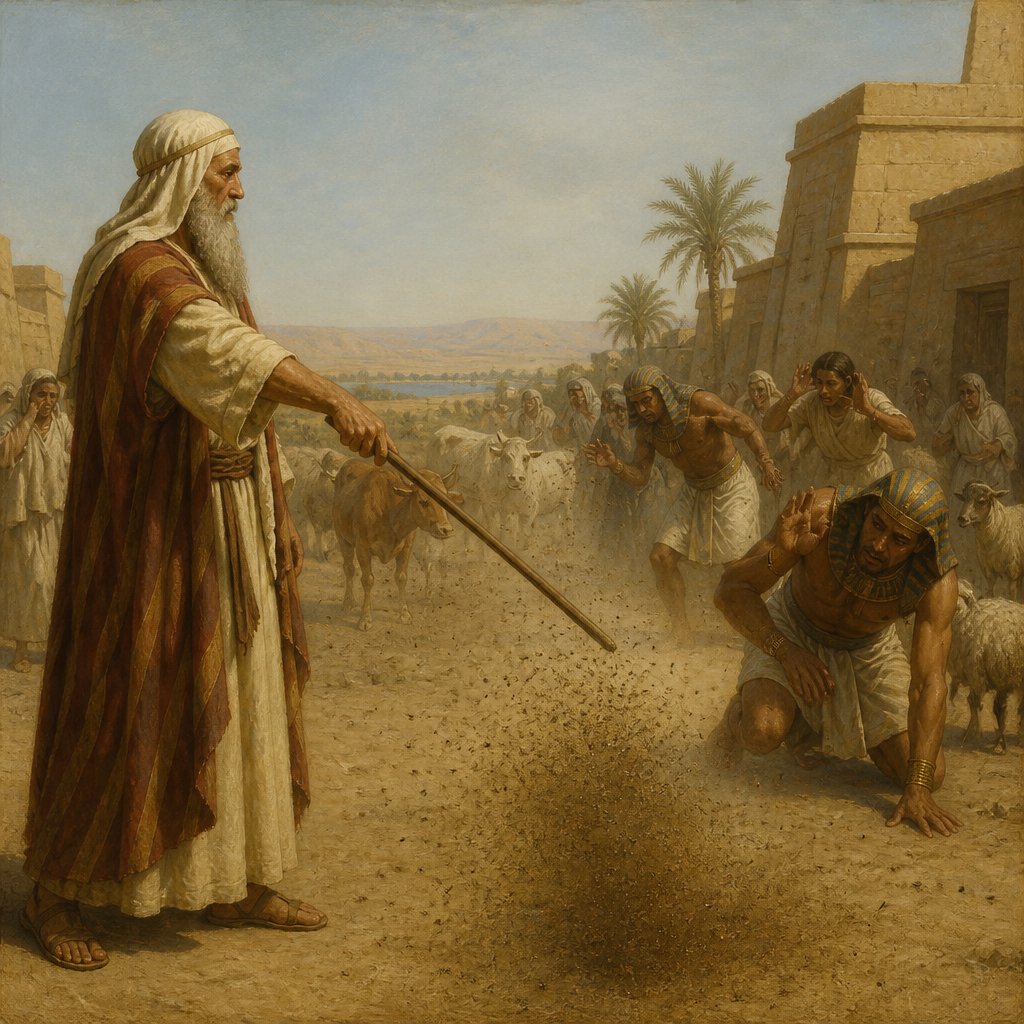
Exodus 8:17 in the King James Version of the Bible reads: "And they did so; for Aaron stretched out his hand with his rod, and smote the dust of the earth, and it became lice in man, and in beast; all the dust of the land became lice throughout all the land of Egypt."
This verse comes from the story of the Ten Plagues of Egypt, in which God sends a series of calamities to afflict the Egyptians in order to persuade Pharaoh to release the Israelites from slavery. This particular plague of lice is the third of the ten plagues, and it highlights the power of God and Aaron, his chosen servant, as well as the futility of the Egyptian magicians' attempts to replicate this display of divine power.
The significance of this verse can be understood on several levels. First and foremost, it emphasizes the power of God to bring about miraculous and devastating consequences upon those who oppose him. After Pharaoh denied Moses' and Aaron's demand to let the Israelites go, God sent a series of plagues to afflict Egypt—the water turning to blood, the plague of frogs, and now the plague of lice. These supernatural occurrences serve as both a punishment for Pharaoh's stubbornness and a demonstration of God's sovereignty.
Additionally, this verse highlights the role of Aaron as a chosen instrument of God's power. Aaron, acting under God's direction, performs the miracle of turning dust into lice by striking the ground with his rod. This underscores the idea that God can work through human beings to accomplish his purposes, and that he appoints individuals to carry out his will.
The verse also portrays the Egyptian magicians' inability to replicate the miracle, even though they had previously been able to reproduce some of the earlier plagues by their "enchantments." This serves to contrast the genuine power of God with the limited abilities of human sorcery and reinforces the futility of resisting the will of God.
Symbolically, the plague of lice can be seen as a manifestation of impurity and contamination, representing the spiritual and moral degradation that had permeated Egyptian society due to their enslavement of the Israelites. From a thematic perspective, this plague highlights the theme of justice and retribution, as the suffering of the Egyptians can be seen as a consequence of their oppression of the Israelites.
In a broader context, this verse is part of the larger narrative of the Exodus, which is a pivotal event in the history of the Israelite people. The plagues and the subsequent liberation of the Israelites from bondage in Egypt serve as a foundational story that underscores God's faithfulness to his people and his ability to deliver them from oppression. It also carries a universal message about the consequences of defying God's will and the importance of obedience to divine authority.
In conclusion, Exodus 8:17 is a verse that holds deep theological, symbolic, and narrative significance within the larger context of the biblical story. It emphasizes the power of God to bring about miracles and judgments, the role of human agents in carrying out God's will, and the futility of opposing the divine. It also serves as a reminder of the themes of justice, retribution, and deliverance that run throughout the biblical narrative. Ultimately, this verse invites readers to reflect on the nature of God's power and the implications of aligning oneself with or against the will of the Almighty.
Have questions about Exodus 8:17?
Dive deeper into this scripture with Bible Chat — an AI-powered tool for exploring God's Word through conversation. Ask questions, get context, and grow in your understanding of the Bible.
Get Our Apps


Exodus 8:17 Artwork

Exodus 8:17 - "And they did so; for Aaron stretched out his hand with his rod, and smote the dust of the earth, and it became lice in man, and in beast; all the dust of the land became lice throughout all the land of Egypt."
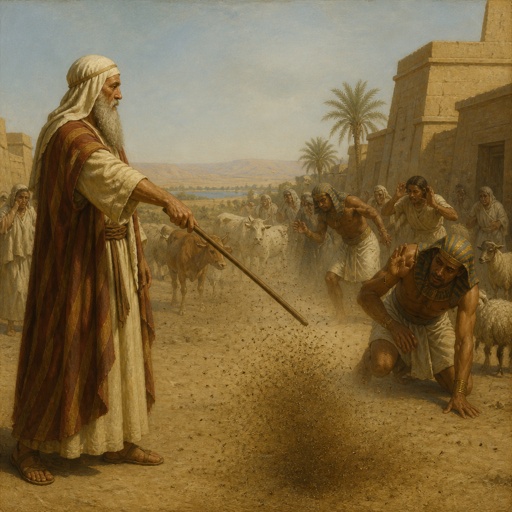
"And they did so; for Aaron stretched out his hand with his rod, and smote the dust of the earth, and it became lice in man, and in beast; all the dust of the land became lice throughout all the land of Egypt." - Exodus 8:17

Exodus 17:8 - "¶ Then came Amalek, and fought with Israel in Rephidim."
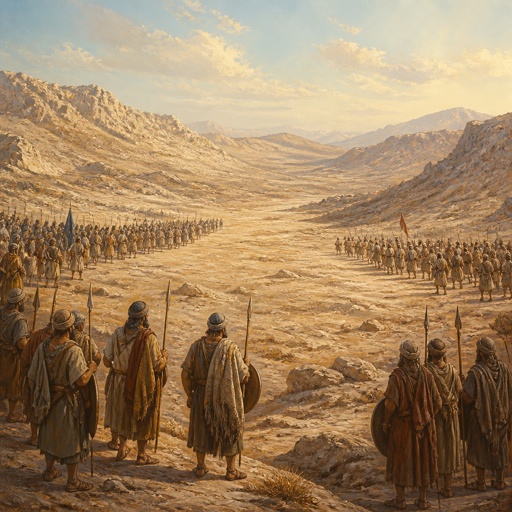
"¶ Then came Amalek, and fought with Israel in Rephidim." - Exodus 17:8
Exodus 17:10

Exodus 17:11

Exodus 17:6

Exodus 17:3

Exodus 17:3
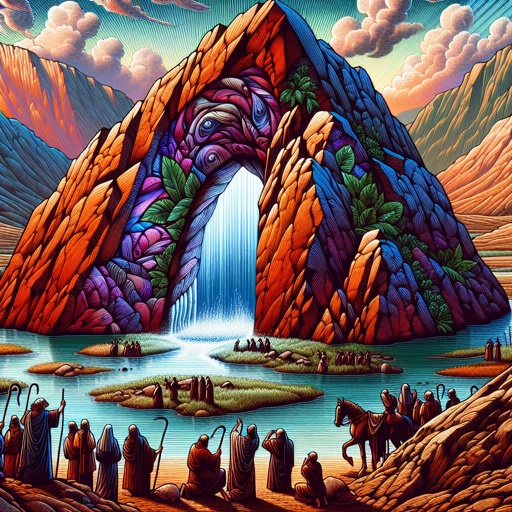
Exodus 17:6

Exodus 17:6

Exodus 24:17

Exodus 17:6

Exodus 30:17 - "¶ And the LORD spake unto Moses, saying,"

Exodus 25:8

Exodus 13:17-14:29

Exodus 6:17 - "The sons of Gershon; Libni, and Shimi, according to their families."

Exodus 34:17 - "Thou shalt make thee no molten gods."
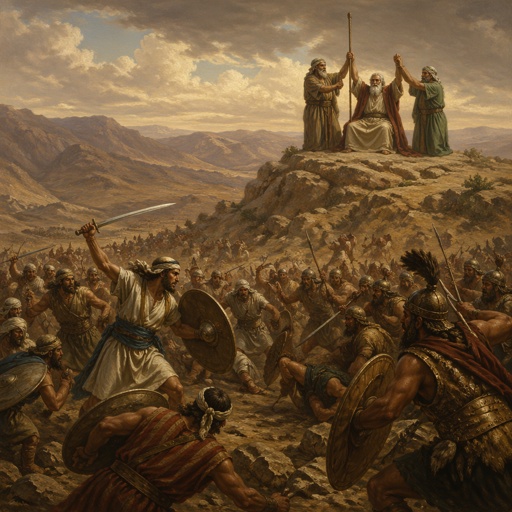
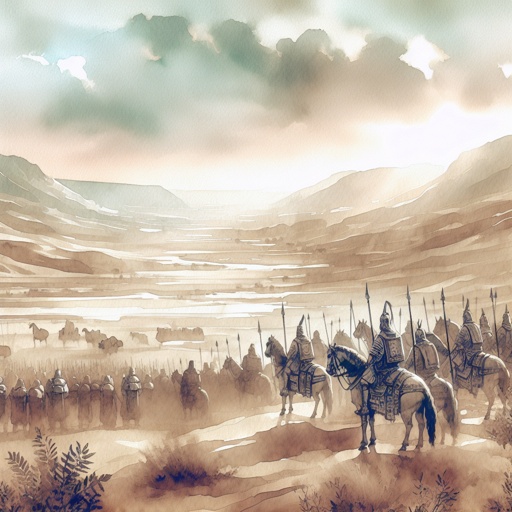
in the context of exodus 17:8, draw a picture of the Amalekites fighting against Joshua and the Israelites. The battle is raging in the valley, and on a hill beyond where the battle is taking place, Moses is sitting and Aaron and Hur are holding his hands up while his staff is in his hands.

Exodus 17:15 - "And Moses built an altar, and called the name of it Jehovah-nissi:"

Exodus 17:13 - "And Joshua discomfited Amalek and his people with the edge of the sword."

Exodus 27:1-8

Exodus 8:1-15

Exodus 35:17 - "The hangings of the court, his pillars, and their sockets, and the hanging for the door of the court,"

Genesis 17:8

Exodus 16:17 - "And the children of Israel did so, and gathered, some more, some less."

Exodus 20:8 - "Remember the sabbath day, to keep it holy."

Luke 8:17

Exodus 39:17 - "And they put the two wreathen chains of gold in the two rings on the ends of the breastplate."
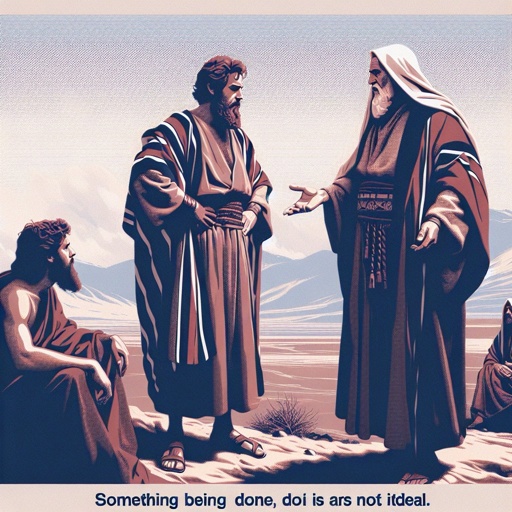
Exodus 18:17 - "And Moses' father in law said unto him, The thing that thou doest is not good."