What does Exodus 6:6 mean?
"Wherefore say unto the children of Israel, I am the LORD, and I will bring you out from under the burdens of the Egyptians, and I will rid you out of their bondage, and I will redeem you with a stretched out arm, and with great judgments:" - Exodus 6:6
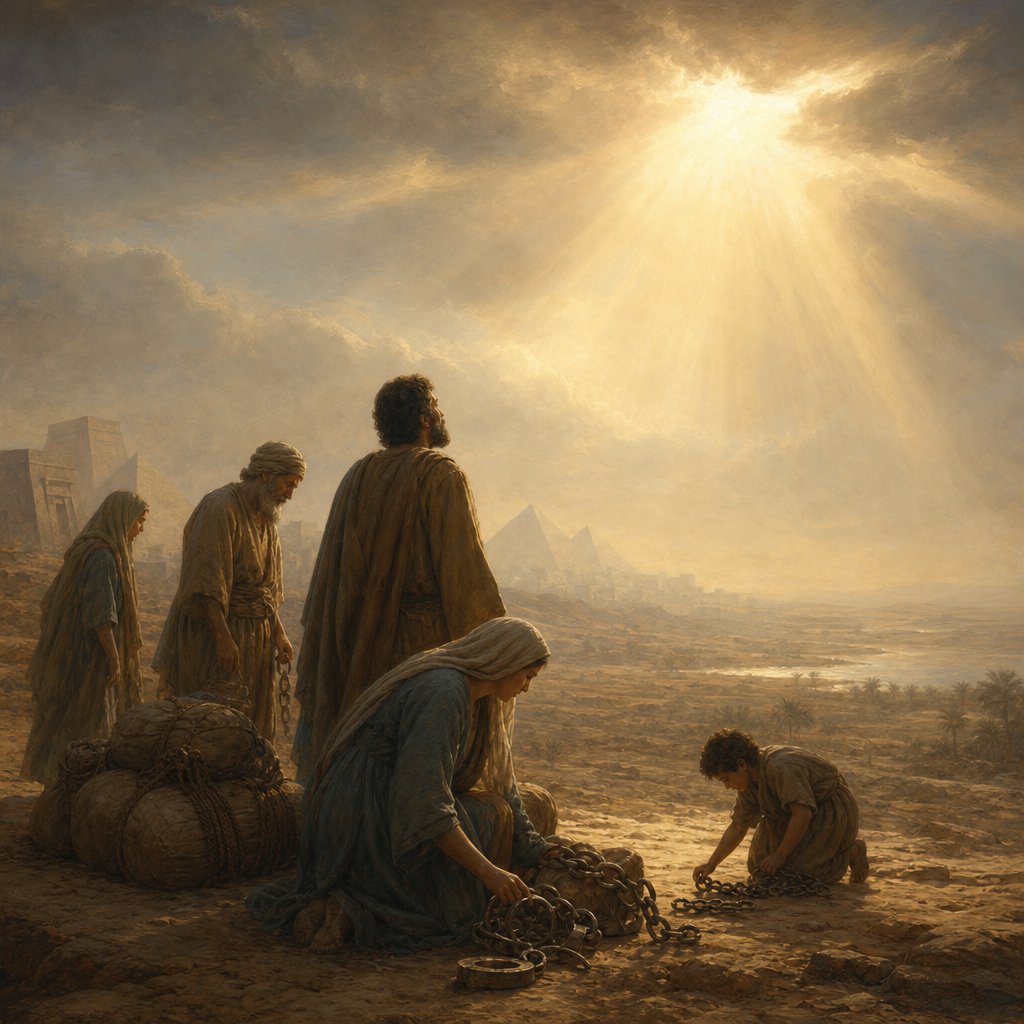
Exodus 6:6 in the KJV stands at a turning point where God answers the crushed expectations of an enslaved people and reasserts, with deliberate fullness, what His covenant faithfulness will look like in history. The verse reads, “Wherefore say unto the children of Israel, I am the LORD, and I will bring you out from under the burdens of the Egyptians, and I will rid you out of their bondage, and I will redeem you with a stretched out arm, and with great judgments.” Every clause is meant to lift Israel’s eyes from what Pharaoh is doing to what the LORD is about to do, and it does so with a rhythm of promise that moves from relief, to release, to ransom, to righteous victory.
The immediate context is one of disappointment and deepening oppression. Moses has obeyed the LORD by confronting Pharaoh, yet Pharaoh’s response has been to increase Israel’s labor, making their misery worse. The people are disheartened, and Moses himself is troubled. In Exodus 6, the LORD speaks again, not by adjusting His plan, but by revealing His purpose more clearly. He roots the coming deliverance in His own identity and covenant. Exodus 6:6 is part of a larger divine declaration in which God ties present action to promises made to Abraham, Isaac, and Jacob, and insists that the story is not being driven by Egypt’s power but by His name and faithfulness. The verse therefore functions as a hinge between Israel’s felt helplessness and God’s impending acts in the plagues and the exodus.
The statement “I am the LORD” is not a casual introduction; it is the foundation of the promise. In KJV language, “LORD” signals the covenant name of God, the One who is not only sovereign in power but steadfast in promise. The point is that Israel’s deliverance will be anchored in who God is, not in Israel’s strength, Moses’ eloquence, or favorable circumstances. The verse makes deliverance personal and certain because the Speaker is the LORD Himself. This name-bearing assertion also sets the coming conflict in theological terms: it will not merely be Moses versus Pharaoh, or slaves versus empire, but the LORD showing His lordship over Egypt, its gods, and its king.
The first promise, “I will bring you out from under the burdens of the Egyptians,” addresses the crushing weight of slavery as daily experience. “Burdens” evokes not only physical labor but the oppressive yoke of a system that has pressed Israel down until hope is nearly extinguished. The language “from under” pictures Israel bowed beneath a load, and the LORD lifting them out from underneath it. This is a promise of relief before it is a promise of relocation: God begins by confronting what is on their backs. It matters that He names the burdens as Egyptian, because it identifies the oppression as an imposed power, not Israel’s destiny.
The second promise, “I will rid you out of their bondage,” goes beyond easing suffering to ending the condition that produces it. “Bondage” names a state of ownership and constraint: Israel is not free to live, worship, move, or hope as a people under God. To be “rid” out of bondage is to be torn free from a grip that cannot be escaped by human effort. In context, it anticipates Pharaoh’s refusal and the necessity of divine intervention. The LORD is declaring that the exodus will not be a negotiated improvement of working conditions; it will be a decisive severing of Egypt’s claim over His people.
The third promise, “I will redeem you,” adds a legal and relational depth. Redemption in Scripture carries the sense of deliverance by the paying of a price, the act of a kinsman who claims what belongs to him, or the reclaiming of someone from slavery. In Exodus, the “price” is not silver or gold given to Egypt, but the LORD’s own mighty acts by which He defeats the oppressor and asserts His rightful claim. To redeem is not merely to rescue; it is to restore Israel to a proper belonging. They are being taken from Pharaoh’s house to become the LORD’s people, and redemption is the bridge between their misery and their identity.
The imagery “with a stretched out arm” is vivid symbolism for God’s active, visible power. An outstretched arm is the posture of exertion and action, as when one reaches out to seize, to strike, or to save. It suggests that what is coming will be unmistakably God’s work, not a subtle turn of political fortune. It also implies intentionality and direction: the LORD’s arm is not raised in abstraction but extended toward His people and against their oppressors. In the unfolding narrative, this “stretched out arm” is seen in the plagues, in the opening of the sea, and in the judgment that breaks Egypt’s will to enslave.
Finally, “with great judgments” frames the exodus as moral reckoning, not random disaster. The plagues that follow are repeatedly described as judgments, and this verse explains their meaning in advance: God will act as Judge over Egypt’s cruelty, over Pharaoh’s hardened resistance, and over the false securities of Egyptian power. The judgments are “great” because they are comprehensive and public; they reach from river to sky to throne, showing that no realm is outside the LORD’s authority. They are also “great” because they answer a great evil: the long oppression and the attempt to destroy Israel. In this light, the exodus is not simply a rescue mission; it is the LORD setting the world right in a particular moment by judging tyranny and vindicating the oppressed.
Taken together, Exodus 6:6 carries a layered significance. It is pastoral, because it speaks hope directly to “the children of Israel” in their despair, and it does not minimize their suffering but names it and promises its end. It is covenantal, because it is grounded in “I am the LORD,” the God who remembers and acts in faithfulness. It is political in the deepest sense, because it proclaims that Pharaoh’s dominion is not ultimate, and that the LORD intervenes in history to liberate. It is theological, because it reveals the pattern by which God makes Himself known: by deliverance, redemption, and judgment. It is symbolic, because the “burdens” and “bondage” represent the total weight of oppression, the “stretched out arm” represents divine power in action, and the “great judgments” represent God’s righteous governance over nations.
Within the larger sweep of Exodus, this verse also foreshadows the purpose of the deliverance: God will not only bring Israel out, but bring them unto Himself, forming them into a worshipping people. Even though Exodus 6:6 does not yet say “that ye may serve me,” that theme is implicit in the very act of redemption. The LORD does not free His people into aimlessness; He frees them from bondage so that they may belong to Him. Thus Exodus 6:6 is a proclamation of identity as much as of escape: the LORD is declaring that Israel’s story will be rewritten not by the lash of Egypt but by the name and mighty arm of their God.
Have questions about Exodus 6:6?
Dive deeper into this scripture with Bible Chat — an AI-powered tool for exploring God's Word through conversation. Ask questions, get context, and grow in your understanding of the Bible.
Get Our Apps


Exodus 6:6 Artwork
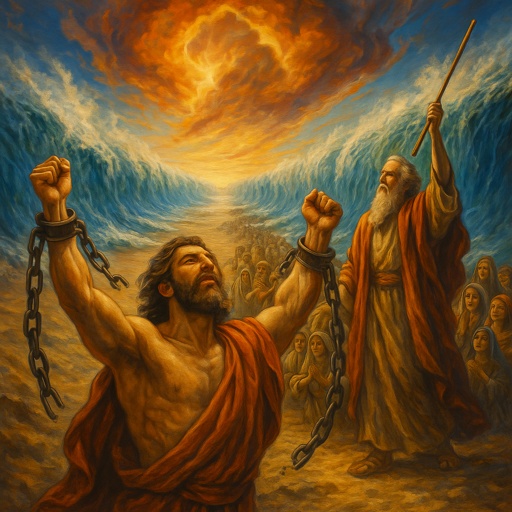
"Wherefore say unto the children of Israel, I am the LORD, and I will bring you out from under the burdens of the Egyptians, and I will rid you out of their bondage, and I will redeem you with a stretched out arm, and with great judgments:" - Exodus 6:6

Exodus 6:6 - "Wherefore say unto the children of Israel, I am the LORD, and I will bring you out from under the burdens of the Egyptians, and I will rid you out of their bondage, and I will redeem you with a stretched out arm, and with great judgments:"
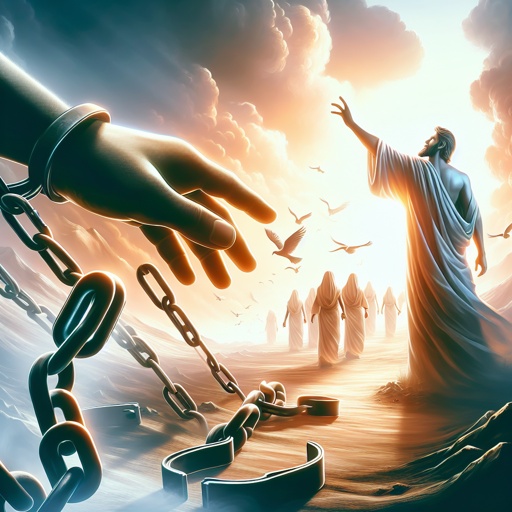
經文:「所以,你要轉告以色列人說,『我是耶和華。我要伸出臂膀重重地懲罰埃及,救贖你們脫離埃及人的轄制,脫離他們的奴役。」— 出埃及記 6:6

經文:「所以,你要轉告以色列人說,『我是耶和華。我要伸出臂膀重重地懲罰埃及,救贖你們脫離埃及人的轄制,脫離他們的奴役。」— 出埃及記 6:6

"Wherefore say unto the children of Israel, I am the LORD, and I will bring you out from under the burdens of the Egyptians, and I will rid you out of their bondage, and I will redeem you with a stretched out arm, and with great judgments:" - Exodus 6:6
"Wherefore say unto the children of Israel, I am the LORD, and I will bring you out from under the burdens of the Egyptians, and I will rid you out of their bondage, and I will redeem you with a stretched out arm, and with great judgments:" - Exodus 6:6

Exodus 17:6

Exodus 17:6

Exodus 17:6

Exodus 17:6

Exodus 6:21 - "¶ And the sons of Izhar; Korah, and Nepheg, and Zichri."

Exodus 6:22 - "And the sons of Uzziel; Mishael, and Elzaphan, and Zithri."

Exodus 6:10 - "And the LORD spake unto Moses, saying,"

Exodus 6:17 - "The sons of Gershon; Libni, and Shimi, according to their families."

Exodus 35:6 - "And blue, and purple, and scarlet, and fine linen, and goats' hair,"

Exodus 25:6 - "Oil for the light, spices for anointing oil, and for sweet incense,"
Exodus 20:6 (6) And shewing mercy unto thousands of them that love me, and keep my commandments.
Exodus 20:6 (6) And shewing mercy unto thousands of them that love me, and keep my commandments.

Exodus 1:6 - "And Joseph died, and all his brethren, and all that generation."

Exodus 33:6 - "And the children of Israel stripped themselves of their ornaments by the mount Horeb."

Exodus 6:24 - "And the sons of Korah; Assir, and Elkanah, and Abiasaph: these are the families of the Korhites."
Exodus 20:6 (6) And shewing mercy unto thousands of them that love me, and keep my commandments.
Exodus 20:6 (6) And shewing mercy unto thousands of them that love me, and keep my commandments.
Exodus 20:6 (6) And shewing mercy unto thousands of them that love me, and keep my commandments.

Exodus 38:6 - "And he made the staves of shittim wood, and overlaid them with brass."

Exodus 23:6 - "Thou shalt not wrest the judgment of thy poor in his cause."

Exodus 6:19 - "And the sons of Merari; Mahali and Mushi: these are the families of Levi according to their generations."

Exodus 7:6 - "And Moses and Aaron did as the LORD commanded them, so did they."

Exodus 5:6 - "And Pharaoh commanded the same day the taskmasters of the people, and their officers, saying,"

Exodus 14:6 - "And he made ready his chariot, and took his people with him:"