What does Exodus 40:10 mean?
"And thou shalt anoint the altar of the burnt offering, and all his vessels, and sanctify the altar: and it shall be an altar most holy." - Exodus 40:10
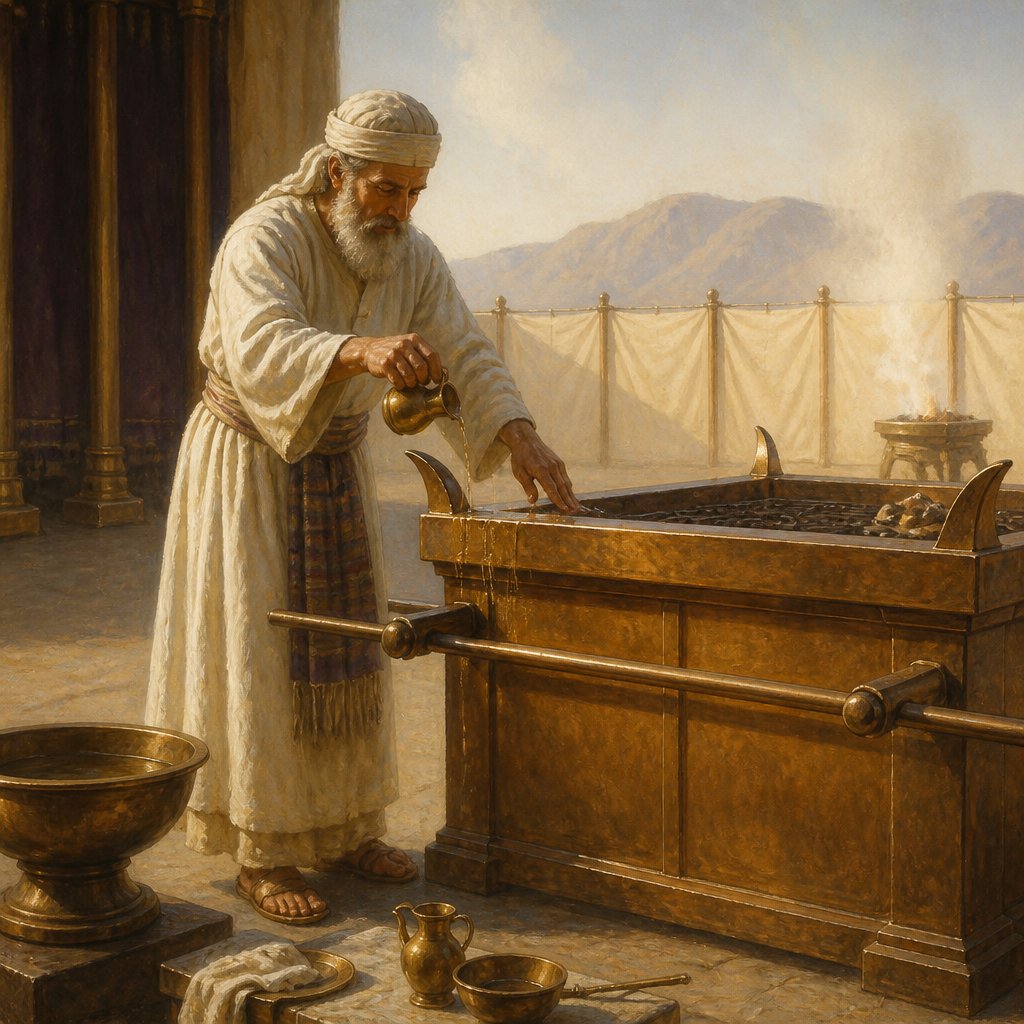
Exodus 40:10 (KJV) states: "And thou shalt anoint the altar of the burnt offering, and all his vessels, and sanctify the altar: and it shall be an altar most holy."
This verse comes from the book of Exodus, which is the second book of the Bible and tells the story of the Israelites' exodus from Egypt and their journey to the promised land. This specific verse is part of the instructions that God gave to Moses for the consecration of the tabernacle and its furnishings.
In this verse, God is instructing Moses to anoint the altar of burnt offering and its vessels and to sanctify the altar. On a literal level, this is a command to physically consecrate the altar and its objects by anointing them with oil, which was a common practice in the Old Testament for setting apart things for holy use. The anointing with oil symbolized God's blessing and the setting apart of the objects for His service.
On a deeper level, this verse carries several important meanings and themes. Firstly, it emphasizes the importance of holiness and sanctification in the worship of God. The altar of burnt offering was a central part of the Israelites' worship, and it was crucial that it be set apart as holy for the sacrifices and offerings that were made upon it. This emphasis on holiness reflects God's own holiness and His desire for His people to approach Him with reverence and purity.
Furthermore, the act of anointing the altar and its vessels symbolizes the consecration of the entire tabernacle and its furnishings for God's use. This act of anointing is a visible sign of God's presence and blessing upon the tabernacle, and it serves as a reminder to the Israelites that this place is set apart for the worship of God alone.
The theme of holiness and sanctification is also closely tied to the concept of atonement and sacrifice in the Old Testament. The burnt offerings that were made on the altar were a way for the Israelites to seek forgiveness for their sins and to be reconciled to God. By anointing the altar and sanctifying it as "most holy," God is emphasizing the importance of approaching Him with humility, repentance, and a desire for reconciliation.
In a broader context, this verse can also be seen as a foreshadowing of the ultimate sacrifice of Jesus Christ. The altar of burnt offering was a place where animals were sacrificed as a temporary atonement for sin, but Jesus' death on the cross would serve as the perfect and final atonement for the sins of all humanity. The anointing and sanctification of the altar can be seen as a precursor to the ultimate act of God's grace and mercy through the sacrifice of His Son.
In conclusion, Exodus 40:10 carries a rich and profound meaning that goes beyond its literal instructions for consecrating the altar of burnt offering. It emphasizes the importance of holiness and sanctification in worship, the need for atonement and reconciliation with God, and ultimately points to the ultimate sacrifice of Jesus Christ. It serves as a powerful reminder to approach God with reverence and humility, seeking His forgiveness and grace.
Have questions about Exodus 40:10?
Dive deeper into this scripture with Bible Chat — an AI-powered tool for exploring God's Word through conversation. Ask questions, get context, and grow in your understanding of the Bible.
Get Our Apps


Exodus 40:10 Artwork

Exodus 40:10 - "And thou shalt anoint the altar of the burnt offering, and all his vessels, and sanctify the altar: and it shall be an altar most holy."
"And thou shalt anoint the altar of the burnt offering, and all his vessels, and sanctify the altar: and it shall be an altar most holy." - Exodus 40:10

Exodus 40: 34

Exodus 40:9

Exodus 40:1 - "And the LORD spake unto Moses, saying,"

Exodus 40:28 - "¶ And he set up the hanging at the door of the tabernacle."

Isaiah 40:10

Isaiah 40:10

Exodus 25:31-40 This is an oil lampstand.

Isaiah 40:10

Exodus 40:11 - "And thou shalt anoint the laver and his foot, and sanctify it."

Exodus 40:25 - "And he lighted the lamps before the LORD; as the LORD commanded Moses."

Exodus 40:26 - "¶ And he put the golden altar in the tent of the congregation before the vail:"

Exodus 40:34 - "¶ Then a cloud covered the tent of the congregation, and the glory of the LORD filled the tabernacle."

Exodus 40:31 - "And Moses and Aaron and his sons washed their hands and their feet thereat:"

Exodus 40:14 - "And thou shalt bring his sons, and clothe them with coats:"

Exodus 40:27 - "And he burnt sweet incense thereon; as the LORD commanded Moses."

Ezra 10:40 - "Machnadebai, Shashai, Sharai,"

Exodus 40:3 - "And thou shalt put therein the ark of the testimony, and cover the ark with the vail."

Exodus 40:37 - "But if the cloud were not taken up, then they journeyed not till the day that it was taken up."

Exodus 25:40 - "And look that thou make them after their pattern, which was shewed thee in the mount."

Exodus 40:24 - "¶ And he put the candlestick in the tent of the congregation, over against the table, on the side of the tabernacle southward."

Exodus 40:16 - "Thus did Moses: according to all that the LORD commanded him, so did he."

Exodus 40:30 - "¶ And he set the laver between the tent of the congregation and the altar, and put water there, to wash withal."

Exodus 40:22 - "¶ And he put the table in the tent of the congregation, upon the side of the tabernacle northward, without the vail."

Exodus 40:6 - "And thou shalt set the altar of the burnt offering before the door of the tabernacle of the tent of the congregation."

Exodus 12:40 - "¶ Now the sojourning of the children of Israel, who dwelt in Egypt, was four hundred and thirty years."

Exodus 40:23 - "And he set the bread in order upon it before the LORD; as the LORD had commanded Moses."

Exodus 40:2 - "On the first day of the first month shalt thou set up the tabernacle of the tent of the congregation."
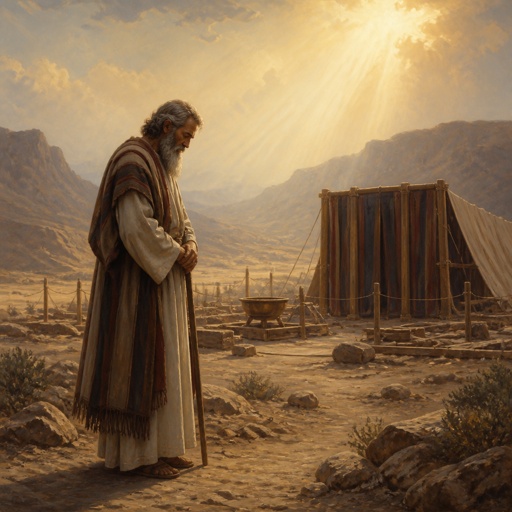
"And the LORD spake unto Moses, saying," - Exodus 40:1