What does Exodus 36:37 mean?
"¶ And he made an hanging for the tabernacle door of blue, and purple, and scarlet, and fine twined linen, of needlework;" - Exodus 36:37
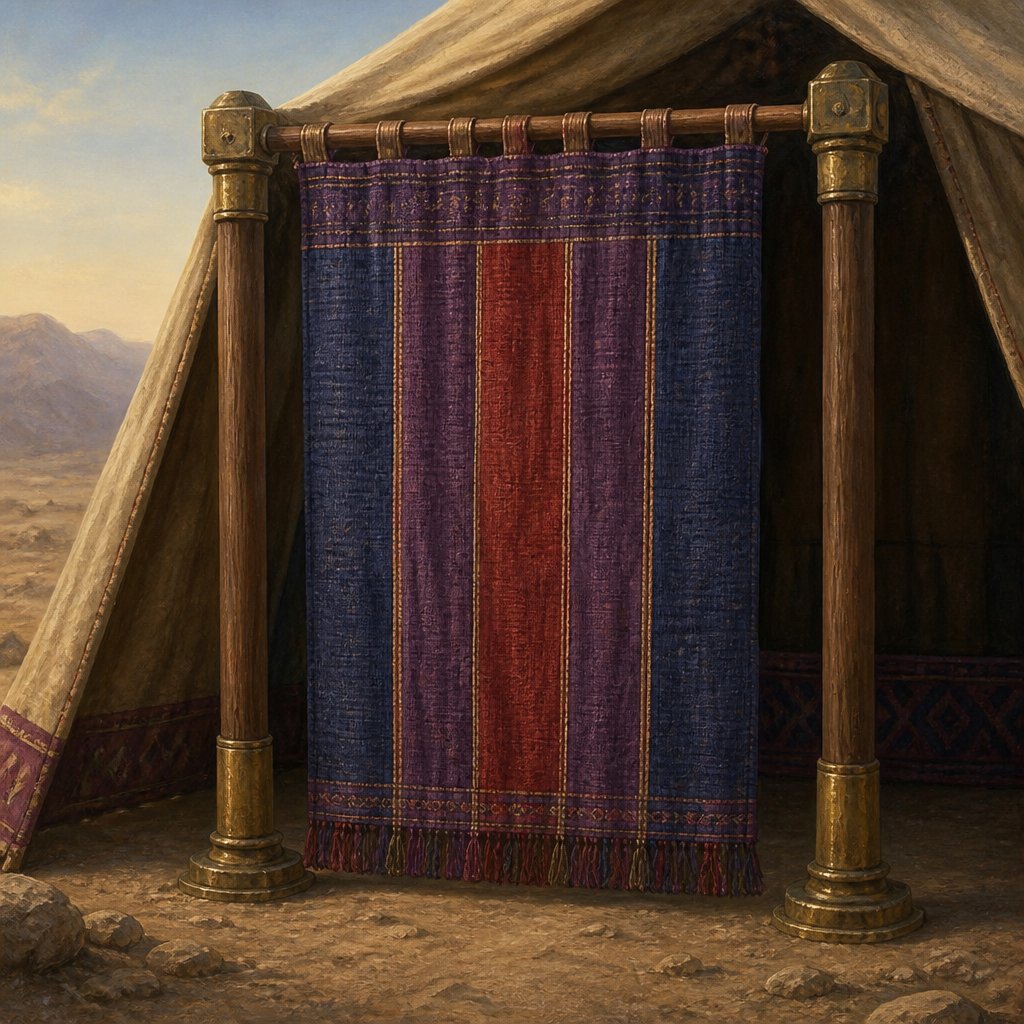
Exodus 36:37 in the King James Version of the Bible reads: "And he made a hanging for the tabernacle door of blue, and purple, and scarlet, and fine twined linen, of needlework;"
This verse is part of the detailed account of the construction of the tabernacle, which was a portable sanctuary that the Israelites built in the wilderness under the guidance of Moses. The tabernacle was the place where God would dwell among his people and where they would worship and make sacrifices. This verse describes the hanging for the door of the tabernacle, which was made of blue, purple, and scarlet yarn and fine linen.
The use of the colors blue, purple, and scarlet have symbolic significance in the Bible. Blue represents the heavenly realm and the divine, purple symbolizes royalty and majesty, and scarlet is often associated with sacrifice and atonement. The fine twined linen and needlework suggest the skill and craftsmanship that went into the making of the hanging, emphasizing the care and attention to detail that the Israelites devoted to the construction of the tabernacle.
The tabernacle as a whole can be seen as a foreshadowing of the person and work of Jesus Christ. The author of the New Testament book of Hebrews makes this connection, describing Jesus as the "great High Priest" who has passed through the heavenly tabernacle and made atonement for the sins of the people (Hebrews 4:14-16, 9:11-12). The colors and materials used in the construction of the tabernacle, including the hanging for the door, can be seen as pointing to the person and work of Christ as the fulfillment of the temple and the sacrificial system.
The theme of the tabernacle as a dwelling place for God is also significant. In the Old Testament, the tabernacle was the place where God's presence would manifest itself, and where the Israelites could approach him in worship and prayer. This reflects the broader biblical theme of God's desire to dwell among his people. In the New Testament, this theme finds its ultimate fulfillment in the person of Jesus Christ, who is described as the "Word made flesh" who dwelt (literally "tabernacled") among us (John 1:14).
The construction of the tabernacle also reflects the broader theme of God's desire for order and beauty in worship. The meticulous instructions given for the construction of the tabernacle, including the hanging for the door, emphasize the importance of doing things according to God's design and for his glory. This is in contrast to the idolatrous practices of the surrounding nations, and reflects the biblical theme of the holiness and distinctiveness of the worship of the one true God.
In conclusion, Exodus 36:37 and the broader account of the construction of the tabernacle in the book of Exodus reflects a number of important themes and theological concepts. It points forward to the person and work of Jesus Christ, emphasizes the theme of God's desire to dwell among his people, and underscores the importance of order and beauty in worship. As believers today, we can learn from the example of the Israelites in their careful and intentional construction of the tabernacle, and seek to worship God with similar reverence and devotion.
Have questions about Exodus 36:37?
Dive deeper into this scripture with Bible Chat — an AI-powered tool for exploring God's Word through conversation. Ask questions, get context, and grow in your understanding of the Bible.
Get Our Apps


Exodus 36:37 Artwork

Exodus 36:37 - "¶ And he made an hanging for the tabernacle door of blue, and purple, and scarlet, and fine twined linen, of needlework;"
"¶ And he made an hanging for the tabernacle door of blue, and purple, and scarlet, and fine twined linen, of needlework;" - Exodus 36:37

Matthew 12:36-37

matthew 12:36-37

Mark 4:36-37

Mark 9:36-37

Mark 4:36-37

Matthew 12:36-37

1 Corinthians 14:36-37
Genesis 36:37 - "And Samlah died, and Saul of Rehoboth by the river reigned in his stead."

Exodus 39:37

Exodus 39:37
Exodus 39:37

Genesis 37:36 - "And the Midianites sold him into Egypt unto Potiphar, an officer of Pharaoh's, and captain of the guard."

Psalms 37:36 - "Yet he passed away, and, lo, he was not: yea, I sought him, but he could not be found."

Exodus 39:36 - "The table, and all the vessels thereof, and the shewbread,"

Exodus 16:36 - "Now an omer is the tenth part of an ephah."

Exodus 36:36 - "And he made thereunto four pillars of shittim wood, and overlaid them with gold: their hooks were of gold; and he cast for them four sockets of silver."

Exodus 36:27 - "And for the sides of the tabernacle westward he made six boards."

Ezekiel 36:37 - "Thus saith the Lord GOD; I will yet for this be enquired of by the house of Israel, to do it for them; I will increase them with men like a flock."

Exodus 37:24 - "Of a talent of pure gold made he it, and all the vessels thereof."

Exodus 37:4 - "And he made staves of shittim wood, and overlaid them with gold."

Exodus 36:7 - "For the stuff they had was sufficient for all the work to make it, and too much."

Exodus 36:28 - "And two boards made he for the corners of the tabernacle in the two sides."

Exodus 36:20 - "¶ And he made boards for the tabernacle of shittim wood, standing up."

Exodus 36:16 - "And he coupled five curtains by themselves, and six curtains by themselves."

Exodus 37:28 - "And he made the staves of shittim wood, and overlaid them with gold."

Exodus 37:5 - "And he put the staves into the rings by the sides of the ark, to bear the ark."

"And Samlah died, and Saul of Rehoboth by the river reigned in his stead." - Genesis 36:37

Exodus 37:14 - "Over against the border were the rings, the places for the staves to bear the table."