What does Exodus 35:27 mean?
"And the rulers brought onyx stones, and stones to be set, for the ephod, and for the breastplate;" - Exodus 35:27
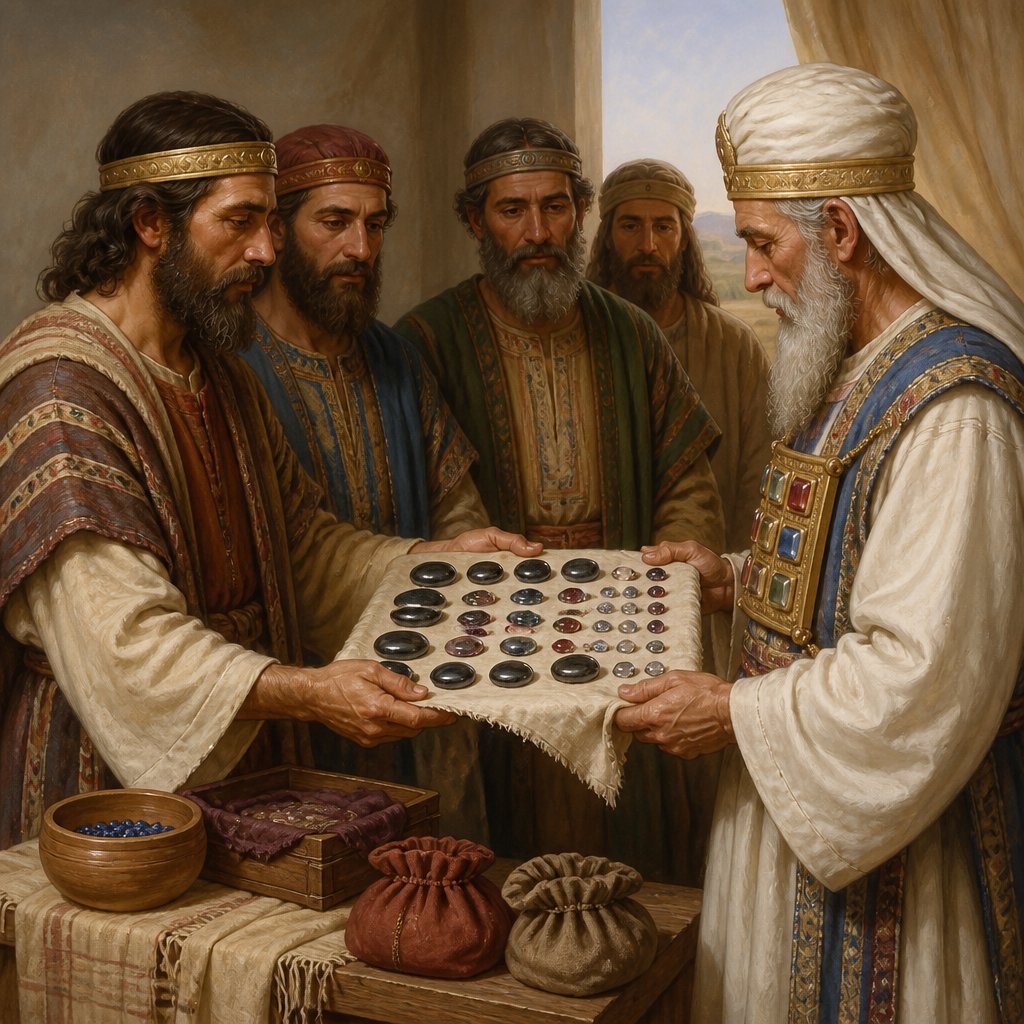
Exodus 35:27 (KJV) states, "And the rulers brought onyx stones, and stones to be set, for the ephod, and for the breastplate."
In order to fully understand the significance of this verse, it is important to consider the broader context of the Book of Exodus. The book describes the Israelites' escape from slavery in Egypt and their journey to the promised land. In chapter 35, the Israelites are preparing to build the tabernacle, a portable sanctuary where they will worship and make offerings to God. The tabernacle is a central symbol of the Israelites' relationship with God, and its construction is a critical component of their religious practice.
In verse 27, we see the rulers of the Israelites bringing onyx stones and other precious stones to be used in the construction of the ephod and the breastplate. The ephod was a type of apron worn by the high priest, and the breastplate was a garment adorned with precious stones that the high priest wore when seeking guidance from God. These items were essential for the high priest to carry out his duties in the tabernacle, and the fact that the rulers brought these precious materials demonstrates their dedication to the worship of God and the importance of the tabernacle in their religious practices.
The use of onyx stones and other precious stones in the construction of the ephod and the breastplate carries deep symbolic meaning. In ancient cultures, onyx was often associated with protection and strength. It was believed to ward off evil and bring good fortune to the wearer. In the context of the high priest's garments, the onyx stones symbolize the protective and guiding role of the high priest in leading the people in their worship and relationship with God. The use of precious stones further emphasizes the sacred and holy nature of the tabernacle and the importance of the high priest's role in representing the people before God.
Furthermore, the act of the rulers bringing these precious materials for the construction of the ephod and the breastplate reflects the broader theme of communal dedication to the worship of God. The construction of the tabernacle was a collective effort, with each member of the community contributing their skills, time, and resources to create a place of worship and connection with God. This verse emphasizes the importance of communal worship and the willingness of the rulers to support and contribute to the religious practices of the entire community.
In a broader spiritual sense, the construction of the tabernacle and the high priest's garments symbolize the establishment of a sacred space and the means for the people to seek and maintain a relationship with God. The use of precious stones and other materials symbolizes the importance of reverence and devotion in worship, as well as the idea of offering one's best to God in the construction of sacred spaces and objects.
In conclusion, Exodus 35:27, with its mention of the rulers bringing onyx stones and stones to be set for the construction of the ephod and the breastplate, carries deep symbolic and spiritual significance. It highlights the communal dedication to the worship of God, the protective and guiding role of the high priest, and the importance of offering one's best in service to God. This verse serves as a reminder of the sacredness of worship and the importance of communal dedication in building a space for encountering the divine.
Have questions about Exodus 35:27?
Dive deeper into this scripture with Bible Chat — an AI-powered tool for exploring God's Word through conversation. Ask questions, get context, and grow in your understanding of the Bible.
Get Our Apps


Exodus 35:27 Artwork

Exodus 35:27 - "And the rulers brought onyx stones, and stones to be set, for the ephod, and for the breastplate;"
"And the rulers brought onyx stones, and stones to be set, for the ephod, and for the breastplate;" - Exodus 35:27

Matthew 27:35

Mark 8:27 - 35

Exodus 32.15-35

Mark 8:27 - 35

Mark 8:27 - 35

Mark 8:27 - 35

Mark 8:27 - 35

Exodus 35:18 - "The pins of the tabernacle, and the pins of the court, and their cords,"

Exodus 39:35 - "The ark of the testimony, and the staves thereof, and the mercy seat,"

Exodus 35:9 - "And onyx stones, and stones to be set for the ephod, and for the breastplate."

Exodus 35:6 - "And blue, and purple, and scarlet, and fine linen, and goats' hair,"

Exodus 35:32 - "And to devise curious works, to work in gold, and in silver, and in brass,"

Exodus 35:8 - "And oil for the light, and spices for anointing oil, and for the sweet incense,"

Exodus 35:12 - "The ark, and the staves thereof, with the mercy seat, and the vail of the covering,"

The Plague of Hail - Exodus 9:13-35

The Plague of Hail - Exodus 9:13-35

Exodus 35:13 - "The table, and his staves, and all his vessels, and the shewbread,"

Exodus 35:28 - "And spice, and oil for the light, and for the anointing oil, and for the sweet incense."

Exodus 35:7 - "And rams' skins dyed red, and badgers' skins, and shittim wood,"

The Plague of Hail - Exodus 9:13-35

The Plague of Hail - Exodus 9:13-35

Exodus 27:20

Exodus 27:20

Exodus 35:20 - "¶ And all the congregation of the children of Israel departed from the presence of Moses."

Exodus 35:17 - "The hangings of the court, his pillars, and their sockets, and the hanging for the door of the court,"

Exodus 32:35 - "And the LORD plagued the people, because they made the calf, which Aaron made."

Exodus 35:14 - "The candlestick also for the light, and his furniture, and his lamps, with the oil for the light,"

2 Chronicles 35:27 - "And his deeds, first and last, behold, they are written in the book of the kings of Israel and Judah."