What does Exodus 33:20 mean?
"And he said, Thou canst not see my face: for there shall no man see me, and live." - Exodus 33:20
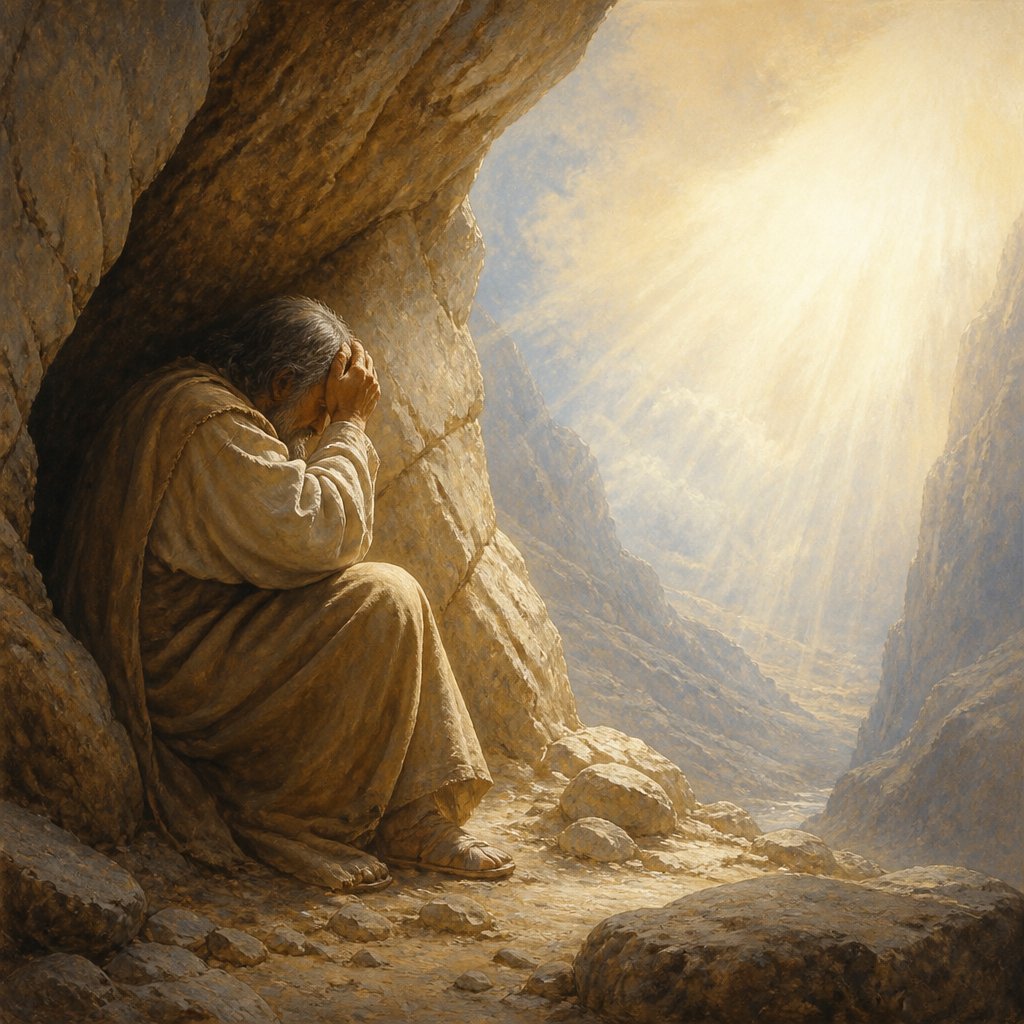
Exodus 33:20 (KJV) states: "And he said, Thou canst not see my face: for there shall no man see me, and live."
This verse is part of a conversation between Moses and God. In this passage, Moses asks God to show him His glory. God responds by telling Moses that no man can see His face and live. This verse holds a significant place within the broader narrative of Exodus, as it reveals important truths about the nature of God and the limitations of human understanding.
The context of this verse is essential to understanding its meaning. The book of Exodus describes the Israelites' journey out of slavery in Egypt and their subsequent encounter with God at Mount Sinai. Moses has been leading the Israelites, and he has a close relationship with God, frequently speaking with Him and receiving divine guidance. Now, after the Israelites have sinned by worshiping the golden calf, Moses is seeking reassurance and seeking to understand more about God's nature and how He will continue to lead and guide His people.
When Moses asks to see God's glory, he is expressing a desire to see God's true nature and experience His presence in a tangible way. However, God's response is a reminder of the vast gulf that separates the human and the divine. The concept that no man can see God's face and live reflects the holiness and inscrutability of God. This verse underscores the idea that God's existence and essence are beyond human comprehension and that seeking to fully understand God is an impossible task for mortal beings.
The theme of human limitations and God's transcendence is central to the message of this verse. Throughout the Bible, there are numerous instances where human characters struggle to understand the nature of God and His ways. In Isaiah 55:8-9, God declares, "For my thoughts are not your thoughts, neither are your ways my ways... For as the heavens are higher than the earth, so are my ways higher than your ways, and my thoughts than your thoughts." This verse in Exodus echoes this sentiment and highlights the idea that God's ways are beyond our understanding.
In addition to highlighting God's transcendence, this verse also serves as a reminder of the holiness and purity of God. In the Old Testament, the concept of approaching God's presence was associated with great awe and reverence, as God's holiness and purity were considered to be so intense that they were potentially lethal to humans. The notion that seeing God's face could result in death underscores the idea that God's holiness is incompatible with human sinfulness.
Symbolically, this verse can be understood as a reflection of the fundamental divide between the finite and the infinite, the mortal and the immortal. It serves as a humbling reminder of the limits of human knowledge and understanding in the presence of the divine. The concept of not being able to see God's face and live can also be seen as a metaphor for the spiritual journey, highlighting the tension between the desire to know God more fully and the recognition of our inherent limitations.
Ultimately, Exodus 33:20 (KJV) conveys a profound truth about the nature of God and the human experience. It emphasizes the incomprehensibility of God's essence and underscores the reverence and humility that should characterize our approach to the divine. This verse reminds us that while we may seek to know and understand God more fully, we ultimately exist within the limitations of our humanity and must approach the divine with awe, reverence, and a recognition of our own finite nature.
Have questions about Exodus 33:20?
Dive deeper into this scripture with Bible Chat — an AI-powered tool for exploring God's Word through conversation. Ask questions, get context, and grow in your understanding of the Bible.
Get Our Apps


Exodus 33:20 Artwork

Exodus 33:20 - "And he said, Thou canst not see my face: for there shall no man see me, and live."
"And he said, Thou canst not see my face: for there shall no man see me, and live." - Exodus 33:20

Exodus 12:33

Exodus 26:31-33

Exodus 33:6 - "And the children of Israel stripped themselves of their ornaments by the mount Horeb."

Numbers 33:20 - "And they departed from Rimmon-parez, and pitched in Libnah."

Exodus 33:18 - "And he said, I beseech thee, shew me thy glory."

Genesis 33:20 - "And he erected there an altar, and called it El-elohe-Israel."

Acts 20:33 - "I have coveted no man's silver, or gold, or apparel."

Exodus 33:21 - "And the LORD said, Behold, there is a place by me, and thou shalt stand upon a rock:"

Matthew 20:33 - "They say unto him, Lord, that our eyes may be opened."

Exodus 33:14 - "And he said, My presence shall go with thee, and I will give thee rest."

Exodus 34:33 - "And till Moses had done speaking with them, he put a vail on his face."

Exodus 35:33 - "And in the cutting of stones, to set them, and in carving of wood, to make any manner of cunning work."

Exodus 36:33 - "And he made the middle bar to shoot through the boards from the one end to the other."

Exodus 23:20

Exodus 20:2

Exodus 27:20

Exodus 27:20

Exodus 27:20

Exodus 20:14

Psalms 33:20 - "Our soul waiteth for the LORD: he is our help and our shield."

Job 33:20 - "So that his life abhorreth bread, and his soul dainty meat."

Exodus 33:15 - "And he said unto him, If thy presence go not with me, carry us not up hence."

Exodus 33:4 - "¶ And when the people heard these evil tidings, they mourned: and no man did put on him his ornaments."

Luke 20:33 - "Therefore in the resurrection whose wife of them is she? for seven had her to wife."

Exodus 21:33 - "¶ And if a man shall open a pit, or if a man shall dig a pit, and not cover it, and an ox or an ass fall therein;"

Exodus 20:13 - "Thou shalt not kill."

Exodus 20:15 - "Thou shalt not steal."

Exodus 33:2 - "And I will send an angel before thee; and I will drive out the Canaanite, the Amorite, and the Hittite, and the Perizzite, the Hivite, and the Jebusite:"