What does Exodus 24:13 mean?
"And Moses rose up, and his minister Joshua: and Moses went up into the mount of God." - Exodus 24:13
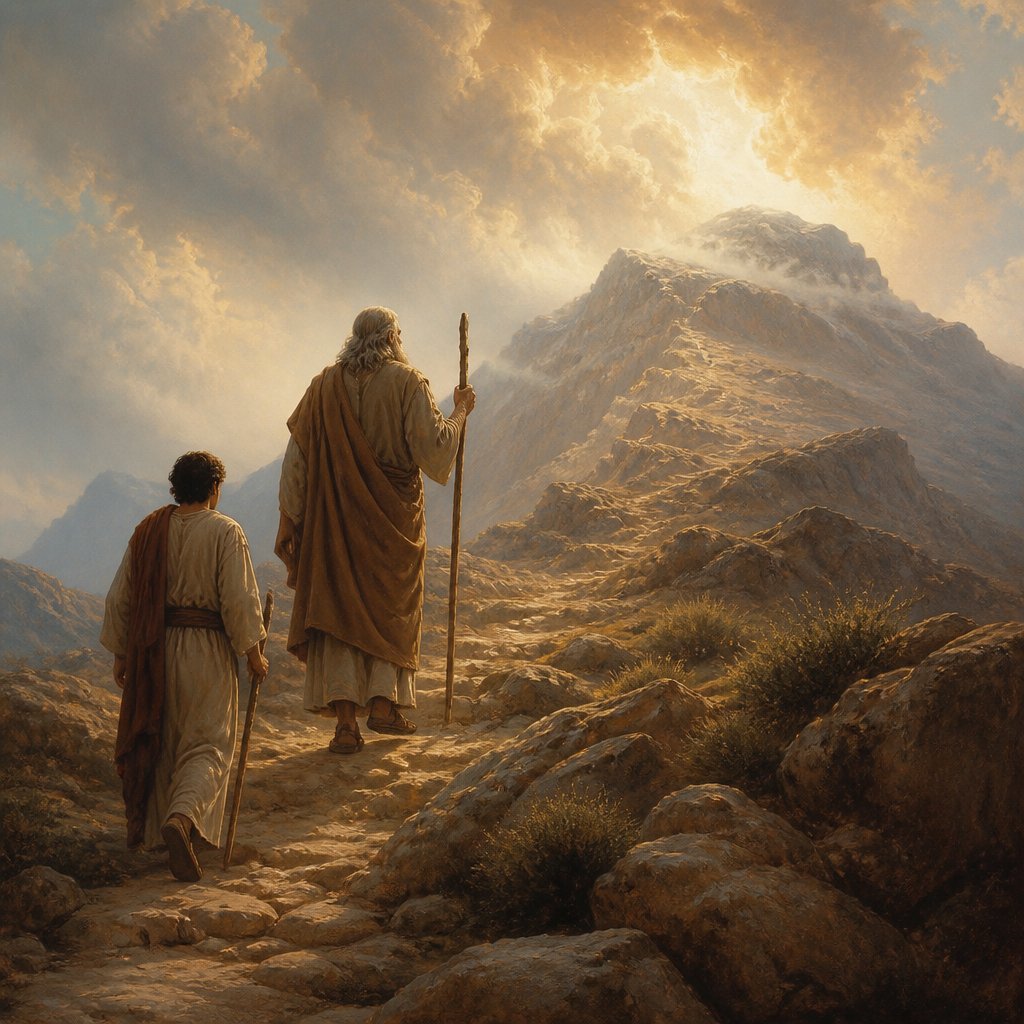
Exodus 24:13 (KJV) states, "And Moses rose up, and his minister Joshua: and Moses went up into the mount of God."
This verse can be found within the larger context of the book of Exodus, which details the journey of the Israelites from slavery in Egypt to their eventual establishment as a nation with the giving of the Law at Mount Sinai. It falls within the section of Exodus that deals with the establishment of the covenant between God and the Israelites, including the receiving of the Ten Commandments and the construction of the tabernacle.
In this particular verse, Moses is about to ascend Mount Sinai to receive the tablets of stone with the commandments written on them from God. The mention of Joshua, who would eventually succeed Moses as the leader of the Israelites, indicates that he was accompanying Moses on this journey.
One of the key themes in this passage is the spiritual leadership of Moses. Moses is a central figure in the Bible, revered for his role as a prophet, leader, and mediator between God and the people of Israel. His actions and interactions with God serve as a model for leadership, obedience, and faith.
The symbolism of Moses going up into the mount of God is significant. The mountain is a sacred space in many religious traditions, including Christianity, Judaism, and Islam. It is often depicted as a place where individuals can draw closer to the divine and receive spiritual guidance. In the case of Mount Sinai, it is the place where God chose to reveal himself to Moses and give him the Law, signaling the establishment of the covenant between God and the Israelites.
The mention of Joshua as Moses' minister also carries symbolic significance. Joshua is depicted as a faithful and dedicated servant of Moses, often acting as his right-hand man. His presence here can be seen as an indication of the importance of mentorship and the passing of leadership from one generation to the next. Joshua would eventually succeed Moses as the leader of the Israelites and lead them into the Promised Land, demonstrating the continuity of God's plan and the faithfulness of His servants.
This verse can also be interpreted as a call to spiritual ascent and communion with God. The act of going up into the mount of God can be seen as a metaphor for seeking divine wisdom, guidance, and revelation. It emphasizes the importance of personal encounter with God and the pursuit of spiritual growth and understanding.
In a broader theological context, the verse can be seen as a foreshadowing of the coming of Jesus Christ, who is often identified as a new and greater Moses. Both figures are associated with the delivering of God's law and the establishment of a new covenant. Just as Moses went up into the mount of God to receive the commandments, Jesus is depicted as the ultimate mediator between God and humanity, offering a new covenant and inviting people into a deeper relationship with God.
In conclusion, Exodus 24:13 (KJV) captures a significant moment in the biblical narrative, emphasizing the spiritual leadership of Moses, the symbolism of Mount Sinai as a sacred space for encountering God, and the theme of mentorship and succession in leadership. It invites readers to consider the importance of seeking spiritual ascent and communion with God, and it points to the ultimate fulfillment of God's plan in the coming of Jesus Christ.
Have questions about Exodus 24:13?
Dive deeper into this scripture with Bible Chat — an AI-powered tool for exploring God's Word through conversation. Ask questions, get context, and grow in your understanding of the Bible.
Get Our Apps


Exodus 24:13 Artwork

Exodus 24:13 - "And Moses rose up, and his minister Joshua: and Moses went up into the mount of God."
"And Moses rose up, and his minister Joshua: and Moses went up into the mount of God." - Exodus 24:13

Exodus 24:16

Exodus 24:17

Exodus 24:4

Exodus 7:14-24

Exodus 24:9-11

Exodus 14:13

Exodus 14:13

Exodus 14:13

Exodus 14:13

Exodus 14:13

Exodus 14:13

Exodus 14:13
Exodus 14:13

Exodus 14:13
Exodus 14:13

Exodus 14:13
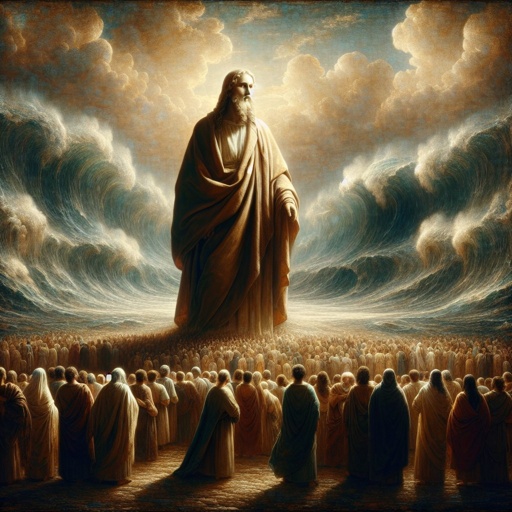
Exodus 14:13

Luke 13:24
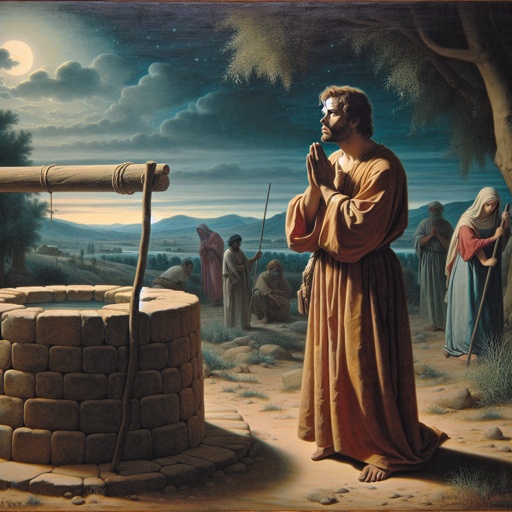
Genesis 24-13

Exodus 6:24 - "And the sons of Korah; Assir, and Elkanah, and Abiasaph: these are the families of the Korhites."
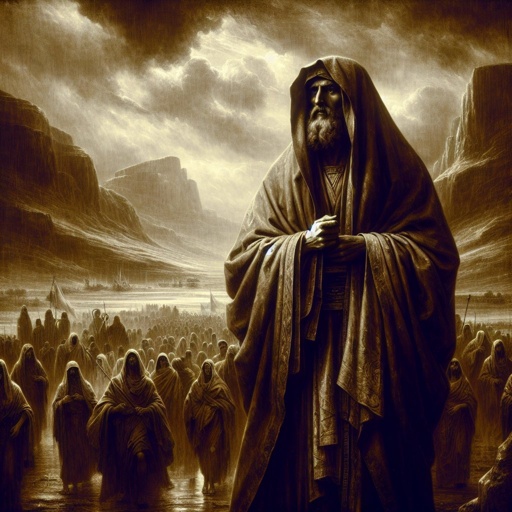
Exodus 14:13
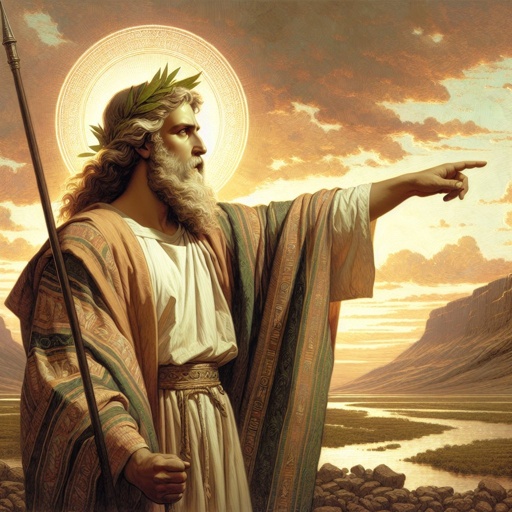
Exodus 14:13

Exodus 14:13

Exodus 14:13

Exodus 14:13

Exodus 14:13

Exodus 14:13
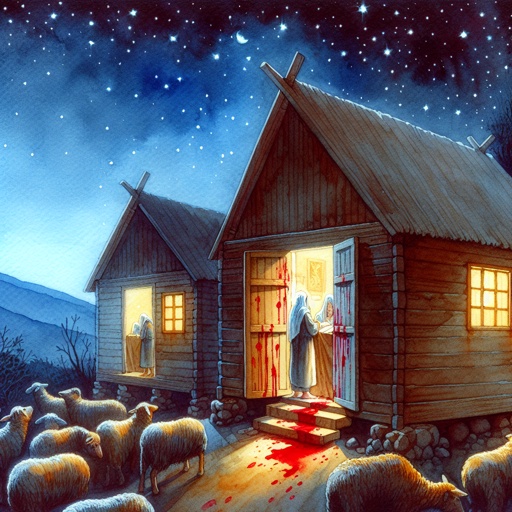
Exodus 12:13