What does Exodus 21:14 mean?
"But if a man come presumptuously upon his neighbour, to slay him with guile; thou shalt take him from mine altar, that he may die." - Exodus 21:14
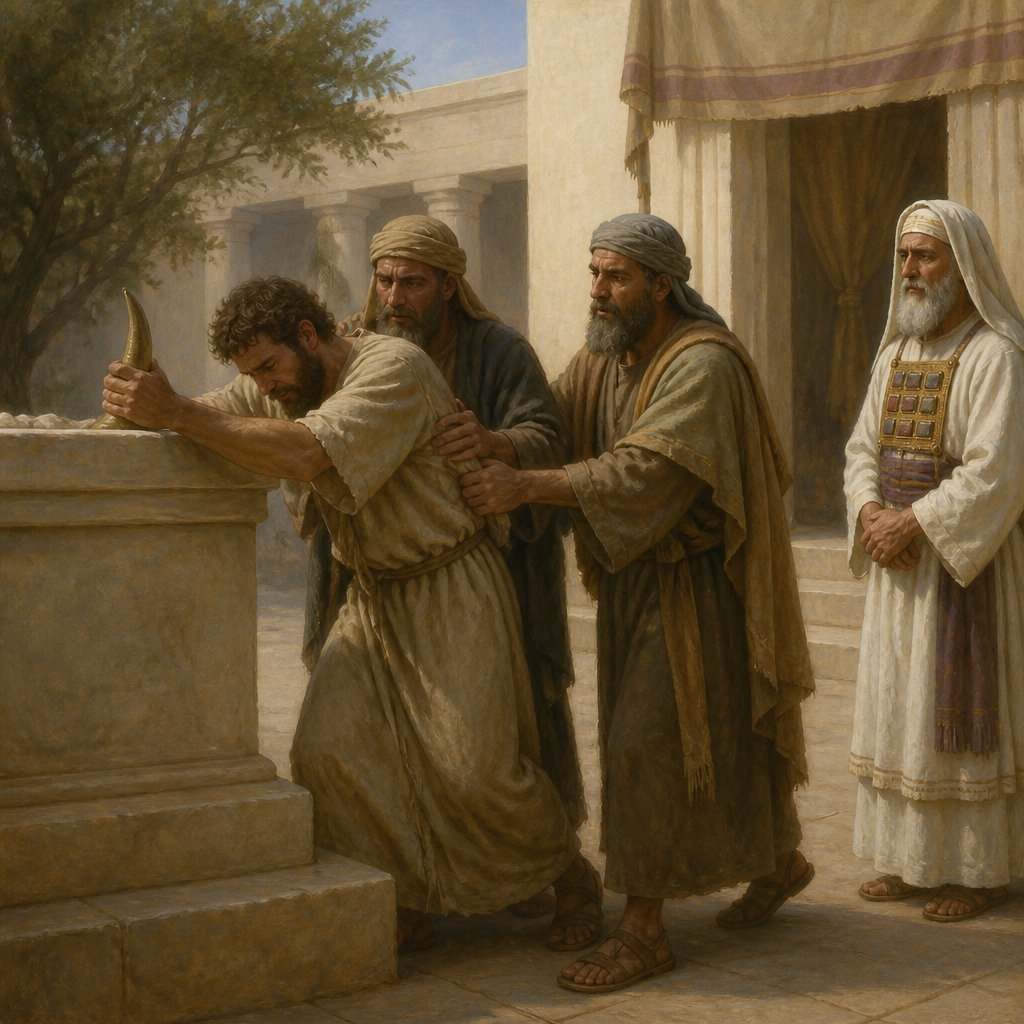
Exodus 21:14 (KJV) states, "But if a man come presumptuously upon his neighbour, to slay him with guile; thou shalt take him from mine altar, that he may die."
This verse comes from the book of Exodus, which is the second book of the Bible and is part of the Pentateuch, the first five books of the Old Testament. The book of Exodus details the Israelites' escape from slavery in Egypt and their journey to the Promised Land. It also contains the laws and regulations given to Moses by God, including the Ten Commandments. This verse is part of a section that outlines various laws and regulations related to social justice and community living.
In analyzing the verse, it is essential to examine its context within the broader narrative of the book of Exodus. The verse is part of a passage that deals with legal matters, specifically focusing on the consequences for various acts of violence and the concept of unintended harm versus intentional harm. In this particular verse, the emphasis is on premeditated murder or intentional harm towards another person.
The verse begins with the condition "if a man come presumptuously upon his neighbour, to slay him with guile." This indicates that the action being addressed is not a crime of passion or self-defense, but a deliberate and calculated attempt to take another person's life. The use of the word "guile" implies deceit or trickery, suggesting a planned and malicious intent. This distinction is significant as it highlights the severity of the offense and the need for appropriate consequences.
The latter part of the verse establishes the punishment for such actions, stating, "thou shalt take him from mine altar, that he may die." This command emphasizes the seriousness of the crime and reinforces the idea that even seeking refuge at a sacred place does not absolve one of responsibility for their actions. The mention of the altar also underscores the religious and moral implications of the act, as seeking sanctuary at the altar was a sign of repentance and seeking forgiveness. However, in this case, the perpetrator is to be taken away from the altar and put to death, signifying the gravity of the offense and the need for justice to be served.
In terms of themes, Exodus 21:14 addresses the concepts of justice, intentionality, and responsibility. The verse underscores the importance of distinguishing between accidental harm and deliberate wrongdoing, as well as the need for appropriate consequences for malicious actions. It also highlights the sanctity of life and the moral duty to uphold justice, even in the face of religious or spiritual considerations.
Symbolically, the verse can be seen as representing the fundamental principles of justice and accountability. The altar, which is a sacred place of worship and offering, serves as a powerful symbol of divine forgiveness and redemption. By specifying that the perpetrator must be taken away from the altar to face the consequences of their actions, the verse emphasizes the idea that true repentance and forgiveness cannot be used as a shield to evade justice. This serves as a reminder that individuals are accountable for their actions and that justice must be administered impartially and without compromise.
In conclusion, Exodus 21:14 is a verse that addresses the gravity of intentional harm and the need for justice. It emphasizes the distinction between premeditated violence and accidental harm and underscores the importance of accountability and responsibility. Symbolically, the verse highlights the sanctity of life and the moral imperative to uphold justice, even in the face of religious or spiritual considerations. Ultimately, it serves as a powerful reminder of the principles of justice and accountability that are foundational to a just and equitable society.
Have questions about Exodus 21:14?
Dive deeper into this scripture with Bible Chat — an AI-powered tool for exploring God's Word through conversation. Ask questions, get context, and grow in your understanding of the Bible.
Get Our Apps


Exodus 21:14 Artwork
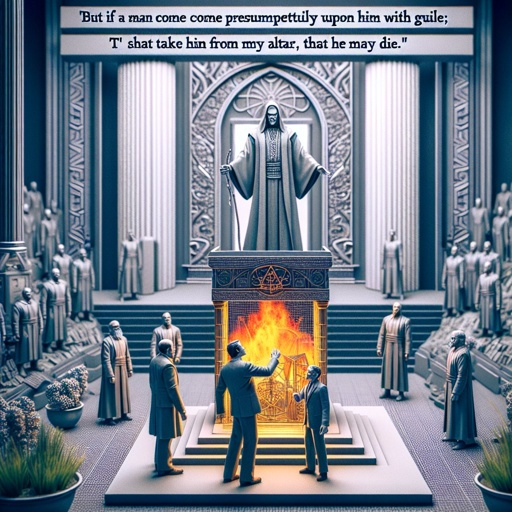
Exodus 21:14 - "But if a man come presumptuously upon his neighbour, to slay him with guile; thou shalt take him from mine altar, that he may die."
"But if a man come presumptuously upon his neighbour, to slay him with guile; thou shalt take him from mine altar, that he may die." - Exodus 21:14

Exodus 14: 21

Exodus 14: 21

"And Moses stretched out his hand over the sea; and the LORD caused the sea to go back by a strong east wind all that night, and made the sea dry land, and the waters were divided. And the children of Israel went into the midst of the sea upon the dry ground: and the waters were a wall unto them on their right hand, and on their left." - Exodus 14:21-22

Exodus 14:21 - "And Moses stretched out his hand over the sea; and the LORD caused the sea to go back by a strong east wind all that night, and made the sea dry land, and the waters were divided."

Exodus 14:21 KJV (21) And Moses stretched out his hand over the sea; and the LORD caused the sea to go back by a strong east wind all that night, and made the sea dry land, and the waters were divided.

Exodus 14:21 KJV (21) And Moses stretched out his hand over the sea; and the LORD caused the sea to go back by a strong east wind all that night, and made the sea dry land, and the waters were divided.

Exodus 15:21

Exodus 14

Exodus 21:21 - "Notwithstanding, if he continue a day or two, he shall not be punished: for he is his money."

Exodus 27:19-21

Exodus 14:13

Exodus 14:13

Exodus 14:13

Exodus 14:13

Exodus 14:13

Exodus 14:13

Exodus 14:13
Exodus 14:13

Exodus 14:13
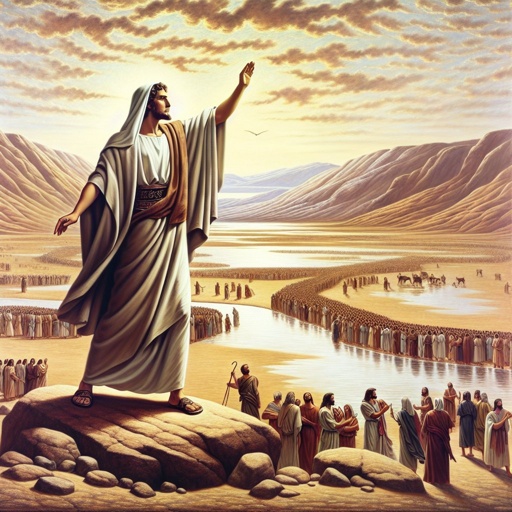
Exodus 14:13

Exodus 14:13

Exodus 14:13

Exodus 14:13
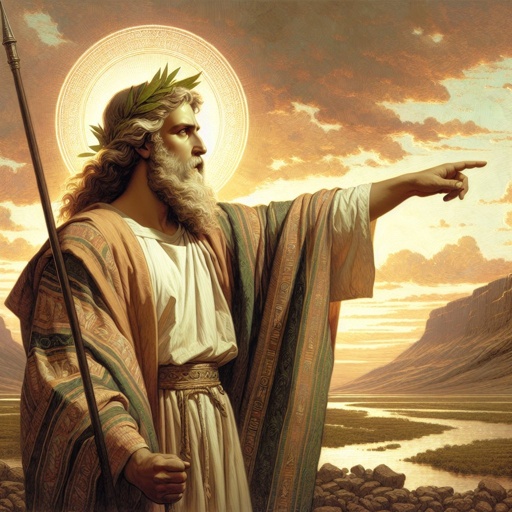
Exodus 14:13

Exodus 3:14

exodus 3:14

Exodus 3:14

Exodus 14:13