What does Esther 9:7 mean?
"And Parshandatha, and Dalphon, and Aspatha," - Esther 9:7
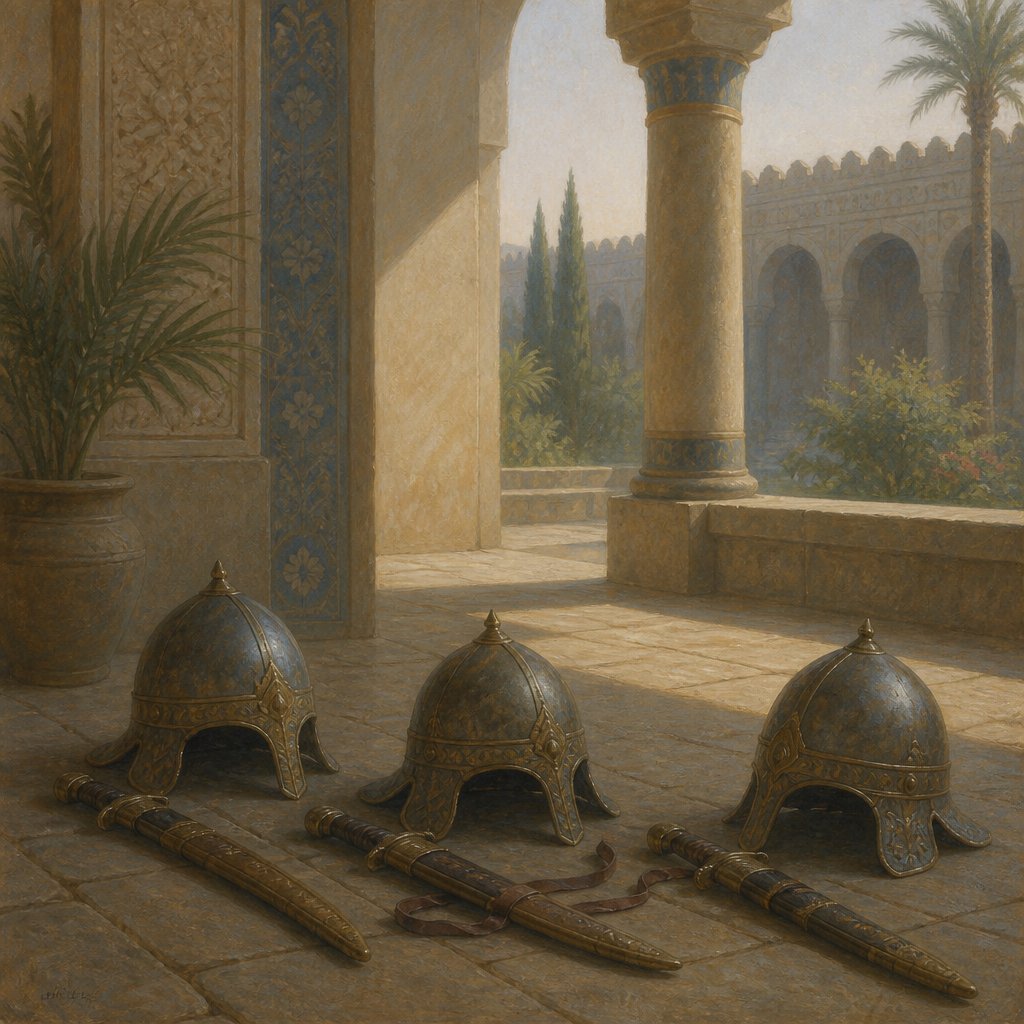
Esther 9:7 in the King James Version of the Bible reads, "And Parshandatha, and Dalphon, and Aspatha."
This verse comes from the book of Esther, which is a narrative that tells the story of a Jewish girl named Esther who becomes the queen of Persia and saves her people from destruction. The book of Esther is unique in that it never directly mentions God, yet His presence and providence are evident throughout the story.
In this particular verse, the names Parshandatha, Dalphon, and Aspatha are mentioned. These names may seem insignificant on the surface, but they are actually an important part of the larger narrative of the book of Esther.
The book of Esther is set in the Persian Empire during the reign of King Xerxes I, also known as Ahasuerus. The king's chief advisor, Haman, devises a plan to annihilate all the Jews in the empire. Esther, who is Jewish but has kept her heritage a secret, becomes aware of this plan and, with the help of her cousin Mordecai, devises a plan to save her people.
Esther 9:7 is part of a larger passage that lists the names of the ten sons of Haman, who are ultimately put to death as part of the Jews' defense against their enemies. The mention of these names serves as a reminder of the defeat of their enemies and the deliverance of the Jewish people.
One of the key themes of the book of Esther is the idea of divine providence and the unseen hand of God at work in the lives of His people. While God is never mentioned explicitly, His presence is felt throughout the story, guiding events and orchestrating deliverance for the Jewish people.
The names mentioned in Esther 9:7 are symbolic of the defeat of evil and the vindication of the righteous. In the larger context of the story, these names represent the enemies of God's people who sought to destroy them but were ultimately defeated. This serves as a reminder that God is always working behind the scenes, even when His presence is not obvious.
The book of Esther also highlights the importance of courage and standing up for one's faith in the face of adversity. Esther herself demonstrates great courage in revealing her true identity as a Jew and intervening on behalf of her people. The names mentioned in Esther 9:7 are a reminder of the bravery and resilience of the Jewish people in the face of persecution.
Overall, Esther 9:7 may seem like a simple list of names, but it serves as a powerful reminder of the themes and messages conveyed in the larger narrative of the book of Esther. It is a testament to the providence of God, the defeat of evil, and the courage of those who stand up for their faith. It is a reminder that even in the darkest times, God is always at work, orchestrating deliverance for His people.
Have questions about Esther 9:7?
Dive deeper into this scripture with Bible Chat — an AI-powered tool for exploring God's Word through conversation. Ask questions, get context, and grow in your understanding of the Bible.
Get Our Apps


Esther 9:7 Artwork

Esther 9:7 - "And Parshandatha, and Dalphon, and Aspatha,"
"And Parshandatha, and Dalphon, and Aspatha," - Esther 9:7

Esther 4:9 - "And Hatach came and told Esther the words of Mordecai."

Esther 9:32 - "And the decree of Esther confirmed these matters of Purim; and it was written in the book."

Esther 5:7 - "Then answered Esther, and said, My petition and my request is;"

Esther 7:1 - "So the king and Haman came to banquet with Esther the queen."

Esther 9:9 - "And Parmashta, and Arisai, and Aridai, and Vajezatha,"

Esther 7:6 - "And Esther said, The adversary and enemy is this wicked Haman. Then Haman was afraid before the king and the queen."

Esther 9:29 - "Then Esther the queen, the daughter of Abihail, and Mordecai the Jew, wrote with all authority, to confirm this second letter of Purim."

"And Hatach came and told Esther the words of Mordecai." - Esther 4:9

Esther 9:8 - "And Poratha, and Adalia, and Aridatha,"

"And the decree of Esther confirmed these matters of Purim; and it was written in the book." - Esther 9:32

Esther 7:2 - "And the king said again unto Esther on the second day at the banquet of wine, What is thy petition, queen Esther? and it shall be granted thee: and what is thy request? and it shall be performed, even to the half of the kingdom."

Esther 7:7 - "¶ And the king arising from the banquet of wine in his wrath went into the palace garden: and Haman stood up to make request for his life to Esther the queen; for he saw that there was evil determined against him by the king."
"And Parmashta, and Arisai, and Aridai, and Vajezatha," - Esther 9:9

"So the king and Haman came to banquet with Esther the queen." - Esther 7:1

Esther 8:7 - "¶ Then the king Ahasuerus said unto Esther the queen and to Mordecai the Jew, Behold, I have given Esther the house of Haman, and him they have hanged upon the gallows, because he laid his hand upon the Jews."
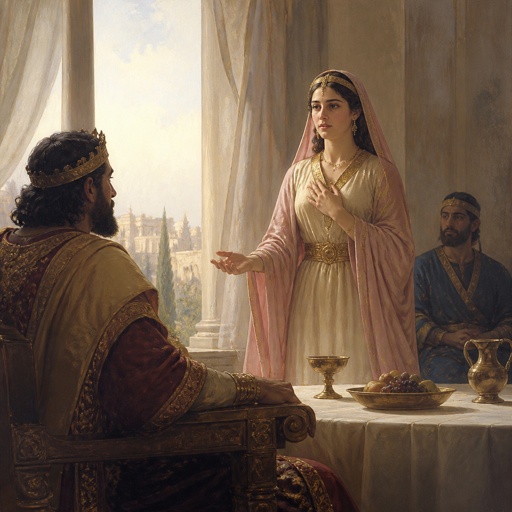
"Then answered Esther, and said, My petition and my request is;" - Esther 5:7

Esther 7:5 - "¶ Then the king Ahasuerus answered and said unto Esther the queen, Who is he, and where is he, that durst presume in his heart to do so?"
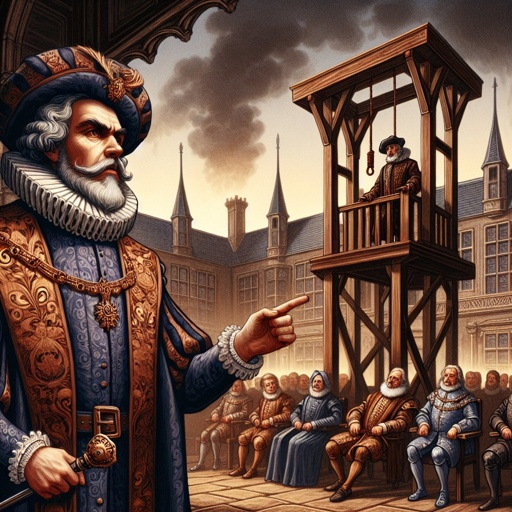
Esther 7:9 - "And Harbonah, one of the chamberlains, said before the king, Behold also, the gallows fifty cubits high, which Haman had made for Mordecai, who had spoken good for the king, standeth in the house of Haman. Then the king said, Hang him thereon."

Esther 9:31 - "To confirm these days of Purim in their times appointed, according as Mordecai the Jew and Esther the queen had enjoined them, and as they had decreed for themselves and for their seed, the matters of the fastings and their cry."

Esther 9:13 - "Then said Esther, If it please the king, let it be granted to the Jews which are in Shushan to do to morrow also according unto this day's decree, and let Haman's ten sons be hanged upon the gallows."
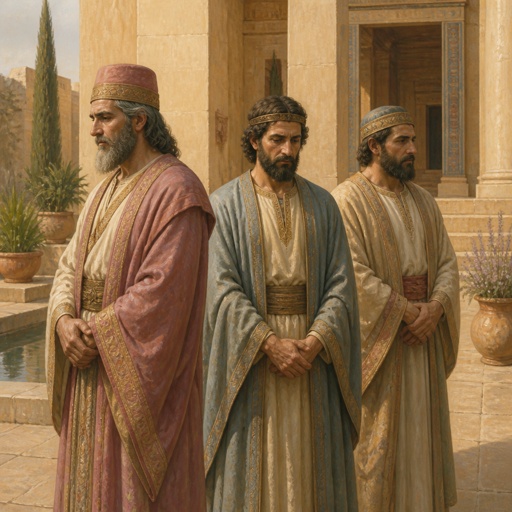
"And Poratha, and Adalia, and Aridatha," - Esther 9:8

Esther 9:6 - "And in Shushan the palace the Jews slew and destroyed five hundred men."

Esther 6:7 - "And Haman answered the king, For the man whom the king delighteth to honour,"

"And Esther said, The adversary and enemy is this wicked Haman. Then Haman was afraid before the king and the queen." - Esther 7:6

Esther 7:3 - "Then Esther the queen answered and said, If I have found favour in thy sight, O king, and if it please the king, let my life be given me at my petition, and my people at my request:"

Esther 9:25 - "But when Esther came before the king, he commanded by letters that his wicked device, which he devised against the Jews, should return upon his own head, and that he and his sons should be hanged on the gallows."

Esther 9:11 - "On that day the number of those that were slain in Shushan the palace was brought before the king."

Esther 9:23 - "And the Jews undertook to do as they had begun, and as Mordecai had written unto them;"