What does Esther 9:6 mean?
"And in Shushan the palace the Jews slew and destroyed five hundred men." - Esther 9:6
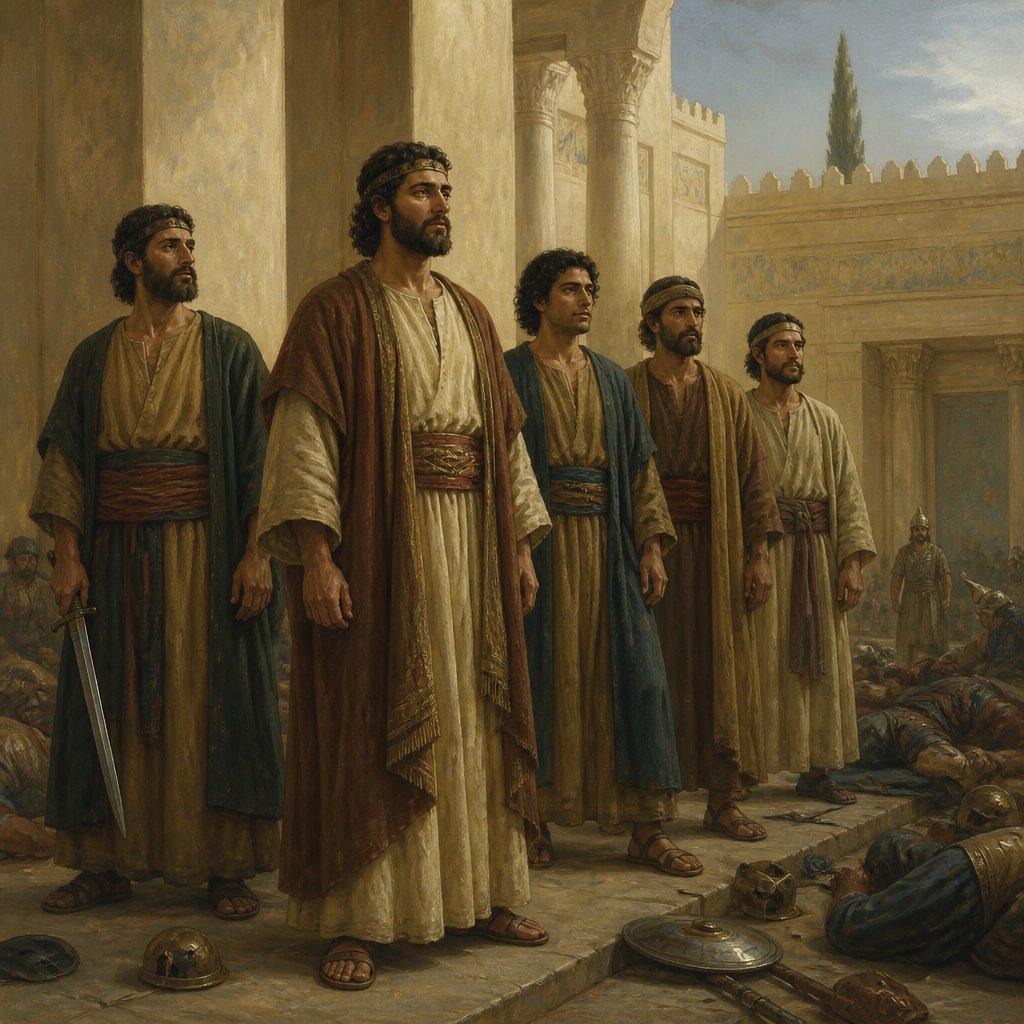
Esther 9:6 (KJV): And in Shushan the palace the Jews slew and destroyed five hundred men.
The book of Esther in the Bible is a historical account of a young Jewish woman who becomes queen of Persia and uses her position to save her people from genocide. The verse Esther 9:6 comes in the context of the Jews defending themselves from their enemies who sought to harm and destroy them. This verse specifically refers to the events in the city of Shushan, where the Jews gathered to defend themselves and ended up killing five hundred of their enemies.
One of the key themes of the Book of Esther is the sovereignty and providence of God. Although the name of God is not directly mentioned in the book, His divine intervention is evident throughout the story. The events that unfold, including Esther becoming queen, Mordecai overhearing a plot to assassinate the king, and the eventual triumph of the Jewish people over their enemies, all point to God working behind the scenes to ensure the safety and deliverance of His people. In Esther 9:6, we see the Jews prevailing over their enemies, which can be seen as a manifestation of God's protection and provision for His chosen people.
The context of Esther 9:6 is a period of great peril and uncertainty for the Jewish people. They were living as exiles in a foreign land, facing the threat of annihilation at the hands of the wicked Haman, a high-ranking official in the Persian court. However, through the bravery and wisdom of Esther, and the intervention of God, the Jews were able to defend themselves and turn the tables on their enemies. The killing of five hundred men in Shushan symbolizes the decisive victory of the Jews over those who sought to destroy them, and it serves as a testament to their determination and courage in the face of adversity.
Another theme that can be drawn from Esther 9:6 is the concept of justice and retribution. The Jews were acting in self-defense, and their actions can be seen as a just response to the threat posed by their enemies. This verse demonstrates that there are times when force must be used to protect oneself and others from harm, and it highlights the importance of standing up against evil and injustice.
In addition, the number five hundred mentioned in Esther 9:6 holds symbolic significance. In biblical numerology, the number five hundred can represent completeness, fullness, and abundance. The fact that the Jews were able to defeat five hundred of their enemies suggests that their victory was thorough and all-encompassing. It emphasizes the extent to which God enabled them to overcome their adversaries and achieve a comprehensive triumph.
Overall, Esther 9:6 is a powerful verse that captures the pivotal moment when the Jews in Shushan turned the tide in their favor and emerged victorious over their enemies. It underscores the themes of divine providence, justice, courage, and the ultimate triumph of good over evil. The verse serves as a testament to the unwavering faith and resilience of the Jewish people, and it stands as a reminder of God's faithfulness in delivering His people from peril.
Have questions about Esther 9:6?
Dive deeper into this scripture with Bible Chat — an AI-powered tool for exploring God's Word through conversation. Ask questions, get context, and grow in your understanding of the Bible.
Get Our Apps


Esther 9:6 Artwork

Esther 9:6 - "And in Shushan the palace the Jews slew and destroyed five hundred men."

"And in Shushan the palace the Jews slew and destroyed five hundred men." - Esther 9:6

Esther 4:9 - "And Hatach came and told Esther the words of Mordecai."

Esther 9:32 - "And the decree of Esther confirmed these matters of Purim; and it was written in the book."

Esther 9:9 - "And Parmashta, and Arisai, and Aridai, and Vajezatha,"

Esther 7:6 - "And Esther said, The adversary and enemy is this wicked Haman. Then Haman was afraid before the king and the queen."

Esther 9:29 - "Then Esther the queen, the daughter of Abihail, and Mordecai the Jew, wrote with all authority, to confirm this second letter of Purim."

Esther 1:6

"And Hatach came and told Esther the words of Mordecai." - Esther 4:9

Esther 9:8 - "And Poratha, and Adalia, and Aridatha,"

Esther 9:7 - "And Parshandatha, and Dalphon, and Aspatha,"

"And the decree of Esther confirmed these matters of Purim; and it was written in the book." - Esther 9:32

Esther 6:14 - "And while they were yet talking with him, came the king's chamberlains, and hasted to bring Haman unto the banquet that Esther had prepared."
"And Parmashta, and Arisai, and Aridai, and Vajezatha," - Esther 9:9

Esther 9:31 - "To confirm these days of Purim in their times appointed, according as Mordecai the Jew and Esther the queen had enjoined them, and as they had decreed for themselves and for their seed, the matters of the fastings and their cry."

Esther 9:13 - "Then said Esther, If it please the king, let it be granted to the Jews which are in Shushan to do to morrow also according unto this day's decree, and let Haman's ten sons be hanged upon the gallows."

Esther 5:6 - "¶ And the king said unto Esther at the banquet of wine, What is thy petition? and it shall be granted thee: and what is thy request? even to the half of the kingdom it shall be performed."
"And Parshandatha, and Dalphon, and Aspatha," - Esther 9:7
"And Poratha, and Adalia, and Aridatha," - Esther 9:8

Esther 6:7 - "And Haman answered the king, For the man whom the king delighteth to honour,"

Esther 6:9 - "And let this apparel and horse be delivered to the hand of one of the king's most noble princes, that they may array the man withal whom the king delighteth to honour, and bring him on horseback through the street of the city, and proclaim before him, Thus shall it be done to the man whom the king delighteth to honour."

"And Esther said, The adversary and enemy is this wicked Haman. Then Haman was afraid before the king and the queen." - Esther 7:6

Esther 9:25 - "But when Esther came before the king, he commanded by letters that his wicked device, which he devised against the Jews, should return upon his own head, and that he and his sons should be hanged on the gallows."

Esther 9:11 - "On that day the number of those that were slain in Shushan the palace was brought before the king."

Esther 9:23 - "And the Jews undertook to do as they had begun, and as Mordecai had written unto them;"

Esther 9:10 - "The ten sons of Haman the son of Hammedatha, the enemy of the Jews, slew they; but on the spoil laid they not their hand."
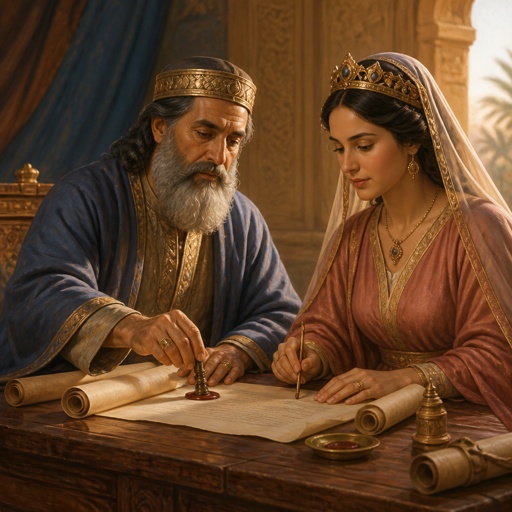
"Then Esther the queen, the daughter of Abihail, and Mordecai the Jew, wrote with all authority, to confirm this second letter of Purim." - Esther 9:29

Esther 9:17 - "On the thirteenth day of the month Adar; and on the fourteenth day of the same rested they, and made it a day of feasting and gladness."

Esther 1:9 - "Also Vashti the queen made a feast for the women in the royal house which belonged to king Ahasuerus."

Esther 9:14 - "And the king commanded it so to be done: and the decree was given at Shushan; and they hanged Haman's ten sons."