What does Esther 9:32 mean?
"And the decree of Esther confirmed these matters of Purim; and it was written in the book." - Esther 9:32
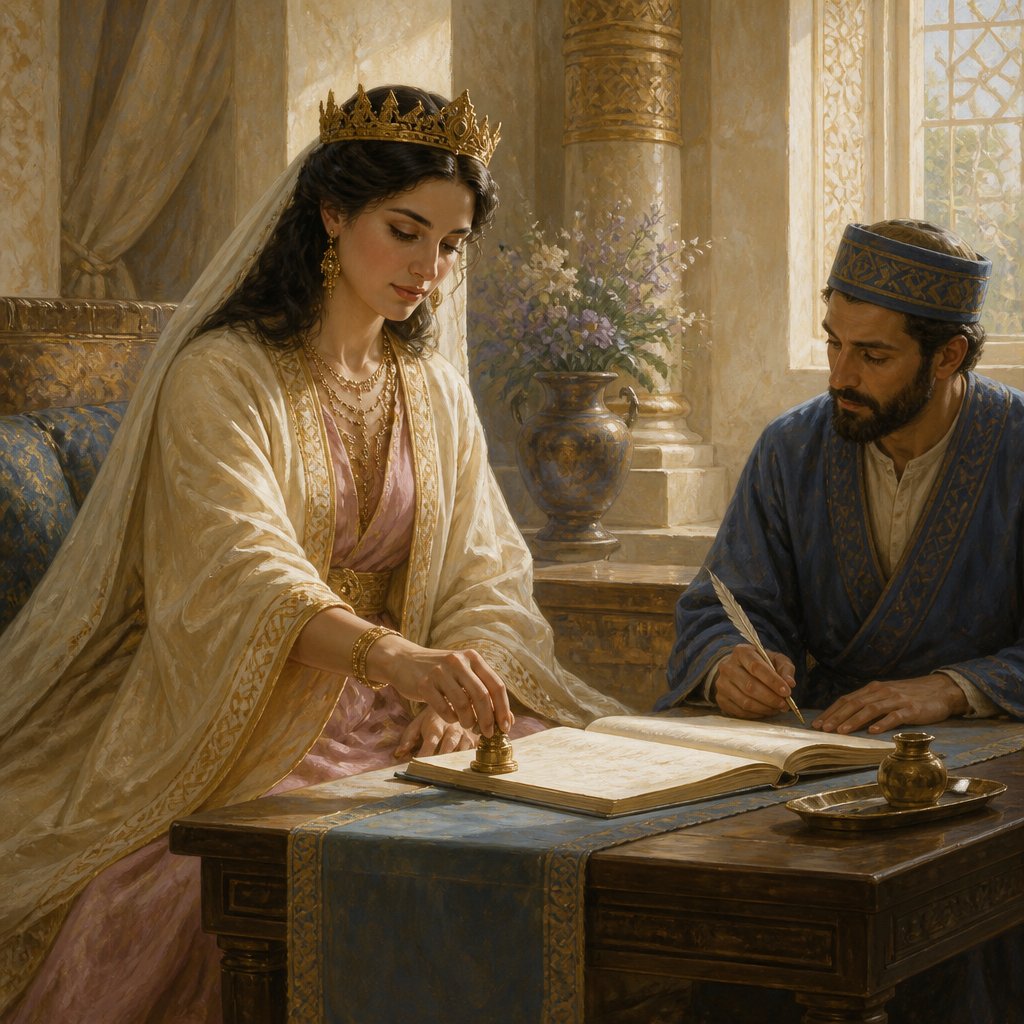
Esther 9:32 from the King James Version of the Bible reads: "And the decree of Esther confirmed these matters of Purim; and it was written in the book."
The book of Esther is a unique and important narrative in the Old Testament. It tells the story of a Jewish woman, Esther, who becomes queen of Persia and saves the Jewish people from annihilation. The verse Esther 9:32 comes at the end of the chapter, after the Jews have successfully defended themselves against their enemies, and it serves as a conclusion to the story of Purim and the events surrounding it.
The context of this verse is the celebration and establishment of the festival of Purim. After the Jews are saved from their enemies, they establish a new festival to commemorate their deliverance. The decree of Esther mentioned in this verse is the official documentation of the festival of Purim and the events that led to its creation. This decree confirms the importance of Purim as a time of celebration and remembrance for the Jewish people.
Purim is a joyous holiday in the Jewish tradition, celebrated with feasting, giving of gifts, and public readings of the book of Esther. It is a time to remember the deliverance of the Jewish people from the threat of destruction and to give thanks to God for His protection. The events of Purim are a reminder of God's faithfulness and His sovereignty in the lives of His people.
The verse Esther 9:32 holds several key themes that are central to the book of Esther and the broader context of the Bible. One such theme is the concept of divine providence. Throughout the book of Esther, we see God working behind the scenes to bring about the salvation of His people. Even though the name of God is not explicitly mentioned in the book, His presence and influence are unmistakable. The establishment of the festival of Purim is a way for the Jewish people to acknowledge and celebrate God's hand in their deliverance.
Another important theme in this verse is the idea of remembrance and commemoration. The decree of Esther serves as a permanent record of the events surrounding the festival of Purim. It ensures that future generations will be able to remember and honor the faithfulness of God in delivering His people. This theme reflects the broader biblical concept of remembering God's faithfulness and teaching future generations to do the same.
The symbolism in Esther 9:32 is also significant. The "book" mentioned in the verse represents the written record of the events of Purim and the establishment of the festival. This book serves as a tangible reminder of God's faithfulness and the salvation of the Jewish people. It symbolizes the importance of preserving and passing down the stories of God's work among His people.
In conclusion, Esther 9:32 is a pivotal verse in the book of Esther, underscoring the significance of the festival of Purim and the events surrounding it. It highlights themes of divine providence, remembrance, and the preservation of God's faithfulness. The verse also holds symbolic value as it represents the written record of God's saving work among His people. As Christians, we can learn from the example of the Jewish people and use their celebration of Purim as a reminder to remember and celebrate God's faithfulness in our own lives.
Have questions about Esther 9:32?
Dive deeper into this scripture with Bible Chat — an AI-powered tool for exploring God's Word through conversation. Ask questions, get context, and grow in your understanding of the Bible.
Get Our Apps


Esther 9:32 Artwork

Esther 9:32 - "And the decree of Esther confirmed these matters of Purim; and it was written in the book."

"And the decree of Esther confirmed these matters of Purim; and it was written in the book." - Esther 9:32

Esther 4:9 - "And Hatach came and told Esther the words of Mordecai."

Esther 9:9 - "And Parmashta, and Arisai, and Aridai, and Vajezatha,"

Esther 9:29 - "Then Esther the queen, the daughter of Abihail, and Mordecai the Jew, wrote with all authority, to confirm this second letter of Purim."

"And Hatach came and told Esther the words of Mordecai." - Esther 4:9

Esther 9:8 - "And Poratha, and Adalia, and Aridatha,"

Esther 9:7 - "And Parshandatha, and Dalphon, and Aspatha,"
"And Parmashta, and Arisai, and Aridai, and Vajezatha," - Esther 9:9

Esther 9:31 - "To confirm these days of Purim in their times appointed, according as Mordecai the Jew and Esther the queen had enjoined them, and as they had decreed for themselves and for their seed, the matters of the fastings and their cry."

Esther 9:13 - "Then said Esther, If it please the king, let it be granted to the Jews which are in Shushan to do to morrow also according unto this day's decree, and let Haman's ten sons be hanged upon the gallows."
"And Parshandatha, and Dalphon, and Aspatha," - Esther 9:7
"And Poratha, and Adalia, and Aridatha," - Esther 9:8

Esther 9:6 - "And in Shushan the palace the Jews slew and destroyed five hundred men."

Esther 9:25 - "But when Esther came before the king, he commanded by letters that his wicked device, which he devised against the Jews, should return upon his own head, and that he and his sons should be hanged on the gallows."

Esther 9:11 - "On that day the number of those that were slain in Shushan the palace was brought before the king."

Esther 9:23 - "And the Jews undertook to do as they had begun, and as Mordecai had written unto them;"

Esther 9:10 - "The ten sons of Haman the son of Hammedatha, the enemy of the Jews, slew they; but on the spoil laid they not their hand."
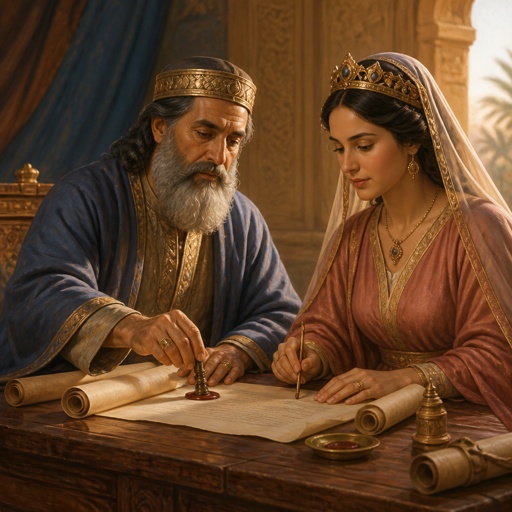
"Then Esther the queen, the daughter of Abihail, and Mordecai the Jew, wrote with all authority, to confirm this second letter of Purim." - Esther 9:29

Esther 9:17 - "On the thirteenth day of the month Adar; and on the fourteenth day of the same rested they, and made it a day of feasting and gladness."

Esther 1:9 - "Also Vashti the queen made a feast for the women in the royal house which belonged to king Ahasuerus."

Esther 9:14 - "And the king commanded it so to be done: and the decree was given at Shushan; and they hanged Haman's ten sons."

Esther 9:21 - "To stablish this among them, that they should keep the fourteenth day of the month Adar, and the fifteenth day of the same, yearly,"

Esther 9:3 - "And all the rulers of the provinces, and the lieutenants, and the deputies, and officers of the king, helped the Jews; because the fear of Mordecai fell upon them."

Esther 9:30 - "And he sent the letters unto all the Jews, to the hundred twenty and seven provinces of the kingdom of Ahasuerus, with words of peace and truth,"

Esther 9:12 - "¶ And the king said unto Esther the queen, The Jews have slain and destroyed five hundred men in Shushan the palace, and the ten sons of Haman; what have they done in the rest of the king's provinces? now what is thy petition? and it shall be granted thee: or what is thy request further? and it shall be done."

Esther 9:4 - "For Mordecai was great in the king's house, and his fame went out throughout all the provinces: for this man Mordecai waxed greater and greater."

Esther 9:5 - "Thus the Jews smote all their enemies with the stroke of the sword, and slaughter, and destruction, and did what they would unto those that hated them."

Esther 9:20 - "¶ And Mordecai wrote these things, and sent letters unto all the Jews that were in all the provinces of the king Ahasuerus, both nigh and far,"

"And in Shushan the palace the Jews slew and destroyed five hundred men." - Esther 9:6