What does Esther 9:29 mean?
"Then Esther the queen, the daughter of Abihail, and Mordecai the Jew, wrote with all authority, to confirm this second letter of Purim." - Esther 9:29
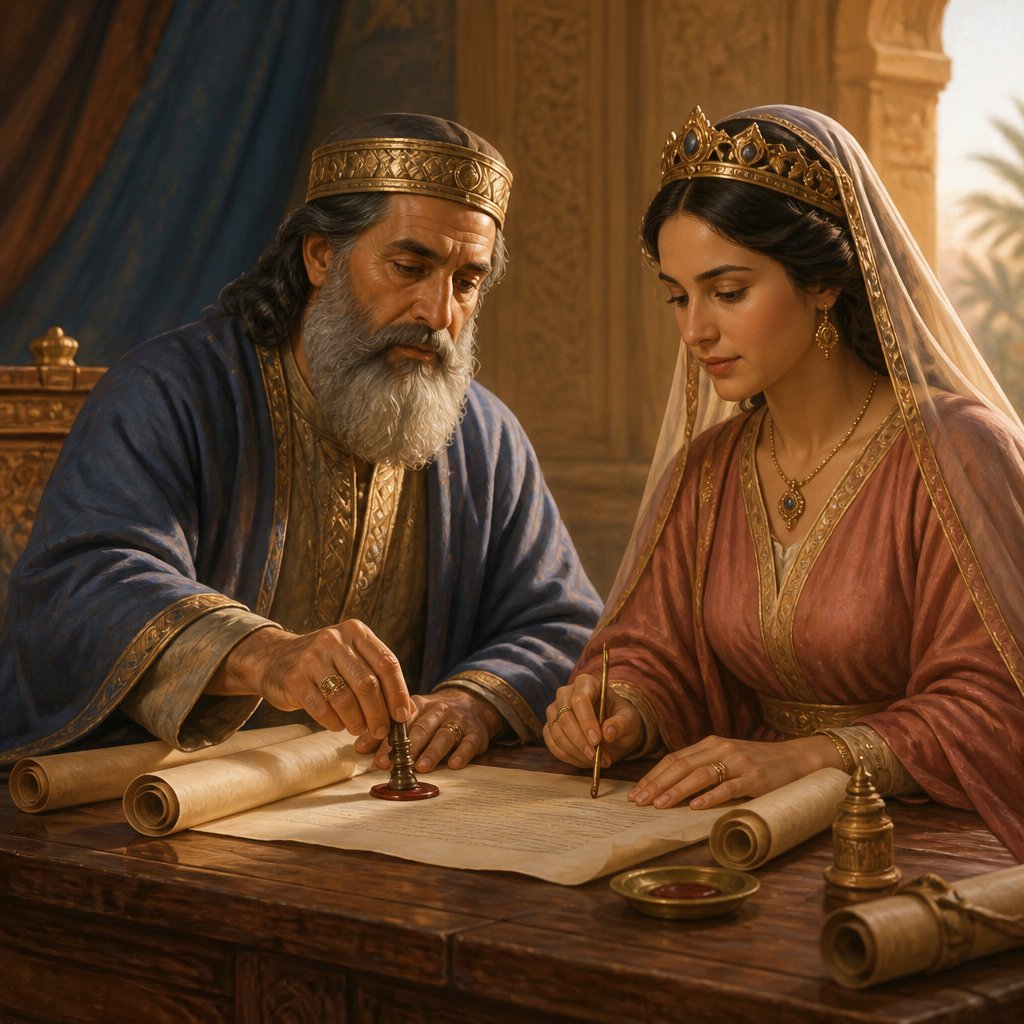
Esther 9:29 in the King James Version of the Bible reads, "Then Esther the queen, the daughter of Abihail, and Mordecai the Jew, wrote with all authority, to confirm this second letter of Purim." This verse is part of the concluding narrative of the book of Esther, which details the establishment of the feast of Purim to commemorate the deliverance of the Jewish people from the plans of their enemies.
The book of Esther is an intriguing narrative set during the time of the Persian Empire. It follows the story of a young Jewish woman, Esther, who becomes queen and ultimately saves her people from destruction. The book is filled with themes of faith, courage, and divine providence, and this verse serves as a conclusion to the events that transpire.
In the context of the verse, Esther and Mordecai are formalizing the observance of the festival of Purim, which commemorates the deliverance of the Jews from the plot of Haman, a high-ranking official in the Persian Empire who sought to annihilate the Jewish population. In the larger context of the book of Esther, this verse signifies the establishment of an annual celebration to remember the miraculous intervention of God in preserving the Jewish people.
One of the key themes of this verse and the book of Esther as a whole is the idea of divine providence. Throughout the narrative, God is never explicitly mentioned, yet his hand is evident in the events that unfold. Esther's rise to the position of queen, her bravery in approaching the king to save her people, and the ultimate defeat of their enemies all serve as a testament to the ways in which God works behind the scenes to bring about his purposes.
The act of writing with "all authority" in the verse underscores the official nature of the establishment of the festival of Purim. Esther and Mordecai were not acting on their own accord, but rather, they were affirming the decree with the full weight of their positions. This adds a sense of formality and importance to the observance of Purim, emphasizing its significance in the Jewish tradition.
The mention of Esther as the daughter of Abihail and Mordecai as a Jew serves to reiterate their identities within the Jewish community. Esther, as a descendant of the tribe of Benjamin, and Mordecai, as a prominent figure among the Jews, are both instrumental in the preservation of their people. Their roles and lineage highlight the providential nature of their positions and their significance in the story of God's deliverance.
In terms of symbolism, the establishment of the festival of Purim holds great significance. It serves as a tangible reminder of God's faithfulness and the triumph of good over evil. The act of writing to confirm the observance of Purim also symbolizes the importance of remembrance and celebration in the life of God's people. By commemorating the events of the past, the Jewish people continue to affirm their identity and hope in God's ongoing protection.
Overall, Esther 9:29 stands as a pivotal verse in the conclusion of the book of Esther. It signifies the establishment of the festival of Purim as a formalized observance of God's deliverance and the preservation of the Jewish people. Through themes of divine providence, courage, and faith, the verse and the entire book of Esther serve as a powerful testament to the enduring faithfulness of God and the ongoing hope of his people.
Have questions about Esther 9:29?
Dive deeper into this scripture with Bible Chat — an AI-powered tool for exploring God's Word through conversation. Ask questions, get context, and grow in your understanding of the Bible.
Get Our Apps


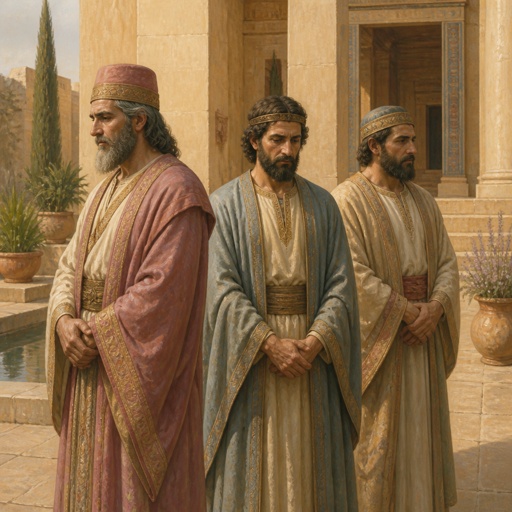
Esther 9:29 Artwork

Esther 9:29 - "Then Esther the queen, the daughter of Abihail, and Mordecai the Jew, wrote with all authority, to confirm this second letter of Purim."
"Then Esther the queen, the daughter of Abihail, and Mordecai the Jew, wrote with all authority, to confirm this second letter of Purim." - Esther 9:29

Esther 4:9 - "And Hatach came and told Esther the words of Mordecai."

Esther 9:32 - "And the decree of Esther confirmed these matters of Purim; and it was written in the book."

Esther 9:9 - "And Parmashta, and Arisai, and Aridai, and Vajezatha,"

"And Hatach came and told Esther the words of Mordecai." - Esther 4:9

Esther 9:8 - "And Poratha, and Adalia, and Aridatha,"

Esther 9:7 - "And Parshandatha, and Dalphon, and Aspatha,"

"And the decree of Esther confirmed these matters of Purim; and it was written in the book." - Esther 9:32
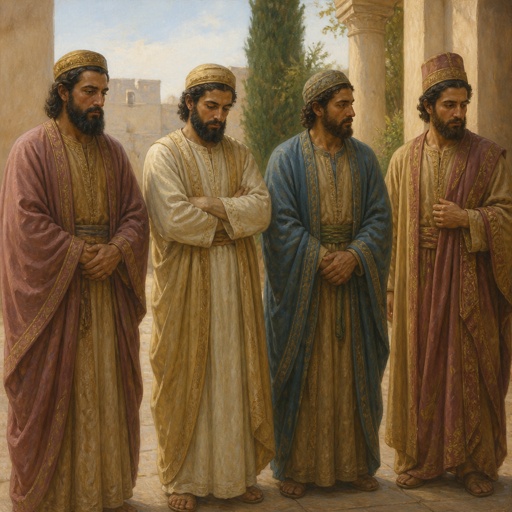
"And Parmashta, and Arisai, and Aridai, and Vajezatha," - Esther 9:9

Esther 9:31 - "To confirm these days of Purim in their times appointed, according as Mordecai the Jew and Esther the queen had enjoined them, and as they had decreed for themselves and for their seed, the matters of the fastings and their cry."

Esther 9:13 - "Then said Esther, If it please the king, let it be granted to the Jews which are in Shushan to do to morrow also according unto this day's decree, and let Haman's ten sons be hanged upon the gallows."
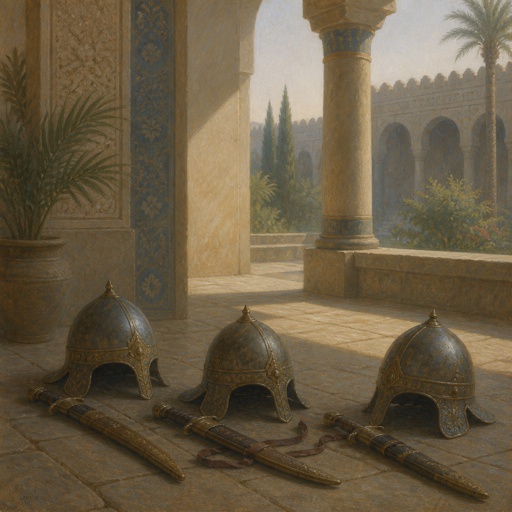
"And Parshandatha, and Dalphon, and Aspatha," - Esther 9:7
"And Poratha, and Adalia, and Aridatha," - Esther 9:8

Esther 9:6 - "And in Shushan the palace the Jews slew and destroyed five hundred men."

Esther 9:25 - "But when Esther came before the king, he commanded by letters that his wicked device, which he devised against the Jews, should return upon his own head, and that he and his sons should be hanged on the gallows."

Esther 9:11 - "On that day the number of those that were slain in Shushan the palace was brought before the king."

Esther 9:23 - "And the Jews undertook to do as they had begun, and as Mordecai had written unto them;"

Esther 9:10 - "The ten sons of Haman the son of Hammedatha, the enemy of the Jews, slew they; but on the spoil laid they not their hand."

Esther 9:17 - "On the thirteenth day of the month Adar; and on the fourteenth day of the same rested they, and made it a day of feasting and gladness."

Esther 1:9 - "Also Vashti the queen made a feast for the women in the royal house which belonged to king Ahasuerus."

Esther 9:14 - "And the king commanded it so to be done: and the decree was given at Shushan; and they hanged Haman's ten sons."

Esther 9:21 - "To stablish this among them, that they should keep the fourteenth day of the month Adar, and the fifteenth day of the same, yearly,"

Esther 9:3 - "And all the rulers of the provinces, and the lieutenants, and the deputies, and officers of the king, helped the Jews; because the fear of Mordecai fell upon them."

Esther 9:30 - "And he sent the letters unto all the Jews, to the hundred twenty and seven provinces of the kingdom of Ahasuerus, with words of peace and truth,"

Esther 9:12 - "¶ And the king said unto Esther the queen, The Jews have slain and destroyed five hundred men in Shushan the palace, and the ten sons of Haman; what have they done in the rest of the king's provinces? now what is thy petition? and it shall be granted thee: or what is thy request further? and it shall be done."

Esther 9:4 - "For Mordecai was great in the king's house, and his fame went out throughout all the provinces: for this man Mordecai waxed greater and greater."

Esther 9:5 - "Thus the Jews smote all their enemies with the stroke of the sword, and slaughter, and destruction, and did what they would unto those that hated them."

Esther 9:20 - "¶ And Mordecai wrote these things, and sent letters unto all the Jews that were in all the provinces of the king Ahasuerus, both nigh and far,"

"And in Shushan the palace the Jews slew and destroyed five hundred men." - Esther 9:6