What does Esther 8:4 mean?
"Then the king held out the golden sceptre toward Esther. So Esther arose, and stood before the king," - Esther 8:4

The verse Esther 8:4 from the King James Version says, "Then the king held out the golden sceptre toward Esther. So Esther arose, and stood before the king." This verse is part of the book of Esther in the Old Testament, and it comes at a pivotal moment in the story. To understand the meaning and commentary of this verse, it is important to delve into the themes, context, and symbolism present in the book of Esther.
The book of Esther tells the story of a Jewish woman named Esther who becomes the queen of Persia. The central plot of the book revolves around a plot to annihilate the Jewish people, which is thwarted by Esther's courage and intervention. Esther risks her own life by interceding on behalf of her people, and the verse in question occurs at a critical juncture in the narrative.
In Esther 8:4, the king extends his golden scepter to Esther, a symbolic gesture that indicates she has found favor in his eyes. This moment is significant because it marks a turning point in the story. Prior to this, Esther had approached the king without being summoned, a dangerous act that could have resulted in her death. However, the king's act of extending the scepter demonstrates his willingness to receive her and hear her petition. This gesture of grace and acceptance sets the stage for the events that follow, ultimately leading to the salvation of the Jewish people.
One of the central themes in the book of Esther is the providence of God and his faithfulness to his people. Despite the absence of direct references to God in the text, his unseen hand is evident throughout the story. The events that transpire, including Esther's rise to power and her courageous intervention to save her people, are all part of God's sovereign plan. The verse Esther 8:4 reflects this theme of divine providence, as it highlights the king's favorable response to Esther, ultimately leading to the deliverance of the Jews.
Additionally, the verse embodies the themes of courage and redemption. Esther's willingness to risk her life by approaching the king without invitation, as well as the king's gracious response, demonstrate the courage and redemption that are central to the narrative. Esther's courage in standing before the king, knowing the potential consequences, is a testament to her bravery and commitment to her people. The king's gesture of extending the scepter symbolizes a form of redemption, as Esther's boldness is met with acceptance rather than rejection.
Moreover, the imagery and symbolism of the golden scepter hold deeper significance within the context of the story. In ancient Persia, the act of extending the golden scepter was a symbol of authority, honor, and favor. When the king extends the scepter to Esther, he is essentially bestowing his favor upon her and granting her audience. This act represents a shift in power dynamics, as Esther transitions from being in a vulnerable position to one of influence and agency. The symbolism of the golden scepter underscores the themes of grace, mercy, and the reversal of fortune that are prevalent throughout the book of Esther.
In conclusion, the verse Esther 8:4 carries rich thematic, contextual, and symbolic significance within the broader narrative of the book of Esther. It captures a pivotal moment in the story, highlighting themes of divine providence, courage, redemption, and the symbolism of the golden scepter. Through the lens of this verse, readers are reminded of God's faithfulness, the power of courageous action, and the potential for unexpected favor and redemption. As such, Esther 8:4 continues to resonate as a powerful testament to the enduring themes and messages of the biblical text.
Have questions about Esther 8:4?
Dive deeper into this scripture with Bible Chat — an AI-powered tool for exploring God's Word through conversation. Ask questions, get context, and grow in your understanding of the Bible.
Get Our Apps


Esther 8:4 Artwork

Esther 8:4

Esther 8:4 - "Then the king held out the golden sceptre toward Esther. So Esther arose, and stood before the king,"

"Then the king held out the golden sceptre toward Esther. So Esther arose, and stood before the king," - Esther 8:4

Esther 4:8 - "Also he gave him the copy of the writing of the decree that was given at Shushan to destroy them, to shew it unto Esther, and to declare it unto her, and to charge her that she should go in unto the king, to make supplication unto him, and to make request before him for her people."

Esther 4:15 - "¶ Then Esther bade them return Mordecai this answer,"

Esther 4:9 - "And Hatach came and told Esther the words of Mordecai."

Esther 4:10 - "¶ Again Esther spake unto Hatach, and gave him commandment unto Mordecai;"

Esther 8:1 - "On that day did the king Ahasuerus give the house of Haman the Jews' enemy unto Esther the queen. And Mordecai came before the king; for Esther had told what he was unto her."

Esther 9:8 - "And Poratha, and Adalia, and Aridatha,"

Esther 4:17 - "So Mordecai went his way, and did according to all that Esther had commanded him."

Esther 8:7 - "¶ Then the king Ahasuerus said unto Esther the queen and to Mordecai the Jew, Behold, I have given Esther the house of Haman, and him they have hanged upon the gallows, because he laid his hand upon the Jews."

Esther 4:12 - "And they told to Mordecai Esther's words."

"And Hatach came and told Esther the words of Mordecai." - Esther 4:9

"¶ Then Esther bade them return Mordecai this answer," - Esther 4:15

Esther 8:16 - "The Jews had light, and gladness, and joy, and honour."

Esther 4:13 - "Then Mordecai commanded to answer Esther, Think not with thyself that thou shalt escape in the king's house, more than all the Jews."
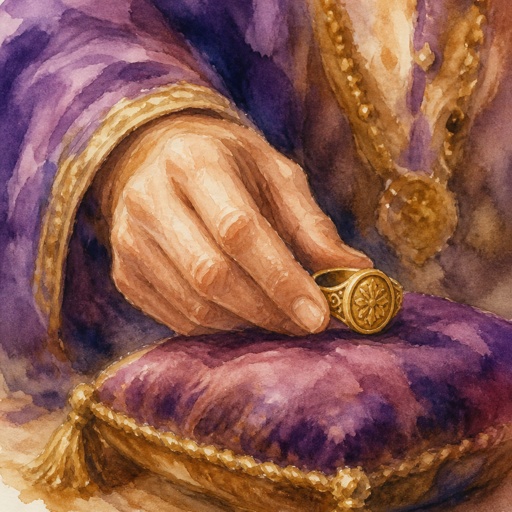
Esther 8:2 focus on the ring

Esther 5:4 - "And Esther answered, If it seem good unto the king, let the king and Haman come this day unto the banquet that I have prepared for him."

Esther 8:2 - "And the king took off his ring, which he had taken from Haman, and gave it unto Mordecai. And Esther set Mordecai over the house of Haman."

Esther 4:5 - "Then called Esther for Hatach, one of the king's chamberlains, whom he had appointed to attend upon her, and gave him a commandment to Mordecai, to know what it was, and why it was."
"And Poratha, and Adalia, and Aridatha," - Esther 9:8

Esther 8:3 - "¶ And Esther spake yet again before the king, and fell down at his feet, and besought him with tears to put away the mischief of Haman the Agagite, and his device that he had devised against the Jews."
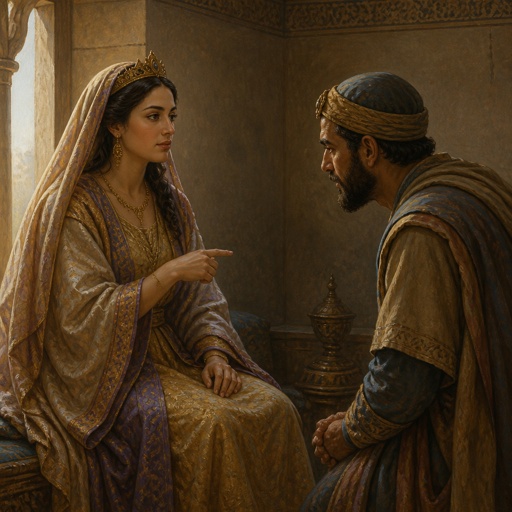
"¶ Again Esther spake unto Hatach, and gave him commandment unto Mordecai;" - Esther 4:10
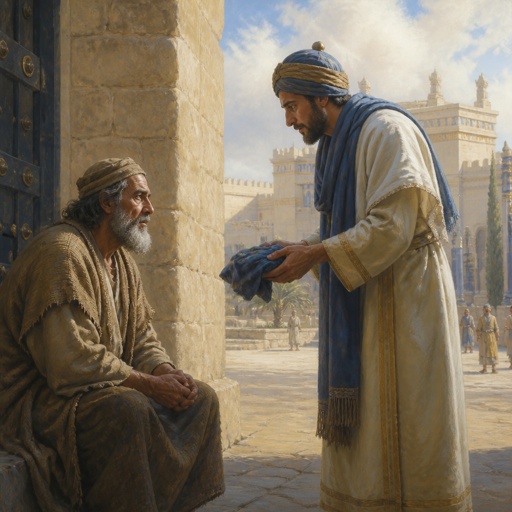
"And they told to Mordecai Esther's words." - Esther 4:12

"So Mordecai went his way, and did according to all that Esther had commanded him." - Esther 4:17

Esther 2:8 - "¶ So it came to pass, when the king's commandment and his decree was heard, and when many maidens were gathered together unto Shushan the palace, to the custody of Hegai, that Esther was brought also unto the king's house, to the custody of Hegai, keeper of the women."

"On that day did the king Ahasuerus give the house of Haman the Jews' enemy unto Esther the queen. And Mordecai came before the king; for Esther had told what he was unto her." - Esther 8:1

Esther 8:8 - "Write ye also for the Jews, as it liketh you, in the king's name, and seal it with the king's ring: for the writing which is written in the king's name, and sealed with the king's ring, may no man reverse."

Esther 7:8 - "Then the king returned out of the palace garden into the place of the banquet of wine; and Haman was fallen upon the bed whereon Esther was. Then said the king, Will he force the queen also before me in the house? As the word went out of the king's mouth, they covered Haman's face."
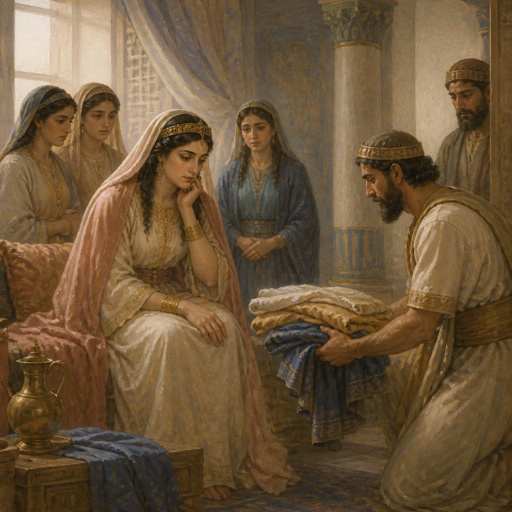
"¶ So Esther's maids and her chamberlains came and told it her. Then was the queen exceedingly grieved; and she sent raiment to clothe Mordecai, and to take away his sackcloth from him: but he received it not." - Esther 4:4