What does Esther 7:6 mean?
"And Esther said, The adversary and enemy is this wicked Haman. Then Haman was afraid before the king and the queen." - Esther 7:6
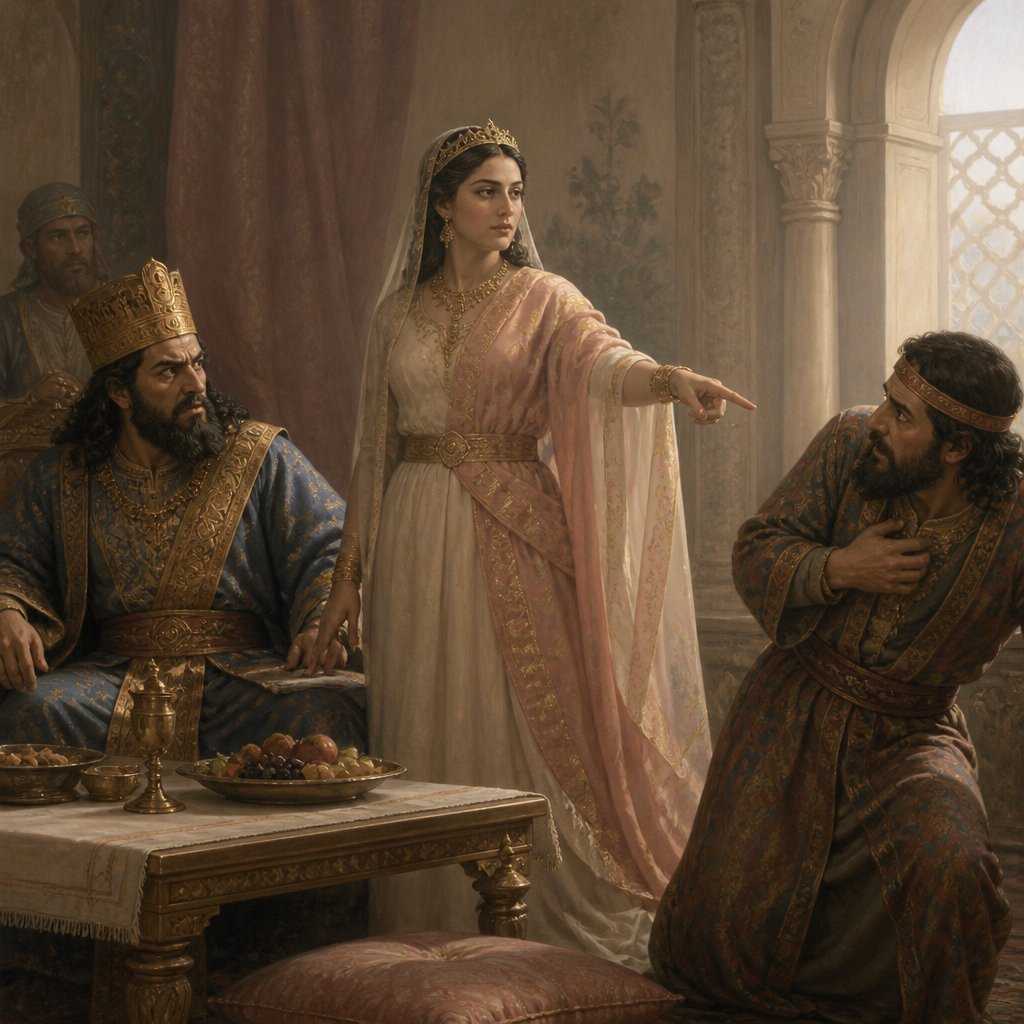
The verse Esther 7:6 from the King James Version of the Bible reads: "And Esther said, The adversary and enemy is this wicked Haman. Then Haman was afraid before the king and the queen." This verse comes from the book of Esther in the Old Testament and occurs at a crucial moment in the narrative.
The book of Esther is set during the time of the Persian Empire and tells the story of a Jewish woman named Esther who becomes the queen of Persia. The plot revolves around a villain named Haman who seeks to exterminate the Jewish people. Esther, with the help of her cousin Mordecai, foils Haman's plan and saves her people from destruction.
In Esther 7:6, Esther takes the bold step of revealing the true nature of Haman to King Ahasuerus. She refers to Haman as "the adversary and enemy" and describes him as "wicked." This moment marks the turning point in the story, as it leads to Haman's downfall and the salvation of the Jewish people.
One of the key themes in this verse is the triumph of good over evil. Throughout the book of Esther, there is a clear contrast between the virtuous characters of Esther and Mordecai, and the wickedness of Haman. Esther's bold declaration in this verse exposes Haman's true nature and sets in motion his downfall. This theme of the triumph of good over evil is a common motif in biblical literature and resonates with readers who are struggling against oppression or injustice.
Another important theme in this verse is the power of courage and conviction. Esther takes a tremendous risk by speaking out against Haman, as she could have faced severe consequences for challenging a powerful official. However, her faith in God and her determination to save her people give her the strength to confront the enemy. This theme of courage in the face of adversity is a source of inspiration for many believers, as it demonstrates the potential for individuals to make a difference through their actions.
The context of Esther 7:6 is also significant for understanding its meaning. Prior to this verse, Haman had convinced King Ahasuerus to issue a decree for the destruction of the Jewish people. Esther, in a display of bravery, had already revealed her Jewish identity to the king and had invited him and Haman to a banquet. It is at this banquet that she reveals the truth about Haman's intentions, leading to his downfall.
The symbolism in this verse is also worth noting. Esther's declaration of Haman as the adversary and enemy carries a powerful symbolic weight. In the biblical tradition, the struggle between good and evil is often represented by the conflict between God's chosen people and their enemies. In this verse, Haman embodies the forces of darkness and oppression, while Esther represents the righteous and the faithful. By exposing Haman's true nature, Esther becomes a symbol of courage and resistance against tyranny.
In conclusion, Esther 7:6 is a significant verse in the book of Esther that encapsulates the themes of the triumph of good over evil, the power of courage and conviction, and the symbolism of the struggle between righteousness and wickedness. This verse serves as a reminder of the potential for individuals to stand up against injustice and make a difference, even in the face of overwhelming odds. It also emphasizes the importance of remaining faithful to one's principles and trusting in the ultimate victory of righteousness.
Have questions about Esther 7:6?
Dive deeper into this scripture with Bible Chat — an AI-powered tool for exploring God's Word through conversation. Ask questions, get context, and grow in your understanding of the Bible.
Get Our Apps


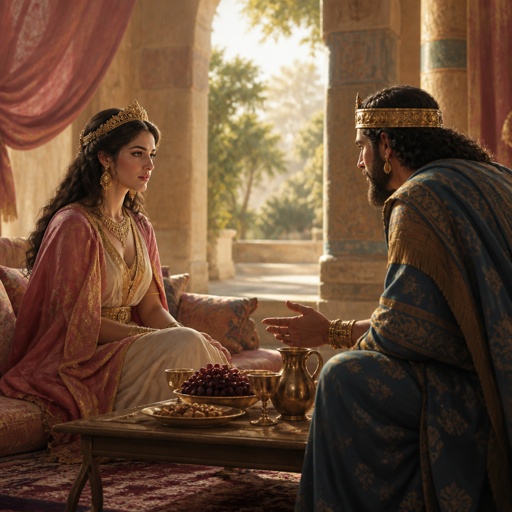
Esther 7:6 Artwork

Esther 7:6 - "And Esther said, The adversary and enemy is this wicked Haman. Then Haman was afraid before the king and the queen."

"And Esther said, The adversary and enemy is this wicked Haman. Then Haman was afraid before the king and the queen." - Esther 7:6

Esther 6:7 - "And Haman answered the king, For the man whom the king delighteth to honour,"

"And Haman answered the king, For the man whom the king delighteth to honour," - Esther 6:7

Esther 5:7 - "Then answered Esther, and said, My petition and my request is;"

Esther 7:1 - "So the king and Haman came to banquet with Esther the queen."

Esther 1:6

Esther 7:2 - "And the king said again unto Esther on the second day at the banquet of wine, What is thy petition, queen Esther? and it shall be granted thee: and what is thy request? and it shall be performed, even to the half of the kingdom."

Esther 6:14 - "And while they were yet talking with him, came the king's chamberlains, and hasted to bring Haman unto the banquet that Esther had prepared."

Esther 7:7 - "¶ And the king arising from the banquet of wine in his wrath went into the palace garden: and Haman stood up to make request for his life to Esther the queen; for he saw that there was evil determined against him by the king."

Esther 9:7 - "And Parshandatha, and Dalphon, and Aspatha,"

"So the king and Haman came to banquet with Esther the queen." - Esther 7:1

Esther 8:7 - "¶ Then the king Ahasuerus said unto Esther the queen and to Mordecai the Jew, Behold, I have given Esther the house of Haman, and him they have hanged upon the gallows, because he laid his hand upon the Jews."
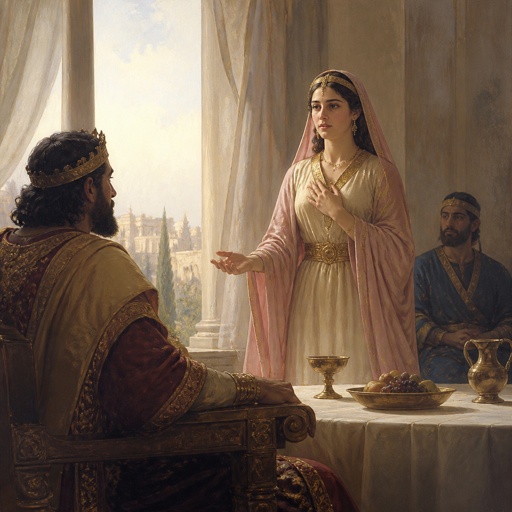
"Then answered Esther, and said, My petition and my request is;" - Esther 5:7

Esther 7:5 - "¶ Then the king Ahasuerus answered and said unto Esther the queen, Who is he, and where is he, that durst presume in his heart to do so?"

Esther 5:6 - "¶ And the king said unto Esther at the banquet of wine, What is thy petition? and it shall be granted thee: and what is thy request? even to the half of the kingdom it shall be performed."
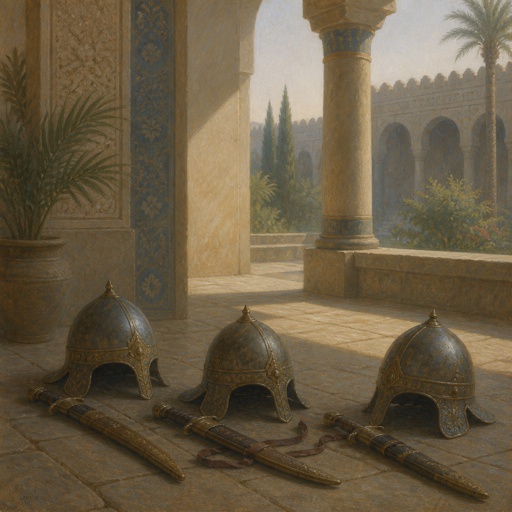
"And Parshandatha, and Dalphon, and Aspatha," - Esther 9:7

Esther 9:6 - "And in Shushan the palace the Jews slew and destroyed five hundred men."

Esther 7:3 - "Then Esther the queen answered and said, If I have found favour in thy sight, O king, and if it please the king, let my life be given me at my petition, and my people at my request:"

Esther 7:10 - "So they hanged Haman on the gallows that he had prepared for Mordecai. Then was the king's wrath pacified."

Esther 4:6 - "So Hatach went forth to Mordecai unto the street of the city, which was before the king's gate."

Esther 2:7 - "And he brought up Hadassah, that is, Esther, his uncle's daughter: for she had neither father nor mother, and the maid was fair and beautiful; whom Mordecai, when her father and mother were dead, took for his own daughter."

Esther 7:8 - "Then the king returned out of the palace garden into the place of the banquet of wine; and Haman was fallen upon the bed whereon Esther was. Then said the king, Will he force the queen also before me in the house? As the word went out of the king's mouth, they covered Haman's face."

Esther 6:1 - "On that night could not the king sleep, and he commanded to bring the book of records of the chronicles; and they were read before the king."

Esther 6:5 - "And the king's servants said unto him, Behold, Haman standeth in the court. And the king said, Let him come in."

Esther 6:12 - "¶ And Mordecai came again to the king's gate. But Haman hasted to his house mourning, and having his head covered."

"And while they were yet talking with him, came the king's chamberlains, and hasted to bring Haman unto the banquet that Esther had prepared." - Esther 6:14
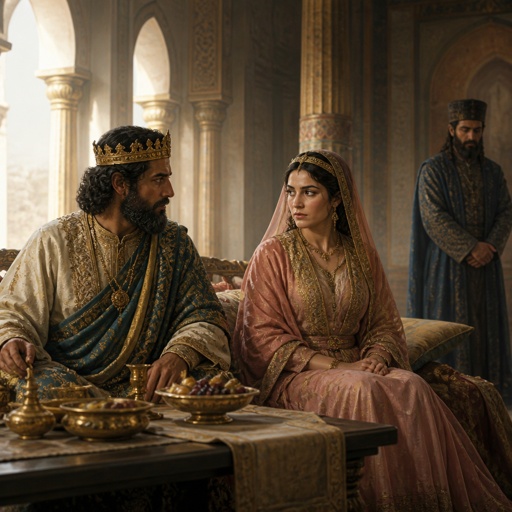
"¶ Then the king Ahasuerus answered and said unto Esther the queen, Who is he, and where is he, that durst presume in his heart to do so?" - Esther 7:5

Esther 1:7 - "And they gave them drink in vessels of gold, (the vessels being diverse one from another,) and royal wine in abundance, according to the state of the king."
"And the king said again unto Esther on the second day at the banquet of wine, What is thy petition, queen Esther? and it shall be granted thee: and what is thy request? and it shall be performed, even to the half of the kingdom." - Esther 7:2