What does Esther 6:5 mean?
"And the king's servants said unto him, Behold, Haman standeth in the court. And the king said, Let him come in." - Esther 6:5
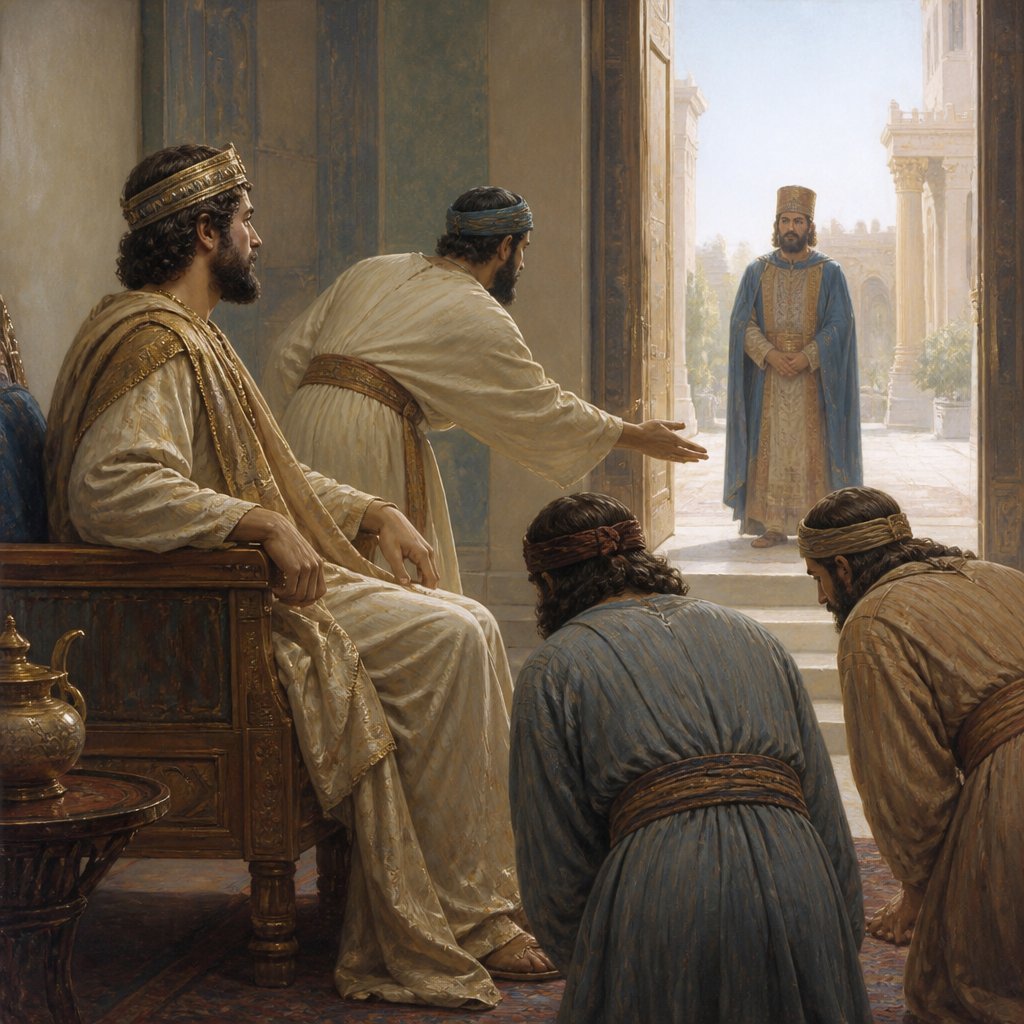
The Book of Esther is a historical account found in the Old Testament. It tells the story of a Jewish woman, Esther, who becomes the queen of Persia and uses her position to save her people from a genocide planned by the king's advisor, Haman. The verse Esther 6:5 in the King James Version (KJV) of the Bible reads:
"And the king's servants said unto him, Behold, Haman standeth in the court. And the king said, Let him come in."
This verse takes place at a pivotal moment in the story, as it sets the stage for the downfall of Haman and the ultimate salvation of the Jewish people. To understand the full meaning and significance of this verse, it is necessary to consider the context and themes of the Book of Esther, as well as the symbolism found within this particular passage.
The context of this verse is crucial to understanding its significance. Earlier in the story, Haman, the king's advisor, had concocted a plan to destroy all the Jews in the Persian Empire. He cast lots, or "pur," to determine the date for this massacre. However, through a series of events orchestrated by divine providence, Esther, a Jewish woman who had become queen of Persia, finds herself in a position to appeal to King Ahasuerus on behalf of her people.
In Esther 6:5, the king's servants inform him that Haman is waiting in the court. This is a significant moment in the story because it leads to a chain of events that ultimately results in Haman's downfall. The king's decision to allow Haman to come before him sets the stage for Haman's public humiliation and ultimately leads to his demise.
One of the themes of the Book of Esther is the providence of God. Throughout the story, we see how God works behind the scenes to protect and deliver His people. Even though the name of God is not explicitly mentioned in the Book of Esther, His providential care is evident in the events that unfold. Esther 6:5 is a pivotal moment in which God's providence is clearly at work, as it sets in motion the events that will lead to the salvation of the Jewish people.
Another theme in the Book of Esther is the reversal of fortunes. Haman, who had plotted to annihilate the Jews, is instead brought low and ultimately executed on the very gallows he had prepared for Mordecai, Esther's cousin and a righteous Jew. The verse Esther 6:5 marks the beginning of this reversal, as Haman's pride and arrogance are exposed and ultimately lead to his downfall.
Symbolism can also be found in Esther 6:5. The fact that Haman is waiting in the court to speak to the king can be seen as a metaphor for the impending judgment and downfall of the wicked. In this verse, Haman, who represents evil and oppression, is brought before the king, who ultimately holds the power to condemn or pardon him. This sets the stage for the justice and retribution that will be meted out to Haman.
In conclusion, Esther 6:5 is a pivotal verse in the Book of Esther, as it sets in motion the events that will lead to the downfall of Haman and the salvation of the Jewish people. Through its themes of divine providence and the reversal of fortunes, as well as its symbolism of impending judgment, this verse holds deep significance within the larger narrative of the Book of Esther. It serves as a reminder of God's faithfulness in protecting His people and bringing about justice for the oppressed.
Have questions about Esther 6:5?
Dive deeper into this scripture with Bible Chat — an AI-powered tool for exploring God's Word through conversation. Ask questions, get context, and grow in your understanding of the Bible.
Get Our Apps


Esther 6:5 Artwork

Esther 6:5 - "And the king's servants said unto him, Behold, Haman standeth in the court. And the king said, Let him come in."
"And the king's servants said unto him, Behold, Haman standeth in the court. And the king said, Let him come in." - Esther 6:5

Esther 5:6 - "¶ And the king said unto Esther at the banquet of wine, What is thy petition? and it shall be granted thee: and what is thy request? even to the half of the kingdom it shall be performed."

Esther 5:5 - "Then the king said, Cause Haman to make haste, that he may do as Esther hath said. So the king and Haman came to the banquet that Esther had prepared."

Esther 5:7 - "Then answered Esther, and said, My petition and my request is;"

Esther 7:6 - "And Esther said, The adversary and enemy is this wicked Haman. Then Haman was afraid before the king and the queen."

Esther 5:2

Esther 5:2 - "And it was so, when the king saw Esther the queen standing in the court, that she obtained favour in his sight: and the king held out to Esther the golden sceptre that was in his hand. So Esther drew near, and touched the top of the sceptre."

Esther 5:2

Esther 5:2

Esther 1:6
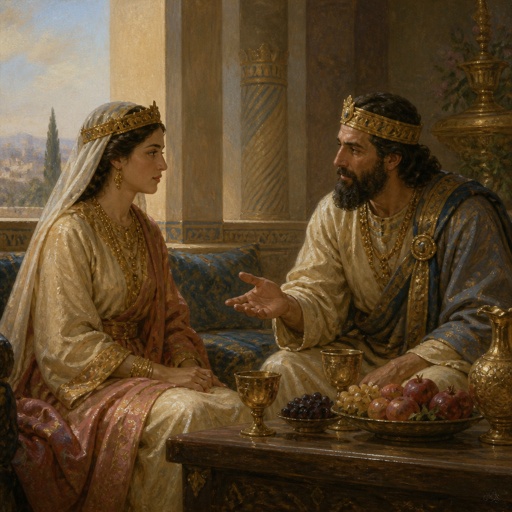
"¶ And the king said unto Esther at the banquet of wine, What is thy petition? and it shall be granted thee: and what is thy request? even to the half of the kingdom it shall be performed." - Esther 5:6

Esther 6:14 - "And while they were yet talking with him, came the king's chamberlains, and hasted to bring Haman unto the banquet that Esther had prepared."
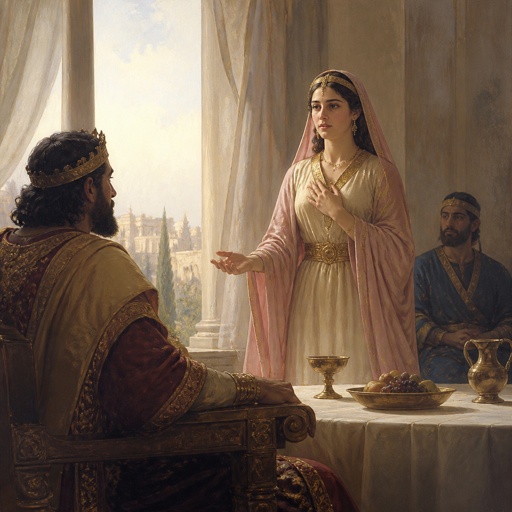
"Then answered Esther, and said, My petition and my request is;" - Esther 5:7

Esther 5:4 - "And Esther answered, If it seem good unto the king, let the king and Haman come this day unto the banquet that I have prepared for him."

Esther 7:5 - "¶ Then the king Ahasuerus answered and said unto Esther the queen, Who is he, and where is he, that durst presume in his heart to do so?"

Esther 5:3 - "Then said the king unto her, What wilt thou, queen Esther? and what is thy request? it shall be even given thee to the half of the kingdom."

Esther 5:2 - "And it was so, when the king saw Esther the queen standing in the court, that she obtained favour in his sight: and the king held out to Esther the golden sceptre that was in his hand. So Esther drew near, and touched the top of the sceptre."
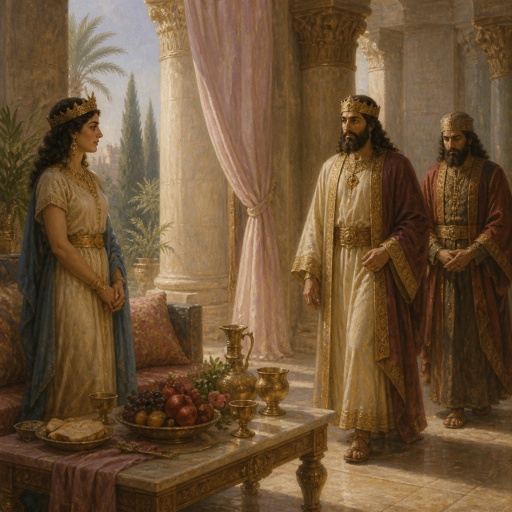
"Then the king said, Cause Haman to make haste, that he may do as Esther hath said. So the king and Haman came to the banquet that Esther had prepared." - Esther 5:5

Esther 4:5 - "Then called Esther for Hatach, one of the king's chamberlains, whom he had appointed to attend upon her, and gave him a commandment to Mordecai, to know what it was, and why it was."

Esther 6:7 - "And Haman answered the king, For the man whom the king delighteth to honour,"

Esther 9:6 - "And in Shushan the palace the Jews slew and destroyed five hundred men."

"And Esther said, The adversary and enemy is this wicked Haman. Then Haman was afraid before the king and the queen." - Esther 7:6

Esther 5:12 - "Haman said moreover, Yea, Esther the queen did let no man come in with the king unto the banquet that she had prepared but myself; and to morrow am I invited unto her also with the king."

Esther 4:6 - "So Hatach went forth to Mordecai unto the street of the city, which was before the king's gate."

Esther 3:5 - "And when Haman saw that Mordecai bowed not, nor did him reverence, then was Haman full of wrath."

Esther 5:1 - "Now it came to pass on the third day, that Esther put on her royal apparel, and stood in the inner court of the king's house, over against the king's house: and the king sat upon his royal throne in the royal house, over against the gate of the house."
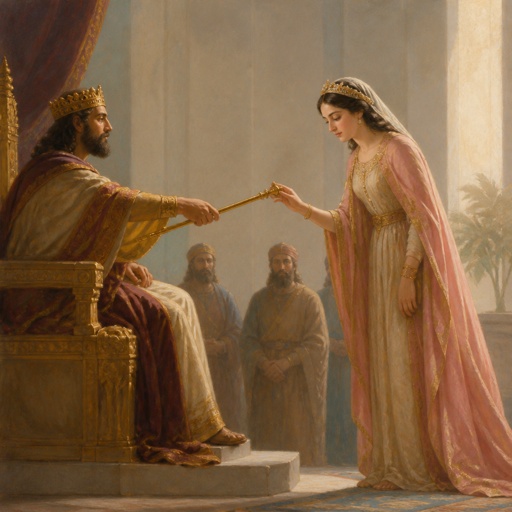
"And it was so, when the king saw Esther the queen standing in the court, that she obtained favour in his sight: and the king held out to Esther the golden sceptre that was in his hand. So Esther drew near, and touched the top of the sceptre." - Esther 5:2

Esther 6:1 - "On that night could not the king sleep, and he commanded to bring the book of records of the chronicles; and they were read before the king."

Esther 6:12 - "¶ And Mordecai came again to the king's gate. But Haman hasted to his house mourning, and having his head covered."