What does Esther 6:2 mean?
"And it was found written, that Mordecai had told of Bigthana and Teresh, two of the king's chamberlains, the keepers of the door, who sought to lay hand on the king Ahasuerus." - Esther 6:2
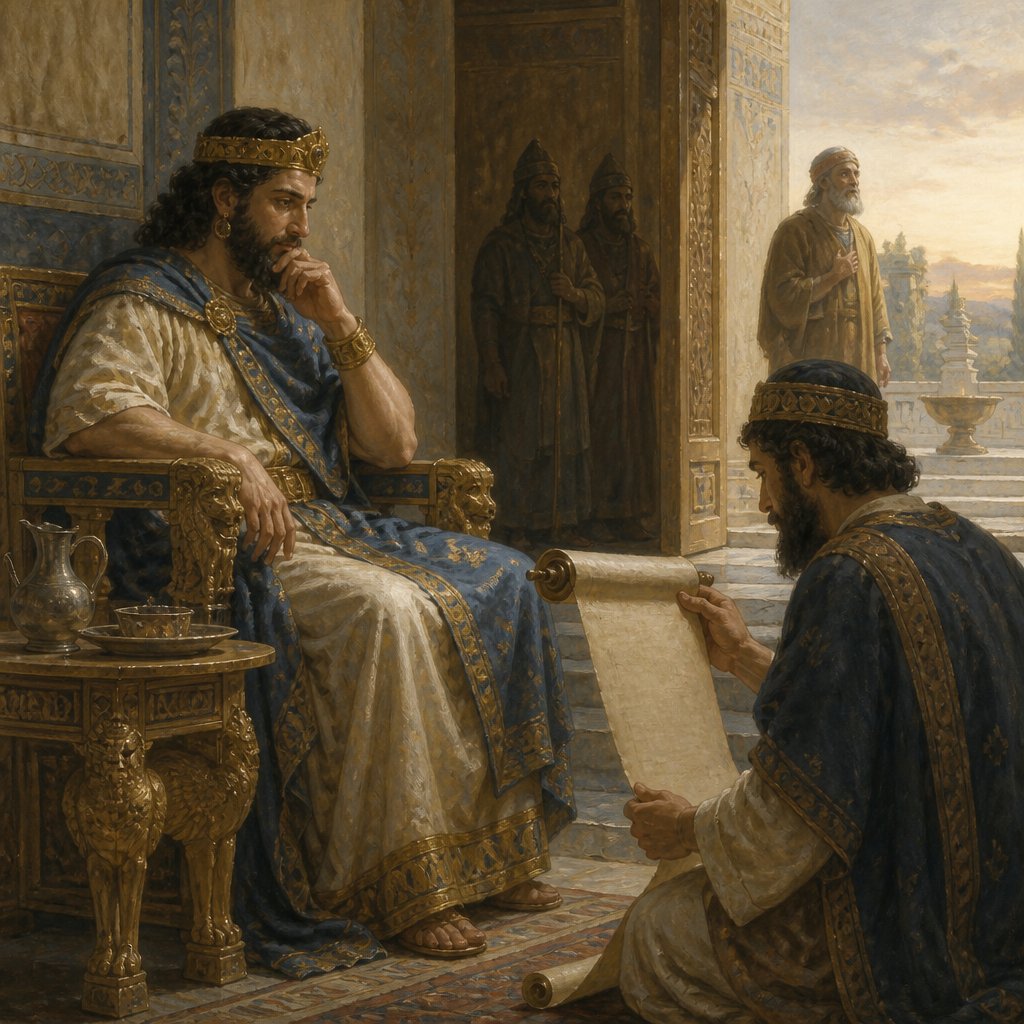
The verse Esther 6:2 in the King James Version of the Bible reads: "And it was found written, that Mordecai had told of Bigthana and Teresh, two of the king's chamberlains, the keepers of the door, who sought to lay hand on the king Ahasuerus."
This verse comes from the book of Esther in the Old Testament. It is part of the story of Queen Esther, a Jewish woman who becomes the queen of Persia and plays a crucial role in saving her people from genocide. In this particular verse, the king Ahasuerus is unable to sleep and commands that the book of records of the chronicles be brought before him. As he reads, he discovers that Mordecai, a Jewish man and cousin of Queen Esther, had previously uncovered a plot to assassinate the king. This crucial piece of information becomes important later in the story.
The book of Esther is a tale of God's providence and faithfulness, even in the midst of dire circumstances. The story is set in the Persian Empire during the time of King Ahasuerus, who is said to have ruled over 127 provinces from India to Cush. The Jewish people, who had been exiled from their homeland, were living under Persian rule. The villain of the story is Haman, a high-ranking official in the Persian court who devises a plan to exterminate all the Jews in the empire. Through a series of events, Esther becomes the queen and is in a position to influence the king to stop the genocide.
The verse Esther 6:2 is significant in the story because it sets the stage for the downfall of Haman and the deliverance of the Jewish people. The fact that Mordecai's act of loyalty in exposing the assassination plot is recorded in the chronicles of the king's reign becomes a pivotal moment in the narrative. The king's realization that Mordecai had not been rewarded for his bravery becomes a key turning point in the plot.
This verse also highlights the theme of divine timing and God's sovereignty. The fact that the king had trouble sleeping and decided to have the chronicles read to him at that particular moment is not a coincidence. It is part of God's plan to bring about justice and deliverance for His people. This theme of divine providence runs throughout the entire book of Esther, as seemingly random events and decisions ultimately work together for the good of the Jewish people.
Additionally, the verse underscores the theme of loyalty and faithfulness. Mordecai's act of reporting the assassination plot was not done for personal gain, but out of loyalty to the king and a desire to protect him. This act of faithfulness is eventually rewarded as the king seeks to honor Mordecai for his service.
Symbolically, this verse represents the idea that good deeds do not go unnoticed. Mordecai's act of loyalty, though initially overlooked, is ultimately brought to the king's attention and plays a significant role in the outcome of the story. This serves as a reminder that God sees and rewards those who are faithful and obedient to Him.
In conclusion, Esther 6:2 is a pivotal verse in the book of Esther, setting the stage for the unraveling of the plot against the Jewish people and the ultimate triumph of good over evil. The themes of God's providence, loyalty, and divine timing are woven throughout this verse and the entire narrative, making it a powerful and significant part of the biblical story.
Have questions about Esther 6:2?
Dive deeper into this scripture with Bible Chat — an AI-powered tool for exploring God's Word through conversation. Ask questions, get context, and grow in your understanding of the Bible.
Get Our Apps


Esther 6:2 Artwork

Esther 6:2 - "And it was found written, that Mordecai had told of Bigthana and Teresh, two of the king's chamberlains, the keepers of the door, who sought to lay hand on the king Ahasuerus."
"And it was found written, that Mordecai had told of Bigthana and Teresh, two of the king's chamberlains, the keepers of the door, who sought to lay hand on the king Ahasuerus." - Esther 6:2

Esther 7:6 - "And Esther said, The adversary and enemy is this wicked Haman. Then Haman was afraid before the king and the queen."

Esther 1:6

Esther 6:14 - "And while they were yet talking with him, came the king's chamberlains, and hasted to bring Haman unto the banquet that Esther had prepared."

Esther 2:22 - "And the thing was known to Mordecai, who told it unto Esther the queen; and Esther certified the king thereof in Mordecai's name."
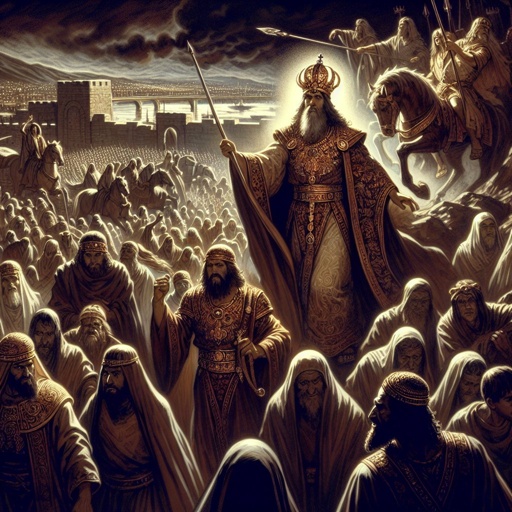
Esther 2:6 - "Who had been carried away from Jerusalem with the captivity which had been carried away with Jeconiah king of Judah, whom Nebuchadnezzar the king of Babylon had carried away."

Esther 5:2 - "And it was so, when the king saw Esther the queen standing in the court, that she obtained favour in his sight: and the king held out to Esther the golden sceptre that was in his hand. So Esther drew near, and touched the top of the sceptre."

Esther 5:6 - "¶ And the king said unto Esther at the banquet of wine, What is thy petition? and it shall be granted thee: and what is thy request? even to the half of the kingdom it shall be performed."

Esther 2:20 - "Esther had not yet shewed her kindred nor her people; as Mordecai had charged her: for Esther did the commandment of Mordecai, like as when she was brought up with him."

Esther 7:2 - "And the king said again unto Esther on the second day at the banquet of wine, What is thy petition, queen Esther? and it shall be granted thee: and what is thy request? and it shall be performed, even to the half of the kingdom."

Esther 5:2

Esther 5:2

Esther 5:2

Esther 6:7 - "And Haman answered the king, For the man whom the king delighteth to honour,"

Esther 9:6 - "And in Shushan the palace the Jews slew and destroyed five hundred men."

Esther 2:11 - "And Mordecai walked every day before the court of the women's house, to know how Esther did, and what should become of her."

Esther 2:10 - "Esther had not shewed her people nor her kindred: for Mordecai had charged her that she should not shew it."

"And Esther said, The adversary and enemy is this wicked Haman. Then Haman was afraid before the king and the queen." - Esther 7:6

Esther 5:2 - "And it was so, when the king saw Esther the queen standing in the court, that she obtained favour in his sight: and the king held out to Esther the golden sceptre that was in his hand. So Esther drew near, and touched the top of the sceptre."

"And the thing was known to Mordecai, who told it unto Esther the queen; and Esther certified the king thereof in Mordecai's name." - Esther 2:22

Esther 2:16 - "So Esther was taken unto king Ahasuerus into his house royal in the tenth month, which is the month Tebeth, in the seventh year of his reign."

Esther 8:2 - "And the king took off his ring, which he had taken from Haman, and gave it unto Mordecai. And Esther set Mordecai over the house of Haman."

Esther 4:6 - "So Hatach went forth to Mordecai unto the street of the city, which was before the king's gate."
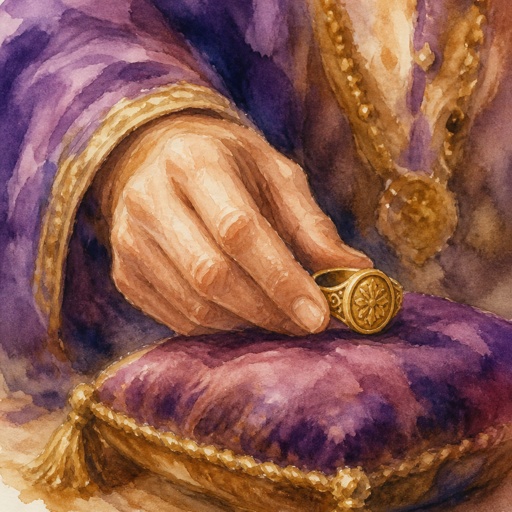
Esther 8:2 focus on the ring

Esther 2:15 - "¶ Now when the turn of Esther, the daughter of Abihail the uncle of Mordecai, who had taken her for his daughter, was come to go in unto the king, she required nothing but what Hegai the king's chamberlain, the keeper of the women, appointed. And Esther obtained favour in the sight of all them that looked upon her."

Esther 6:5 - "And the king's servants said unto him, Behold, Haman standeth in the court. And the king said, Let him come in."

Esther 6:1 - "On that night could not the king sleep, and he commanded to bring the book of records of the chronicles; and they were read before the king."

Esther 6:12 - "¶ And Mordecai came again to the king's gate. But Haman hasted to his house mourning, and having his head covered."

Esther 2:2 - "Then said the king's servants that ministered unto him, Let there be fair young virgins sought for the king:"