What does Esther 5:7 mean?
"Then answered Esther, and said, My petition and my request is;" - Esther 5:7
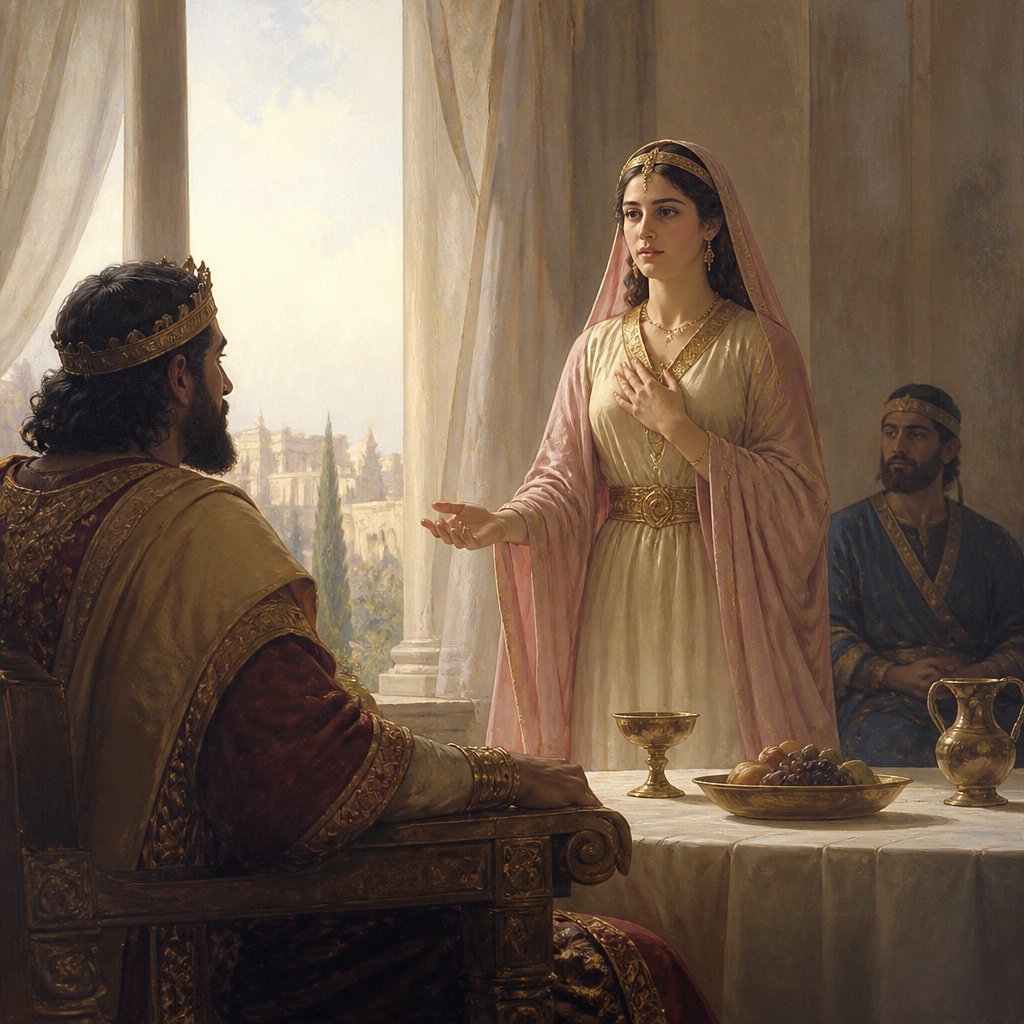
Esther 5:7 (KJV): "Then answered Esther, and said, My petition and my request is;"
The book of Esther is one of the historical books of the Old Testament, and it tells the story of a Jewish girl named Esther who becomes the queen of Persia and uses her influence to save the Jewish people from a plot to destroy them. The verse Esther 5:7 occurs in the midst of a critical moment in the story, when Esther is preparing to approach King Xerxes in order to intercede on behalf of her people.
In this verse, Esther is about to make a request to the king. Her approach to the king is a risky move, as approaching the king without invitation could result in death. However, Esther is willing to take this risk in order to save her people. This verse marks a turning point in the story, as Esther's bravery and willingness to stand up for what is right serves as a pivotal moment in the salvation of the Jewish people.
The themes present in Esther 5:7 are courage, faith, and selflessness. Esther's willingness to approach the king, risking her own life for the sake of her people, demonstrates her courage and selflessness. Additionally, her actions are a testament to her faith in God, as she believed that He would help her in her endeavor to save her people.
The context of Esther 5:7 is important to understanding its significance. Prior to this verse, Esther had fasted and prayed for three days, asking for God's guidance and help. She then approached the king, knowing that it was a dangerous and potentially life-threatening action. This demonstrates her unwavering faith and determination to do what was necessary to save her people. The verse also highlights the power of intercession, as Esther's bold request to the king on behalf of her people ultimately leads to their salvation.
Symbolism is also present in Esther 5:7. The act of Esther approaching the king represents her willingness to take a significant risk in order to achieve her goal. It also symbolizes the idea of standing up for what is right, even in the face of danger. Esther's actions serve as an example of selflessness and bravery, and her willingness to approach the king serves as a symbol of hope and salvation for her people.
Overall, Esther 5:7 is a pivotal verse in the book of Esther, representing the bravery, faith, and selflessness of its protagonist. The verse serves as a reminder of the power of intercession and the importance of standing up for what is right, even in the face of danger. Esther's actions in this verse ultimately lead to the salvation of her people, making it a powerful and significant moment in the biblical narrative.
Have questions about Esther 5:7?
Dive deeper into this scripture with Bible Chat — an AI-powered tool for exploring God's Word through conversation. Ask questions, get context, and grow in your understanding of the Bible.
Get Our Apps


Esther 5:7 Artwork

Esther 5:7 - "Then answered Esther, and said, My petition and my request is;"
"Then answered Esther, and said, My petition and my request is;" - Esther 5:7

Esther 7:5 - "¶ Then the king Ahasuerus answered and said unto Esther the queen, Who is he, and where is he, that durst presume in his heart to do so?"

Esther 5:5 - "Then the king said, Cause Haman to make haste, that he may do as Esther hath said. So the king and Haman came to the banquet that Esther had prepared."

Esther 7:1 - "So the king and Haman came to banquet with Esther the queen."
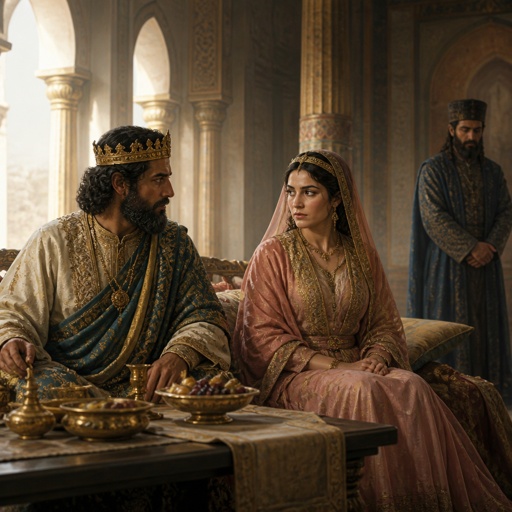
"¶ Then the king Ahasuerus answered and said unto Esther the queen, Who is he, and where is he, that durst presume in his heart to do so?" - Esther 7:5

Esther 7:6 - "And Esther said, The adversary and enemy is this wicked Haman. Then Haman was afraid before the king and the queen."

Esther 5:2

Esther 5:2 - "And it was so, when the king saw Esther the queen standing in the court, that she obtained favour in his sight: and the king held out to Esther the golden sceptre that was in his hand. So Esther drew near, and touched the top of the sceptre."

Esther 5:2

Esther 5:2

Esther 7:2 - "And the king said again unto Esther on the second day at the banquet of wine, What is thy petition, queen Esther? and it shall be granted thee: and what is thy request? and it shall be performed, even to the half of the kingdom."

Esther 7:7 - "¶ And the king arising from the banquet of wine in his wrath went into the palace garden: and Haman stood up to make request for his life to Esther the queen; for he saw that there was evil determined against him by the king."

Esther 9:7 - "And Parshandatha, and Dalphon, and Aspatha,"

"So the king and Haman came to banquet with Esther the queen." - Esther 7:1

Esther 8:7 - "¶ Then the king Ahasuerus said unto Esther the queen and to Mordecai the Jew, Behold, I have given Esther the house of Haman, and him they have hanged upon the gallows, because he laid his hand upon the Jews."

Esther 5:4 - "And Esther answered, If it seem good unto the king, let the king and Haman come this day unto the banquet that I have prepared for him."

Esther 5:3 - "Then said the king unto her, What wilt thou, queen Esther? and what is thy request? it shall be even given thee to the half of the kingdom."

Esther 5:2 - "And it was so, when the king saw Esther the queen standing in the court, that she obtained favour in his sight: and the king held out to Esther the golden sceptre that was in his hand. So Esther drew near, and touched the top of the sceptre."
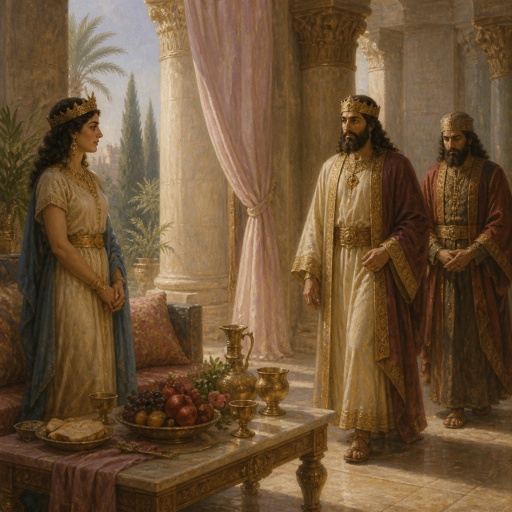
"Then the king said, Cause Haman to make haste, that he may do as Esther hath said. So the king and Haman came to the banquet that Esther had prepared." - Esther 5:5

Esther 4:5 - "Then called Esther for Hatach, one of the king's chamberlains, whom he had appointed to attend upon her, and gave him a commandment to Mordecai, to know what it was, and why it was."

Esther 5:6 - "¶ And the king said unto Esther at the banquet of wine, What is thy petition? and it shall be granted thee: and what is thy request? even to the half of the kingdom it shall be performed."
"And Parshandatha, and Dalphon, and Aspatha," - Esther 9:7

Esther 6:7 - "And Haman answered the king, For the man whom the king delighteth to honour,"

"And Esther said, The adversary and enemy is this wicked Haman. Then Haman was afraid before the king and the queen." - Esther 7:6

Esther 5:12 - "Haman said moreover, Yea, Esther the queen did let no man come in with the king unto the banquet that she had prepared but myself; and to morrow am I invited unto her also with the king."

Esther 7:3 - "Then Esther the queen answered and said, If I have found favour in thy sight, O king, and if it please the king, let my life be given me at my petition, and my people at my request:"

Esther 7:10 - "So they hanged Haman on the gallows that he had prepared for Mordecai. Then was the king's wrath pacified."

Esther 3:5 - "And when Haman saw that Mordecai bowed not, nor did him reverence, then was Haman full of wrath."

Esther 2:7 - "And he brought up Hadassah, that is, Esther, his uncle's daughter: for she had neither father nor mother, and the maid was fair and beautiful; whom Mordecai, when her father and mother were dead, took for his own daughter."